


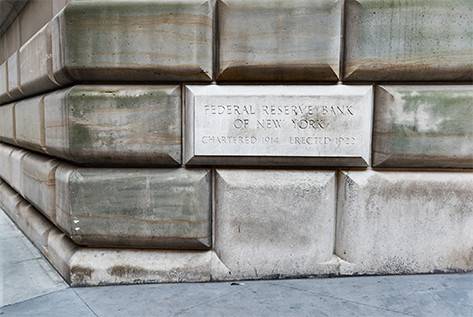
Everyone is waiting for rate cuts. But the Federal Reserve has already taken its biggest policy step. If another liquidity squeeze similar to 2019 happens, your money-market fund will be the first domino.
The Fed ended quantitative tightening on December 1. It’s time to take a closer look at where your cash sits — not because conditions are healthy, but because the liquidity “pipes” are clogged, and someone has finally smelled the gas leak.
Quantitative tightening meant the Fed was shrinking its balance sheet by allowing bonds to mature without replacing them. Launched in 2022 to drain the “excess” pandemic liquidity from the financial system, it was a noble goal — but reserves have now fallen to levels where one more month of this “discipline” could break something in funding markets.
The Fed’s overnight reverse-repo facility used to hold roughly $2.5 trillion in excess liquidity — essentially a giant mattress stuffed with cash nobody needed. That mattress is now empty. The money has moved into your money-market fund. You are the mattress now.
Why stop? Jerome Powell muttered something about “ample reserves” and referenced 2019, when the repo market froze overnight and the Fed had to inject emergency cash. Translation from Fed-speak into plain English: the engine is making noises that sound like expensive repairs.
The Midnight Hotel… The Fed’s Shock Absorber Has Disappeared — No Cushion, Only Friction
The overnight reverse-repo facility is a long bureaucratic name for something simple: Wall Street’s overflow tank for extra liquidity.
Money-market funds with billions in spare cash could park it at the Fed in exchange for Treasuries and a modest return — tidy and safe. The Fed managed liquidity; Wall Street earned a few basis points while sleeping.
In peak 2022, the tank held about $2.5 trillion. A luxury hotel for money with nowhere else to go.
By this fall, occupancy was near zero — roughly $20–30 billion on a good day. The New York Fed effectively declared the hotel closed.
Officials marketed this as “normalization.” That’s what bureaucrats say when they have no better explanation. The Fed’s shock absorber is gone.
With the hotel gone, liquidity has no place to pool. Treasury auctions, corporate tax payments, quarter-end balance-sheet needs — all these now drain directly from bank reserves. No cushion. Only friction.
Remember September 2019? Most people don’t — unless you work in finance or have anxiety issues. Corporate tax payments coincided with a large Treasury auction, money drained, and overnight repo rates jumped from 2% to 10% within days. The Fed had to intervene with emergency liquidity. Everyone called it “technical.” It wasn’t.
A new 2019-style squeeze would push overnight funding costs sharply higher, potentially lifting yields and increasing volatility across markets — not just for professionals but for anyone holding bonds, money-market funds, or relying on credit.
If the Fed is forced to intervene again, it may have to open the liquidity spigot abruptly, shocking interest rates and asset prices for savers, borrowers, and investors. The initial market reaction would likely be: “Rates will stay higher for longer,” with all that implies — pricier mortgages, risk-off sentiment in equities, and fresh questions like “Is my money-market fund really safe?”
We are closer to that point than at any time in six years. Safety valves are empty, reserves are lower — and your money-market fund is the first domino.
The Emergency Frame They Said They’d Never Need
The Fed’s permanent repo facility is its credit card for strange moments. And things have gotten strange.
The permanent repo facility allows primary dealers to post Treasuries for overnight cash at a set rate — an emergency valve the Fed said would be used “sparingly.” Yet dealers have borrowed up to $10 billion from it on some days. Previously this happened quarterly. Now it happens on Tuesdays.
Here is the critical signal: private-market repo rates are rising above the Fed’s official ceiling for this facility. That means the system is tight enough that lenders are charging more in the private market than the Fed charges in its emergency window.
This is not a “technical adjustment.”
This is a failure of monetary control. It is an admission that the Fed no longer determines the price of money. The market does.
When your emergency credit card becomes your daily card, you no longer have an emergency plan. You have a problem.
Your Money-Market Fund Is a Hostage — Here’s Why
A government buying its own debt is not a sign of strength. It is a sign of a shortage of other buyers.
The Fed ended QT a full year ahead of schedule. Officials first hinted at this in late October and confirmed it in the November 19 minutes. They did not announce it as an achievement. They announced it the way someone out of fuel calls roadside assistance.
The reason? Reserves are falling to dangerous levels. Funding markets are fragile. The pipes are clogged, and the Fed has decided it is unwise to drain more liquidity when something is clearly wrong.
This is not policy. It is damage control.
What should you do? The short version: make sure your “safe” cash is not the first to suffer when the pipes burst.
For money-market funds:
• Prime funds hold commercial paper and corporate debt — the type that suffers when liquidity tightens.
• Government money-market funds hold Treasuries and Fed-backed repo, and are safer when the system heats up.
Move there and stay there.
Avoid Treasury bills maturing on December 31 and March 31 — quarter ends. Repo stress peaks then, and bills often trade at discounts because nobody wants to hold them when the pipes start rattling.
For bonds:
The Fed is now buying $40–50 billion a month in Treasuries. A price-insensitive buyer has returned. That props up prices for now, but do not be fooled. As said before: avoid long-term bonds. Government buying its own debt signals a shortage of natural buyers, not strength.
For equities:
When liquidity tightens, investors shift to defensive sectors — companies with steady cash flows, low leverage, and essential products. Financials take the first hit because banks depend on smooth repo markets for daily functioning.
For gold and crypto:
Gold is the “I don’t trust the system” trade.
Bitcoin is the “I really, really don’t trust the system” trade.
If the secured overnight financing rate (SOFR) spikes and margin calls roll in, demand for both rises as the financial system freezes — because SOFR is the number that tells you the pipes are bursting.
The Warning No One Wants to Hear
Check where your money sits while the central bank pushes liquidity to the edge of the system’s capacity.
The Fed ended QT — the process of letting bonds run off — launched in 2022 to drain pandemic liquidity and look tough on inflation.
It ended QT because reserves are sinking toward levels where routine month-end flows cause unusual stress. The reverse-repo facility that once held $2.5 trillion is nearly empty. That cushion has left the Fed’s balance sheet and entered your money-market fund.
Next step: quiet purchases of short-term Treasuries to manage reserves and prevent further declines — the plumbing maneuver balance-sheet watchers track obsessively. Markets will see it as “supportive.”
You cannot fix the Fed’s pipes. You cannot force banks to lend reserves they prefer to hoard, nor convince dealers to absorb balance-sheet risk out of civic duty. What you *can* do is check where your money sits while the central bank pushes liquidity toward the edge of system tolerances.
The warning light is on. Powell has eased from 70 miles per hour to 55 and patted your knee. You’re in the front seat without a seatbelt, and the dashboard lights are blinking like they’re trying to transmit a message in Morse code — one you never learned.
