


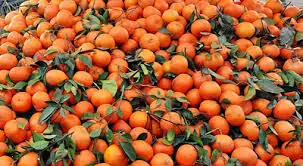
The All Pakistan Fruit and Vegetable Exporters, Importers and Merchants Association today set a kinnow export target of 300,000 tonnes for the current season, a move which is expected to generate $110 million in foreign exchange.
During the last season, Pakistan exported 250,000 tonnes of kinnow, earning $95 million.
Experts believe Pakistan can scale export earnings to $400 million within five years by introducing new citrus varieties and improving supply chain efficiency.
Exports of kinnow from Pakistan have begun for the current season, with 6,000 tonnes shipped so far —since December 1 — to the Middle East, Sri Lanka, and the Philippines.
According to the Association’s Patron-in-Chief, Waheed Ahmed, this season has seen a bumper crop, with total production expected to reach 2.7 million tonnes compared to 1.7 million tonnes last season. Despite the increase in production, exports are still 50 percent lower than the 550,000 tonnes exported five years ago. He said the main reason for this decline is the lack of research and development in cultivation and reliance on old varieties that cannot withstand environmental challenges.
Talking to Business Recorder, horticulture expert Dr Aasia Akbar Panhwar from the Sindh Agriculture University said farmers can adopt three to five new citrus varieties.
Promising options include ‘seedless kinnow,’ ‘kinnow gold,’ ‘kinnow late’, ‘mandarin nova’ and ‘mandarin clementine’.
Under the Australia Pakistan Agriculture Sector Linkages Program, certified nurseries and improved planting material have already been introduced. With proper research, farmers can gradually shift to these climate-resilient and export-friendly varieties to meet global market requirements.
Dr Panhwar said the program proved that better quality control, modern packing houses, cold treatment, and international food safety practices increases global acceptance. She said strengthening research, establishing new export markets, upgrading processing units, and improving supply chain efficiency will help raise kinnow export earnings from the present level to $400 million dollars within five years.
Waheed Ahmed said the association has presented short-, medium-, and long-term plans to the government to boost exports.
He added that Pakistan will need to acquire new varieties from Egypt, the United States, Morocco, and China for local cultivation. At the same time, preference must be given to low-water-consuming varieties such as lemon, grapefruit, orange, and mandarin, which have strong demand in international markets.
According to him, the suspension of trade with Afghanistan has created difficulties in exporting kinnows via land routes to Central Asian states and Russia. The alternative route through Iran is long and costly; freight rates through Iran have already increased by up to 100 percent at the start of the season, alongside additional logistics challenges.
He also called for a national-level strategy to enhance kinnow exports, strengthen research and development, and promote modern irrigation methods in view of the growing water shortage.
