


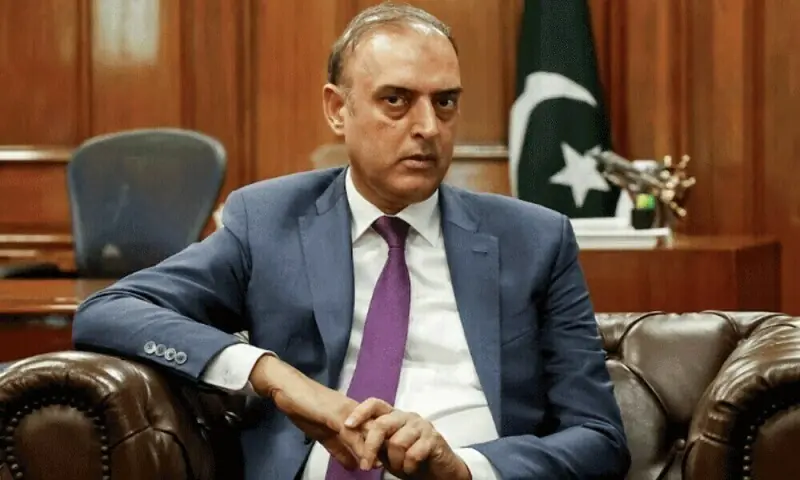
State Bank of Pakistan (SBP) Governor Jameel Ahmad on Tuesday reaffirmed the central bank’s commitment to developing a “robust and inclusive” digital payments ecosystem, stressing the need for a regulatory framework that encourages innovation, competition and consumer protection.
He passed these remarks while addressing the launch ceremony of the new co-badged card introduced by Faysal Bank Limited in collaboration with Mastercard and Pakistan’s national payment scheme, PayPak, according to a statement from the SBP.
Co-badging refers to the practice of including more than one payment brand (or “badge”) on a single payment card (debit, credit, or prepaid card). The State Bank of Pakistan encourages this practice to increase payment flexibility, acceptance, and digital payment usage within the country.
“Reaffirming SBP’s commitment to developing a robust and inclusive digital payments ecosystem, the governor underscored the importance of a regulatory framework that promotes innovation, competition, and consumer protection.
“He reiterated SBP’s resolve to ensure a level playing field for all stakeholders, including international payment schemes, as Pakistan advances toward a secure, interoperable, and self-sustaining payments infrastructure,” the statement read.
Pakistan’s digital payment boom collides with a nation still clinging to cash
Ahmad was of the view that the co-badging initiative would help strengthen further Pakistan’s digital payments landscape.
“The consumers will be able to make international and e-commerce payments seamlessly, while domestic transactions will be settled within Pakistan thus enhancing efficiency and reducing reliance on external networks,” he said.
“Co-badging is gaining momentum in Pakistan’s digital payments space. Today’s launch follows the introduction of the PayPak–UnionPay co-badged card last month, reflecting a growing trend where Pakistan’s domestic payment scheme is forming strategic alliances with global payment giants. He expressed confidence that more banks would adopt similar models due to the strong value proposition these collaborations offer.”
While PayPak currently commands over 25% of the 53 million debit cards in circulation, its usage share remains at 6%, according to the central bank.
Review and audit: Cashless economy drive to go under scrutiny
Ahmad attributed this gap to “challenges such as limited acceptance on e-commerce and international platforms, modest marketing efforts, and the perception of PayPak as a low-value card”.
He stressed the importance of addressing the constraints to establish PayPak as a sustainable and competitive scheme.
