


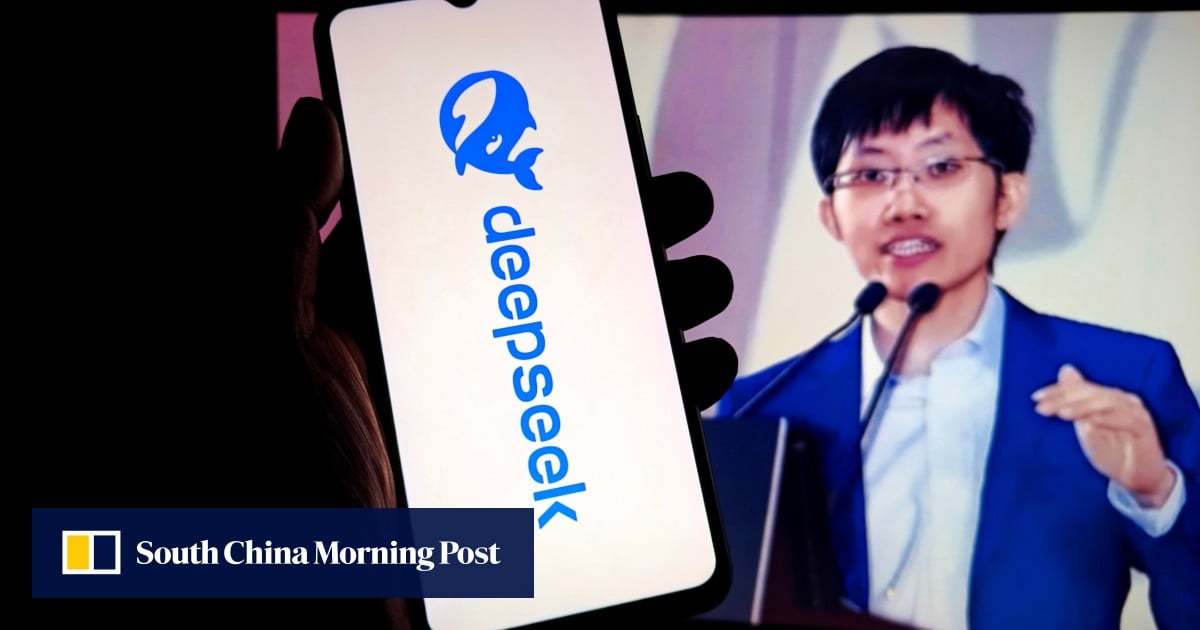
The Nature’s 10 profile of Liang recognised the disruption caused in January by the release of DeepSeek-R1, a reasoning model that showed how “the United States was not as far ahead in AI as many experts had thought”.
Hangzhou-based DeepSeek, a spin-off from Liang’s High-Flyer Quantitative Fund, made headlines early this year for roiling the US stock market. On January 27, a massive sell-off wiped out nearly US$1 trillion in tech stocks, including US$600 billion from Nvidia alone.
The performance of DeepSeek’s R1 and V3, released in December, rivalled that of OpenAI’s offerings at a fraction of the training cost, which cast doubt on the assumptions that underpinned the high valuations of US semiconductor and AI companies.
Training costs for Meta Platforms’ Llama 3 405B model, for example, were more than 10 times greater, according to Nature.
DeepSeek’s open-source models, which are downloaded and built on for free, have been “a boon for researchers who want to adapt algorithms to their own field”, according to Nature. That development had “prompted other companies in China and the US to follow suit by releasing their own open models”.
In many ways, “DeepSeek has been hugely influential”, said Adina Yakefu, a researcher at AI developer platform Hugging Face, in the Nature profile.
