Close Menu
World Economist – Global Markets, Finance & Economic Insights
  • Home
  • Economist Impact
    • Economist Intelligence
    • Finance & Economics
  • Business
  • Asia
  • China
  • Europe
  • Economy
  • USA
    • Middle East & Africa
    • Highlights
  • This week
  • World Economy
    • World News
What's Hot

Exclusive | ‘No need to explain’: leading mRNA vaccine scientist Hu Haitao leaves US for China

December 21, 2025

How the Bondi Beach attack became a flashpoint for global disinformation and AI-driven hate

December 21, 2025

Singapore’s unforgiving food scene can go hot and cold on brands. What keeps them coming?

December 21, 2025
Facebook X (Twitter) Instagram
Sunday, December 21
Facebook X (Twitter) Instagram
World Economist – Global Markets, Finance & Economic Insights
  • Home
  • Economist Impact
    • Economist Intelligence
    • Finance & Economics
  • Business
  • Asia
  • China
  • Europe
  • Economy
  • USA
    • Middle East & Africa
    • Highlights
  • This week
  • World Economy
    • World News
World Economist – Global Markets, Finance & Economic Insights
Home » Spurred by US sanctions, China adapts Huawei’s HarmonyOS for microsatellites
China

Spurred by US sanctions, China adapts Huawei’s HarmonyOS for microsatellites

adminBy adminJune 21, 2025No Comments2 Mins Read
Share Facebook Twitter Pinterest Copy Link LinkedIn Tumblr Email VKontakte Telegram
Share
Facebook Twitter Pinterest Email Copy Link
Post Views: 75


China has successfully tested a home-grown operating system in space, marking a major step towards reducing reliance on foreign software and boosting the performance of future small satellites.
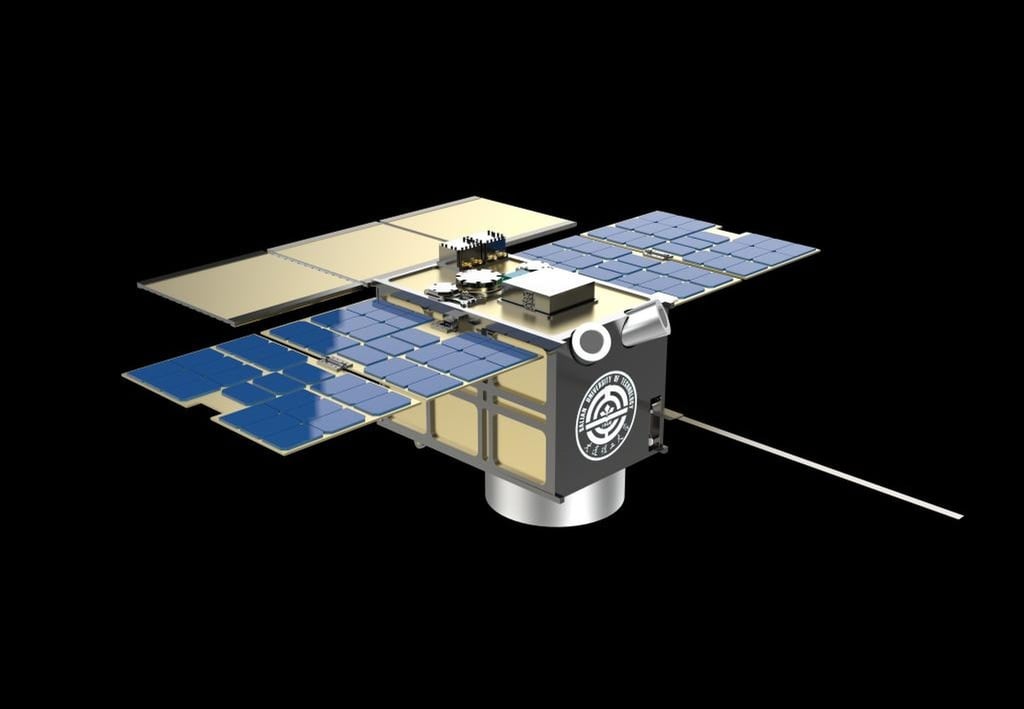
More than 1,000 hours of in-orbit testing were conducted aboard the Dalian-1 Lianli CubeSat to evaluate how satellite subsystems performed under the OpenHarmony real-time operating system (RTOS) – a lightweight version of Huawei’s open-source operation platform, according to a team of researchers from the Chinese cities of Dalian and Xian.
With OpenHarmony, the suitcase-sized satellite, which was released from China’s Tiangong space station last year, delivered faster data updates and improved stability compared with earlier set-ups using simpler firmware or foreign software, the researchers reported in the latest issue of the journal Space: Science and Technology.

“The Lianli satellite mission showed that using the OpenHarmony real-time operating system significantly improved the satellite’s response speed and reliability,” Yu Xiaozhou, the paper’s lead author and a professor at Dalian University of Technology, told Chinese media in May.

The Dalian-1 Lianli has been installed with the OpenHarmony real-time operating system. Illustration: Handout

As the first microsatellite to carry the OpenHarmony RTOS, Lianli also ran on a domestically produced chip, “achieving a fully home-grown hardware-software solution in the field, and offering a new option for spacecraft operating systems worldwide”, according to Chinese media reports.

Following the Lianli mission, Yu and colleagues proposed national technical standards to guide how OpenHarmony is used in small satellites – a step intended to encourage broader adoption, which is already taking place across both commercial and research satellite missions in China.



Source link

Share. Facebook Twitter Pinterest LinkedIn Tumblr Email Telegram Copy Link
admin
  • Website

Related Posts

China

Exclusive | ‘No need to explain’: leading mRNA vaccine scientist Hu Haitao leaves US for China

December 21, 2025
China

China’s top court sends message to employers on sexual harassment

December 21, 2025
China

China eases visa rules for India, tapping into US$21.6 billion travel market

December 21, 2025
China

In eastern China, ancient ruins are pushing back the date of Yangtze delta’s earliest cities

December 21, 2025
China

China speeds up armour steel production by 30% as US Conshohocken plant folds

December 21, 2025
China

Pentagon’s Taiwan war games reflect US anxiety over PLA power: defence experts

December 20, 2025
Add A Comment
Leave A Reply Cancel Reply

Editors Picks

Karachi: industrialists greet infrastructure uplift package – Business & Finance

December 21, 2025

Islamabad wholesale market: sugar price shows declining trend – Markets

December 21, 2025

Oil prices climb as US blocks Venezuelan tankers – Markets

December 21, 2025

Macroeconomic stability: World Bank Board approves USD700m for ‘PRID-MPA’ – Business & Finance

December 21, 2025
Latest Posts

PSX hits all-time high as proposed ‘neutral-to-positive’ budget well-received by investors – Business

June 11, 2025

Sindh govt to allocate funds for EV taxis, scooters in provincial budget: minister – Pakistan

June 11, 2025

US, China reach deal to ease export curbs, keep tariff truce alive – World

June 11, 2025

Subscribe to News

Subscribe to our newsletter and never miss our latest news

Subscribe my Newsletter for New Posts & tips Let's stay updated!

Recent Posts

  • Exclusive | ‘No need to explain’: leading mRNA vaccine scientist Hu Haitao leaves US for China
  • How the Bondi Beach attack became a flashpoint for global disinformation and AI-driven hate
  • Singapore’s unforgiving food scene can go hot and cold on brands. What keeps them coming?
  • China’s top court sends message to employers on sexual harassment
  • Malaysia’s LGBTQ community lives in fear as raids drive them underground

Recent Comments

No comments to show.

Welcome to World-Economist.com, your trusted source for in-depth analysis, expert insights, and the latest news on global finance and economics. Our mission is to provide readers with accurate, data-driven reports that shape the understanding of economic trends worldwide.

Latest Posts

Exclusive | ‘No need to explain’: leading mRNA vaccine scientist Hu Haitao leaves US for China

December 21, 2025

How the Bondi Beach attack became a flashpoint for global disinformation and AI-driven hate

December 21, 2025

Singapore’s unforgiving food scene can go hot and cold on brands. What keeps them coming?

December 21, 2025

Subscribe to Updates

Subscribe to our newsletter and never miss our latest news

Subscribe my Newsletter for New Posts & tips Let's stay updated!

Archives

  • December 2025
  • November 2025
  • October 2025
  • September 2025
  • August 2025
  • July 2025
  • June 2025
  • May 2025
  • April 2025
  • March 2025
  • February 2025
  • January 2025
  • December 2024
  • June 2024
  • March 2024
  • October 2022
  • March 2022
  • July 2021
  • February 2021
  • January 2021
  • November 2019
  • April 2011
  • January 2011
  • December 2007
  • July 2007

Categories

  • AI & Tech
  • Asia
  • Banking
  • Business
  • Business
  • China
  • Climate
  • Computing
  • Economist Impact
  • Economist Intelligence
  • Economy
  • Editor's Choice
  • Europe
  • Europe
  • Featured
  • Featured Business
  • Featured Climate
  • Featured Health
  • Featured Science & Tech
  • Featured Travel
  • Finance & Economics
  • Health
  • Highlights
  • Markets
  • Middle East
  • Middle East & Africa
  • Middle East News
  • Most Viewed News
  • News Highlights
  • Other News
  • Politics
  • Russia
  • Science
  • Science & Tech
  • Social
  • Space Science
  • Sports
  • Sports Roundup
  • Tech
  • This week
  • Top Featured
  • Travel
  • Trending Posts
  • Ukraine Conflict
  • Uncategorized
  • US Politics
  • USA
  • World
  • World & Politics
  • World Economy
  • World News
© 2025 world-economist. Designed by world-economist.
  • Home
  • About Us
  • Advertise With Us
  • Contact Us
  • DMCA
  • Privacy Policy
  • Terms & Conditions

Type above and press Enter to search. Press Esc to cancel.