Chinese naval researchers have detailed plans to construct a multilayered defence architecture designed to protect warships from saturation attacks by up to thousands of low-cost drones, responding to what they call an existential threat amplified by accessible commercial technology.
The proposed “counter-swarm system”, likened by some experts to a digital-age Great Wall, would integrate satellites, AI-powered sensors and radical new weapons – including hypersonic missiles, lasers and microwave beams showcased in Beijing’s recent military parade – to detect, disrupt and destroy drone fleets before they reach their targets.
Their study, published in the peer-reviewed journal Command Control & Simulation on August 22 in the paper “Constructing Naval Counter-Swarm Systems: A Framework for Future Warfare”, warns that such swarms could overwhelm traditional warship defences through stealth, coordination and sheer numerical superiority.
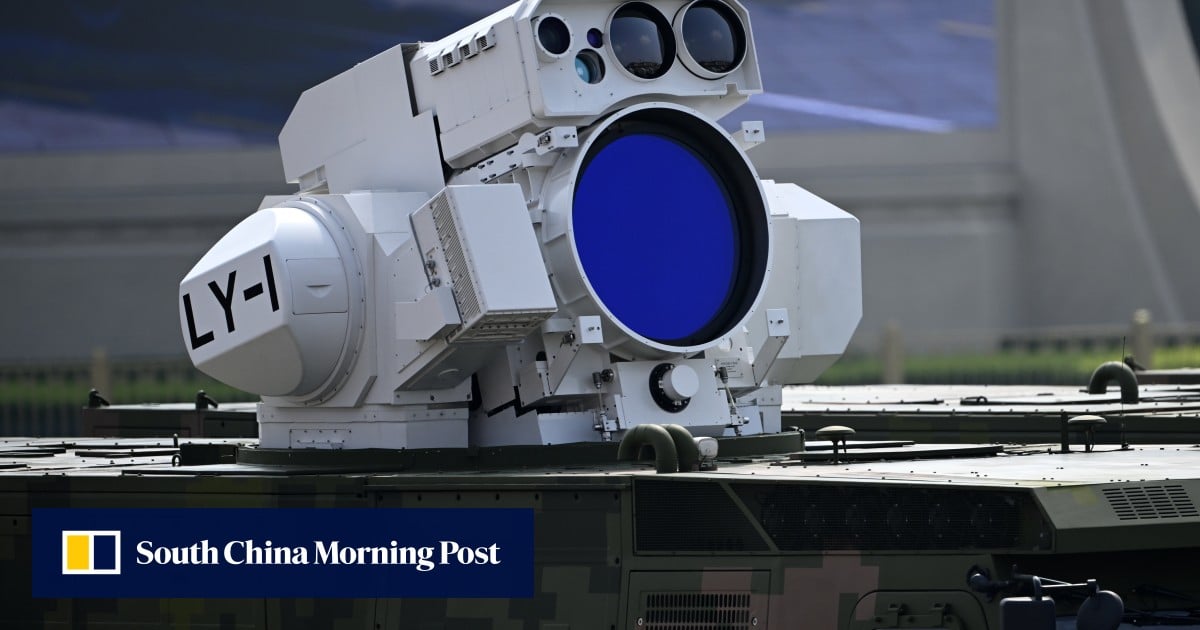
The detailed countermeasures they proposed match a wide variety of anti-drone weapon systems displayed for the first time in the massive parade on September 3, such as high-power microwave weapons, LY-1 ship-mounted lasers and CJ-1000 hypersonic cruise missiles that can hit a drone-carrying cargo plane from thousands of kilometres away.
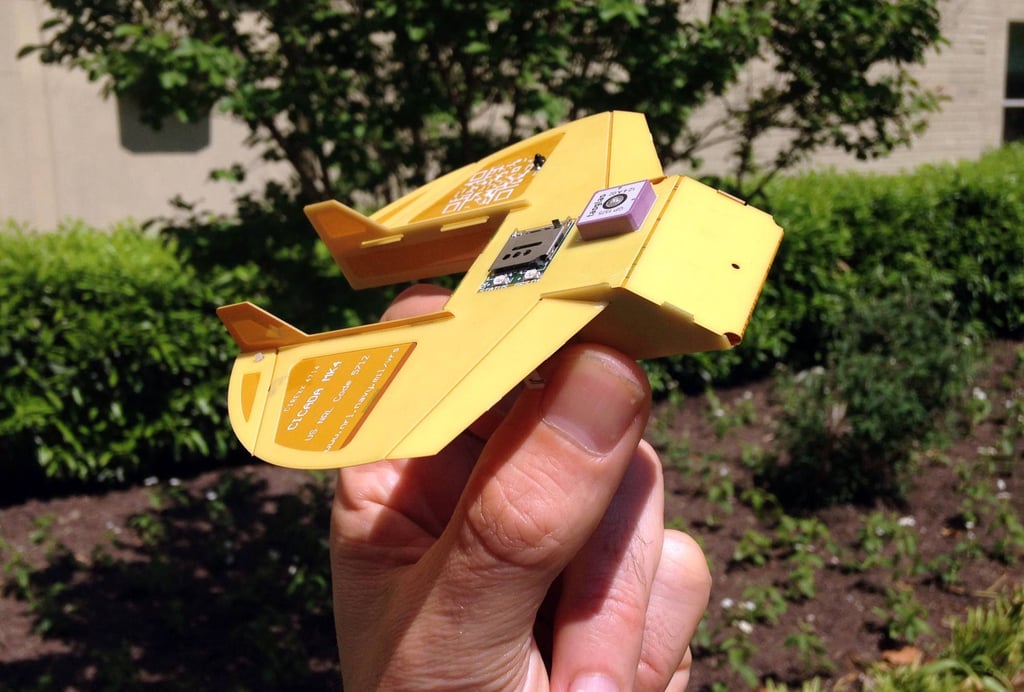
A Cicada is a miniature drone invented by US military scientists, designed to be smaller, cheaper and simpler than any other robotic aircraft – but still able to carry out a mission in a remote battlefield. Photo: AFP
“It could be a pure coincidence, but [the parade] brings the idea from paper to life,” said a Beijing-based defence expert who requested not to be named due to the sensitivity of the issue.