


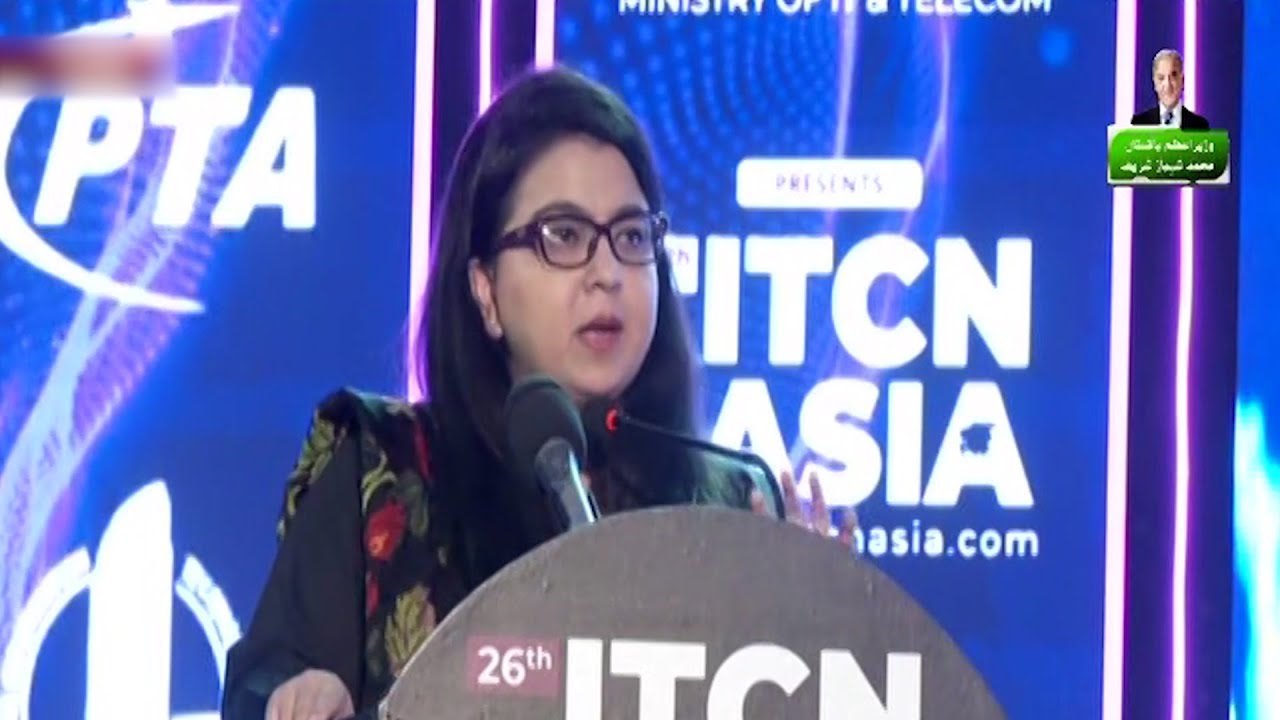
Federal Minister for IT and Telecommunication Shaza Fatima Khawaja on Tuesday said that the IT sector will be a “core element” under the newly inked Strategic Mutual Defence Agreement (SMDA) between Saudi Arabia and Pakistan
Speaking at the inauguration ceremony of ITCN Asia-2025 in Karachi, the minister stated: “We have received a note from London stating that the IT sector will be a core element for investment opportunities under the newly signed SMDA.”
Last week, Saudi Arabia and Pakistan signed SMDA during Prime Minister Muhammad Shehbaz Sharif’s visit to Riyadh, which clearly states: “Any aggression against either country shall be considered an aggression against both.”
While primarily a defence pact, economic experts believe that the agreement has opened a new chapter in bilateral relations with much potential to boost investment and explore joint ventures, foreign direct investment, oil & gas energy cooperation and IT exports.
Highlighting Pakistan’s digital journey, Shaza informed that Pakistan’s tech sector has registered annual growth of 20% in recent years. She informed that in the last two years, Pakistan’s internet and data usage increased by 24%.
The number of Pakistan’s freelancers and remote workers has doubled in one year, she said.
The minister informed that the government intends to make Pakistan a data transit hub of the region.
The minister added that the government is prioritising the resolution of IT and internet-related issues and is taking concrete steps to ensure 5G access across all regions of the country.
She said that the government intends to conduct spectrum auction by the end of this year. “The auction will increase spectrum availability from 274MHz to 1,000Hz, but will also introduce 5G into the country,” she said.
Shaza reaffirmed the government’s commitment to equipping one million youth with AI skills.
According to the State Bank of Pakistan (SBP), IT exports rose to $691 million during the period of July to August as compared to $584 million reported in the same period of the last year, while showing a surge of $107 million year-on-year.
