


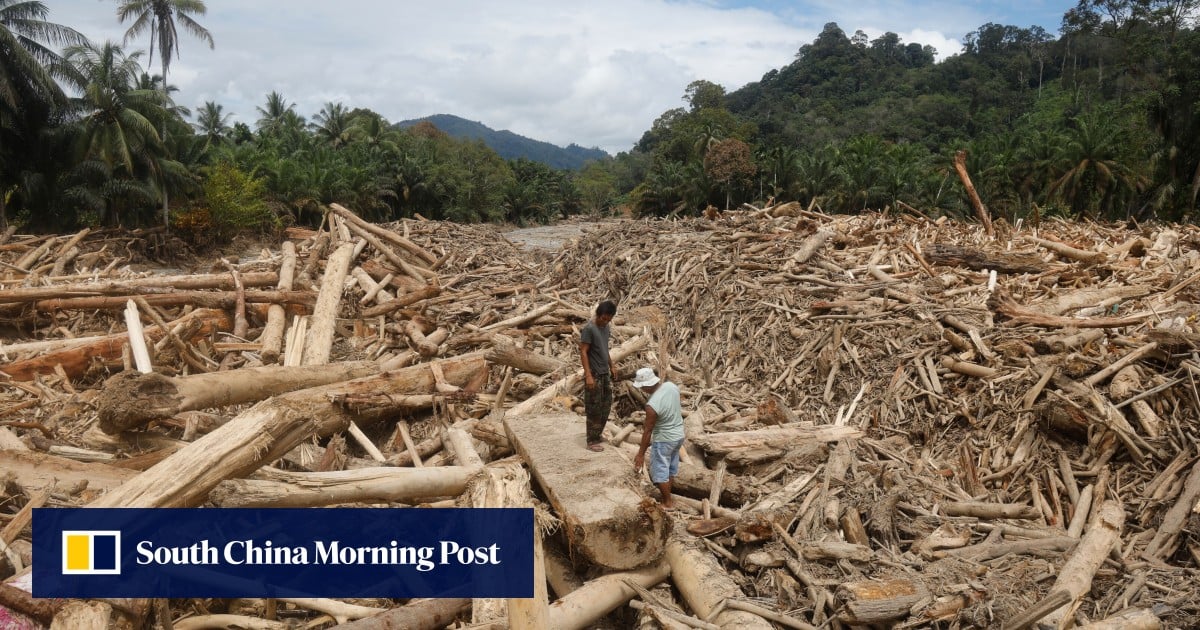
The disaster has prompted a nationwide debate over whether the tragedy was driven primarily by climate change-fuelled extreme weather or by decades of ecological destruction in a region that has been transformed by plantations, mining and large-scale energy projects.
A cyclone forming so close to the equator is rare, but climatologists say the phenomenon could become more frequent as warming ocean waters disrupt atmospheric patterns. Environmental groups, meanwhile, say that years of deforestation have degraded Sumatra’s watersheds, magnifying the scale of the flooding.
Tropical cyclone Senyar made landfall across densely populated areas of Aceh, North Sumatra and West Sumatra on November 26, bringing torrential rains and powerful winds that triggered deadly flash floods and landslides.
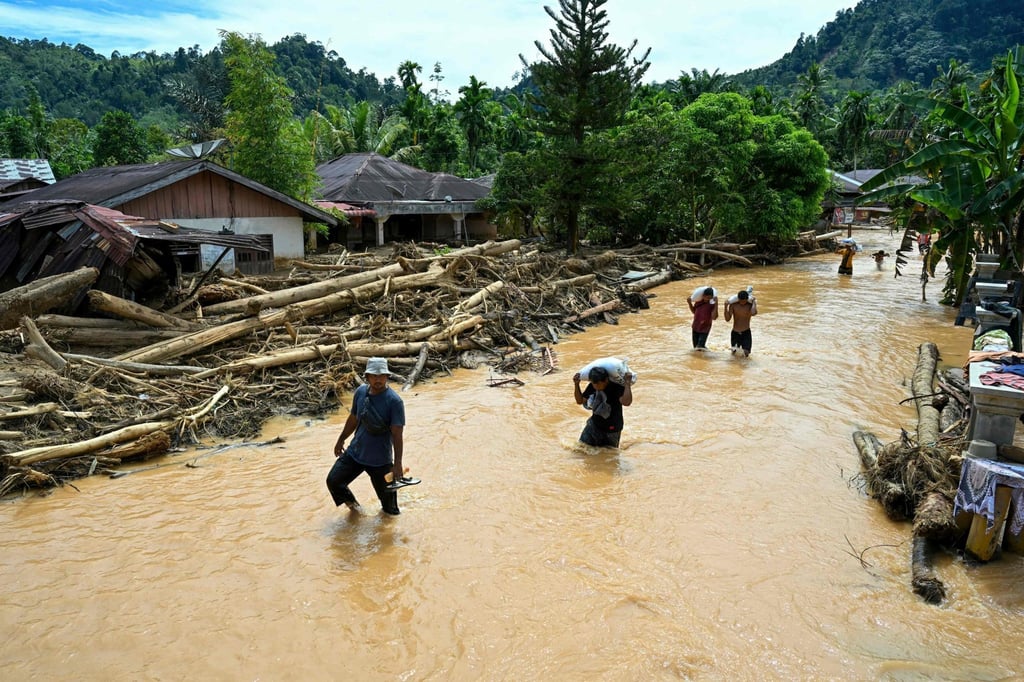
North Sumatra suffered the heaviest toll with 301 deaths, followed by 225 in West Sumatra and 218 in Aceh. The National Disaster Mitigation Agency (BNPB) said on Tuesday that a further 551 people were missing across the three provinces.
Nearly 1.5 million people have been affected by the flooding and 570,000 displaced, with roads and bridges in many North Sumatra communities still impassable. BNPB chief Suharyanto said officials were working around the clock to restore electricity, communications and clean water, and to move supplies by land, sea and air.
