


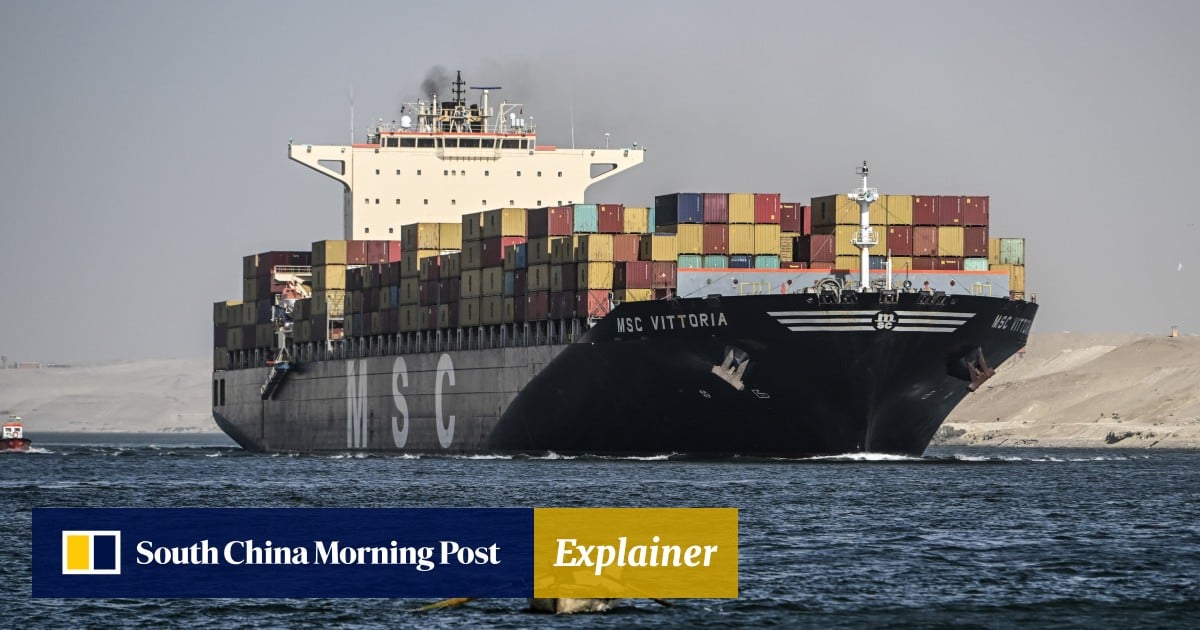
Houthi rebel groups in Yemen signalled in November they would halt attacks on commercial ships passing through the Red Sea if the Gaza ceasefire held, allowing a possible end to two years of costly detours for cargo shipping between Asia and Europe.
Dutch financial services group ING called the potential reopening of Red Sea shipping lanes a “key thing to watch for in container shipping” next year. And it would have particular significance for China: the world’s biggest merchandise exporter.
However, it may not be possible for companies to simply snap back to the status quo in 2023, before the attacks started. Here are three potential scenarios:
1. The Red Sea is safe and ships dive back in
Red Sea traffic could return to normal from next year, saving fuel, time and greenhouse gas emissions on Asia-Europe routes compared with detouring around Africa’s Cape of Good Hope.
“It’s not a matter of ‘if’, but ‘when’” this happens, ING said in a research note on Monday.
Red Sea passages cut down voyages between Asia and Europe by more than 3,000 nautical miles and 10 days compared with the Cape of Good Hope route, ING estimated.
They are also significantly cheaper. Sending ships all the way around Africa cost companies an extra US$30 to US$50 per 20-foot equivalent unit of cargo, said Surinder Brrar, a professor at the Hong Kong Polytechnic University’s Department of Logistics and Maritime Studies.
