Close Menu
World Economist – Global Markets, Finance & Economic Insights
  • Home
  • Economist Impact
    • Economist Intelligence
    • Finance & Economics
  • Business
  • Asia
  • China
  • Europe
  • Economy
  • USA
    • Middle East & Africa
    • Highlights
  • This week
  • World Economy
    • World News
What's Hot

Oil declines as investors focus on Russia-Ukraine talks

December 11, 2025

Jim Cramer’s top 10 things to watch in the stock market Thursday

December 11, 2025

Chow Tai Fook sells Australian energy assets to Singapore group for US$4.3 billion

December 11, 2025
Facebook X (Twitter) Instagram
Thursday, December 11
Facebook X (Twitter) Instagram
World Economist – Global Markets, Finance & Economic Insights
  • Home
  • Economist Impact
    • Economist Intelligence
    • Finance & Economics
  • Business
  • Asia
  • China
  • Europe
  • Economy
  • USA
    • Middle East & Africa
    • Highlights
  • This week
  • World Economy
    • World News
World Economist – Global Markets, Finance & Economic Insights
Home » Atif Mian proposes 5/50 framework to transform Pakistan’s economy – Business & Finance
Economist Intelligence

Atif Mian proposes 5/50 framework to transform Pakistan’s economy – Business & Finance

adminBy adminDecember 10, 2025No Comments3 Mins Read
Share Facebook Twitter Pinterest Copy Link LinkedIn Tumblr Email VKontakte Telegram
Share
Facebook Twitter Pinterest Email Copy Link
Post Views: 8


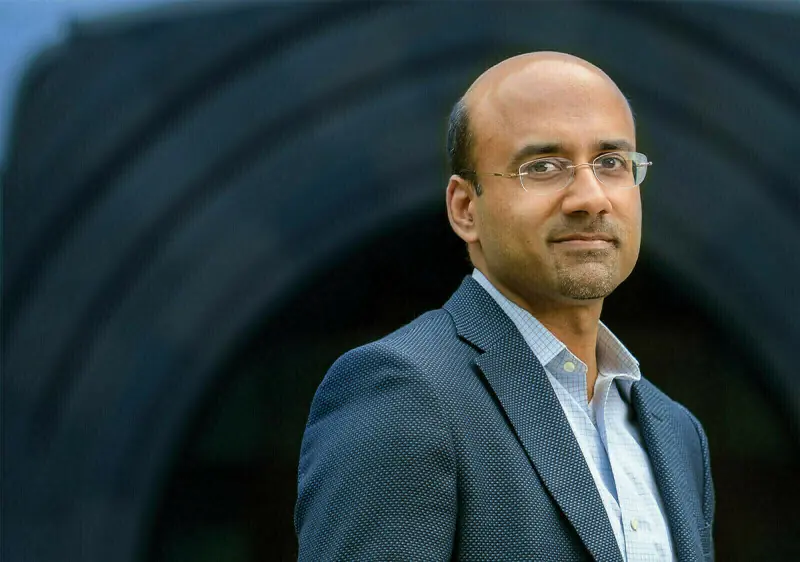
Atif Mian, a noted Pakistani-American economist and currently a professor of Economics at Princeton University, has said that Pakistan must adopt a new economic vision calling for sustained income growth under a “Five-for-Fifty” (5/50) framework.

The proposed 5/50 vision argues that Pakistan should target 5% annual per capita income growth for the next 50 years, enabling the “average Pakistani to earn as much as the average citizen of the world”, wrote Atif on his website atifmian.com on Tuesday.

“Five-for-fifty is an attainable goal, and Pakistan could do even better in best-case scenarios,” argues Atif, citing the example of South Korea and China, which once had income levels similar to Pakistan.

Atif believes that his Five-for-Fifty vision would be “transformative” for Pakistan.

“If Pakistan had managed 5/50 over the last half century, it would be one of the world’s top ten economies today, with a global standing comparable to France.

“Unfortunately, Pakistan’s economic performance over the last fifty years has fallen far short of the 5/50 vision. Worse, the trajectory has been deteriorating,” he said, with growth slowing from an already insufficient 3.1% per capita rate in the 1980s to near stagnation in recent years.

Atif said that to bring the 5/50 vision within reach, Pakistan needs a “regime change – not in political terms necessarily, but in strategic policy”.

Last two years worse in Pakistan’s economic history: Atif Mian

He said that an analysis of growth experiences worldwide reveals that countries typically fall into two distinct growth regimes.

“Some are stuck in a stagnation regime: they may enjoy the occasional burst of high growth, but it quickly mean-reverts, and they never catch up to the world average. Others manage to build institutions and policies that deliver a sustained high-growth regime: external shocks may slow them for a few years, but they soon return to a strong long-run path,” he said.

Atif said that Pakistan is stuck in a “stagnation regime” with several policy missteps leading to stagnation, including the IMF program.

“The ongoing IMF program was badly needed for liquidity support, but the program is poorly designed to deliver sustained growth. For example, the program jacked up taxes on electricity, making it among the most expensive in the world to plug fiscal holes,” argues Atif.

He noted that Pakistan’s policy establishment still misunderstands what investment is, “repeatedly mistaking inflows of borrowed dollars for growth-generating capital”.

“The latest example is the poorly designed SIFC, but earlier foreign investment deals were similarly ill-structured,” he said.

The economist further criticised that Pakistan lacks a serious, rational external-account policy. “It should have been clear decades ago that actively maintaining an overvalued exchange rate, while encouraging unproductive dollar-denominated sovereign borrowing, would end badly. But the nervous system was broken.”

“What Pakistan needs is a regime change in thinking – a decisive break from the stagnation regime of the last five decades,” said Atif.

However, a successful regime shift requires serious investment in the decision-making process: robust data infrastructure, domestic research institutions with independent analytical capacity, and competent technical professionals at the top with real delegated authority, said the economist.

“Above all, however, successful regime change requires courage – the courage to break with entrenched, regressive special interests, and the courage to think and act differently,” he concluded.


Source link

Share. Facebook Twitter Pinterest LinkedIn Tumblr Email Telegram Copy Link
admin
  • Website

Related Posts

Economist Intelligence

Reko Diq’s $7bn financial close marks major boost in Pakistan–US economic ties: Aurangzeb – Markets

December 11, 2025
Economist Intelligence

K-Electric, PSRM partner to build dedicated grid station in Gharo – Business & Finance

December 11, 2025
Economist Intelligence

Weak woven fabric demand prompts Pakistan’s textile firm to cut loom operations – Markets

December 11, 2025
Economist Intelligence

CCP conducts raids in Lahore over suspected cartelisation – Business & Finance

December 11, 2025
Economist Intelligence

Pakistan receives $1.2bn from IMF, confirms SBP – Business & Finance

December 11, 2025
Economist Intelligence

KSE-100 sheds nearly 900 points amid proft-taking – Markets

December 11, 2025
Add A Comment
Leave A Reply Cancel Reply

Editors Picks

Reko Diq’s $7bn financial close marks major boost in Pakistan–US economic ties: Aurangzeb – Markets

December 11, 2025

K-Electric, PSRM partner to build dedicated grid station in Gharo – Business & Finance

December 11, 2025

Weak woven fabric demand prompts Pakistan’s textile firm to cut loom operations – Markets

December 11, 2025

CCP conducts raids in Lahore over suspected cartelisation – Business & Finance

December 11, 2025
Latest Posts

PSX hits all-time high as proposed ‘neutral-to-positive’ budget well-received by investors – Business

June 11, 2025

Sindh govt to allocate funds for EV taxis, scooters in provincial budget: minister – Pakistan

June 11, 2025

US, China reach deal to ease export curbs, keep tariff truce alive – World

June 11, 2025

Subscribe to News

Subscribe to our newsletter and never miss our latest news

Subscribe my Newsletter for New Posts & tips Let's stay updated!

Recent Posts

  • Oil declines as investors focus on Russia-Ukraine talks
  • Jim Cramer’s top 10 things to watch in the stock market Thursday
  • Chow Tai Fook sells Australian energy assets to Singapore group for US$4.3 billion
  • Gold maintains gains after Fed’s meeting
  • First flight of China’s giant drone carrier Jiu Tian signals PLA swarm capacity boost

Recent Comments

No comments to show.

Welcome to World-Economist.com, your trusted source for in-depth analysis, expert insights, and the latest news on global finance and economics. Our mission is to provide readers with accurate, data-driven reports that shape the understanding of economic trends worldwide.

Latest Posts

Oil declines as investors focus on Russia-Ukraine talks

December 11, 2025

Jim Cramer’s top 10 things to watch in the stock market Thursday

December 11, 2025

Chow Tai Fook sells Australian energy assets to Singapore group for US$4.3 billion

December 11, 2025

Subscribe to Updates

Subscribe to our newsletter and never miss our latest news

Subscribe my Newsletter for New Posts & tips Let's stay updated!

Archives

  • December 2025
  • November 2025
  • October 2025
  • September 2025
  • August 2025
  • July 2025
  • June 2025
  • May 2025
  • April 2025
  • March 2025
  • February 2025
  • January 2025
  • December 2024
  • June 2024
  • October 2022
  • March 2022
  • July 2021
  • February 2021
  • January 2021
  • November 2019
  • April 2011
  • January 2011
  • December 2007
  • July 2007

Categories

  • AI & Tech
  • Asia
  • Banking
  • Business
  • Business
  • China
  • Climate
  • Computing
  • Economist Impact
  • Economist Intelligence
  • Economy
  • Editor's Choice
  • Europe
  • Europe
  • Featured
  • Featured Business
  • Featured Climate
  • Featured Health
  • Featured Science & Tech
  • Featured Travel
  • Finance & Economics
  • Health
  • Highlights
  • Markets
  • Middle East
  • Middle East & Africa
  • Middle East News
  • Most Viewed News
  • News Highlights
  • Other News
  • Politics
  • Russia
  • Science
  • Science & Tech
  • Social
  • Space Science
  • Sports
  • Sports Roundup
  • Tech
  • This week
  • Top Featured
  • Travel
  • Trending Posts
  • Ukraine Conflict
  • Uncategorized
  • US Politics
  • USA
  • World
  • World & Politics
  • World Economy
  • World News
© 2025 world-economist. Designed by world-economist.
  • Home
  • About Us
  • Advertise With Us
  • Contact Us
  • DMCA
  • Privacy Policy
  • Terms & Conditions

Type above and press Enter to search. Press Esc to cancel.