


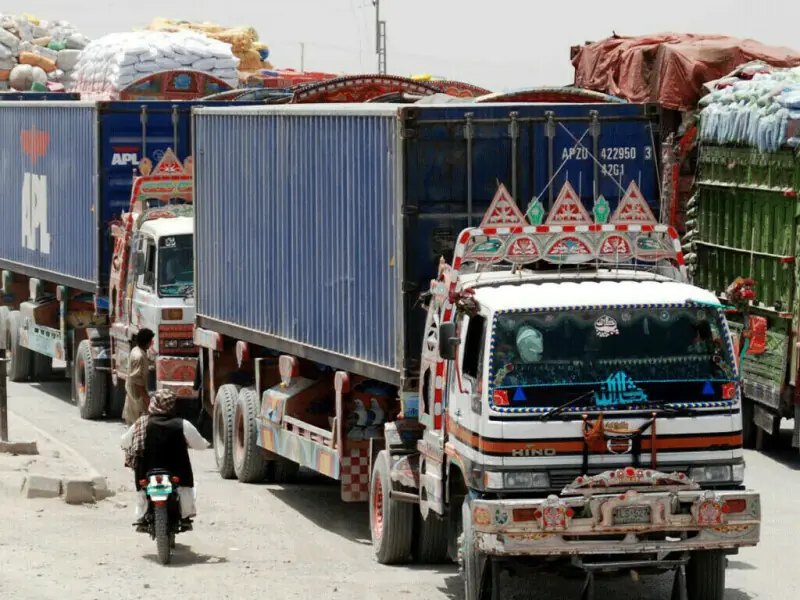
Pakistan’s cargo transporters kickstarted a wheel-jam strike on Thursday for an indefinite period against arrest of their drivers and confiscation of aging cargo trucks and trailers by the traffic police, particularly in the province of Punjab.
The transporters claimed they had halted the movement of import and export goods from seaports to factories and vice-versa nationwide that, if continues for long, may result into stopping wheels of the domestic economy.
Talking to Business Recorder, Hammas Khan Lodhi, chairman, Port Qasim TGA (Transporters Goods Association), said the police were arresting their unlicensed, but trained drivers and confiscating trucks and trailers older than 20-30 years, particularly in Punjab.
“This is not acceptable. We will not resume cargo transportation operations until the government withdraws such laws,” he said.
Karachi Port launches Pakistan’s first standardised bunkering operations
Lodhi claimed that the police had opted to demand bribes to allow the skilled drivers to move cargo via road-networks nationwide instead of binding them to acquire driving-licences.
“We offer to facilitate the authorities concerned to take driving tests of the truck and trailer drivers and issue licence to successful ones instead continue to arrest them and/or demand heavy bribes.”
He questioned whether the government had grounded aging aircrafts in the Pakistan International Airlines (PIA) and decades old engines in Pakistan Railways (PR). “If not then why were our trucks confiscated?”
Lodhi said the association that he heads and operates at the Port Qasim to transport import and export cargo nationwide had a fleet of over 4,000 vehicles.
In a press statement issued earlier, TGA said three cargo transport associations had joined hands to get their demands accepted at government level, including TGA, Truckload Carriers Association (TCA) and Karachi Warehouse (KWH).
“TCA is involved in transporting goods from Karachi to the upcountry (Punjab and other parts) and vice-versa and the other two associations are part of intercity transportation,” he said.
Speaking on the condition of anonymity, an official at the Karachi Port Trust (KPT) said they had heard about the strike, “but there is no slowdown in cargo movement to and from Karachi’s port [till the afternoon on Thursday].”
A significant increase has been recorded in road accidents nationwide involving trucks, trailers and water-tankers, which claimed a number of casualties.
Asif Mahmood, a former chairman of Pakistan Transport Federation (PTF) – an umbrella of different cargo transporters associations in the country – claimed it would prove to be an unprecedented and a successful historical wheel jam strike, as the demand for the strike had come from the drivers instead from owners.
“The strike would continue till the government withdraws the controversial ordinance that has resulted in jailing a large number of truck drivers, particularly in Punjab, and generating bribes worth hundreds of thousands of rupees to police on a daily basis.”
1.8pc infrastructure cess imposed by Sindh govt: BMP seeks early abolition
He claimed there were some 250,000 to 300,000 cargo trucks and trailers in the country. “They all would participate in the indefinite strike.”
Najib Balagamwala, chairman of the Sea Trade Group and a blue economy expert in Pakistan, urged the government to play its due role in calling off the strike, as it would cause heavy losses to the domestic economy.
“Pakistan bears a loss of Rs150 million a day on account of ship and cargo demurrages, totalling at $760 million over the past 10 years,” he mentioned.
