


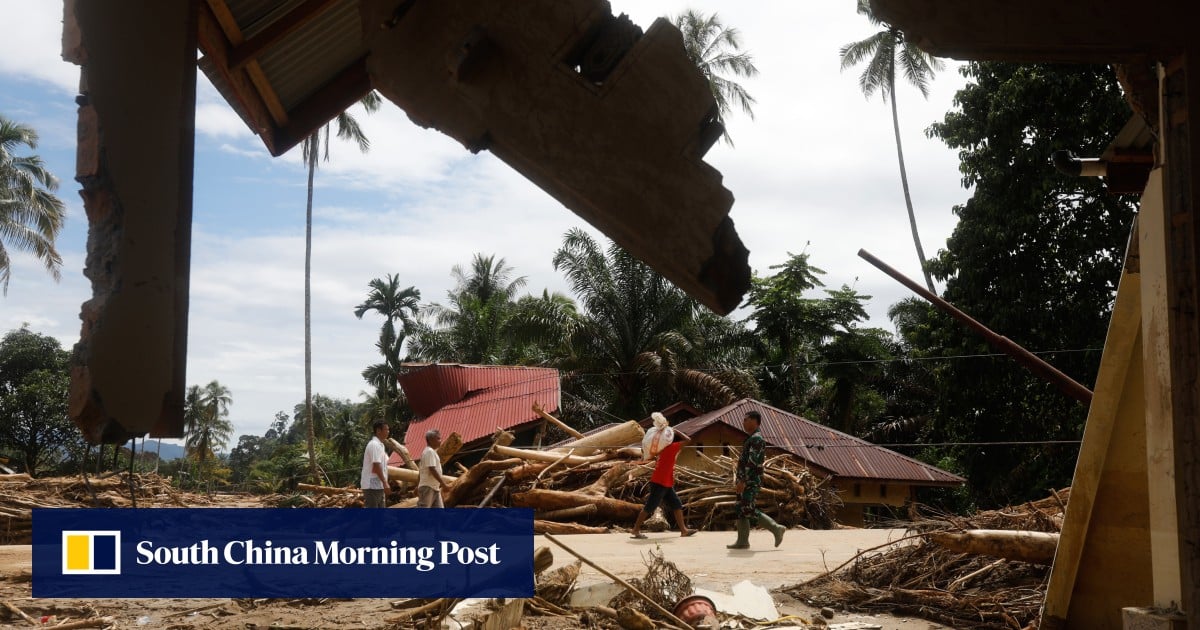
More than 1,400 people have been killed across South and Southeast Asia in a week of catastrophic floods, exposing how rising global temperatures are amplifying extreme weather, even as international negotiations to phase out fossil fuels stall.
While monsoon rains are a seasonal fixture, climate scientists warn that the recent onslaught coincides with a potent “Indian Ocean Dipole”: a climate pattern that can vastly amplify rainfall across Asia by warming and cooling sea surfaces.
“Climate change is also likely playing a role,” said Mariam Zachariah, a research associate at Imperial College London’s Centre for Environmental Policy, explaining that “a warmer atmosphere can hold more moisture”.

02:33
Millions of people affected by deadly floods in Southeast Asia
Millions of people affected by deadly floods in Southeast Asia
Greenhouse gas emissions from fossil fuels are supercharging this capacity, scientists say, while elevated sea surface temperatures feed the storms with additional energy.
