


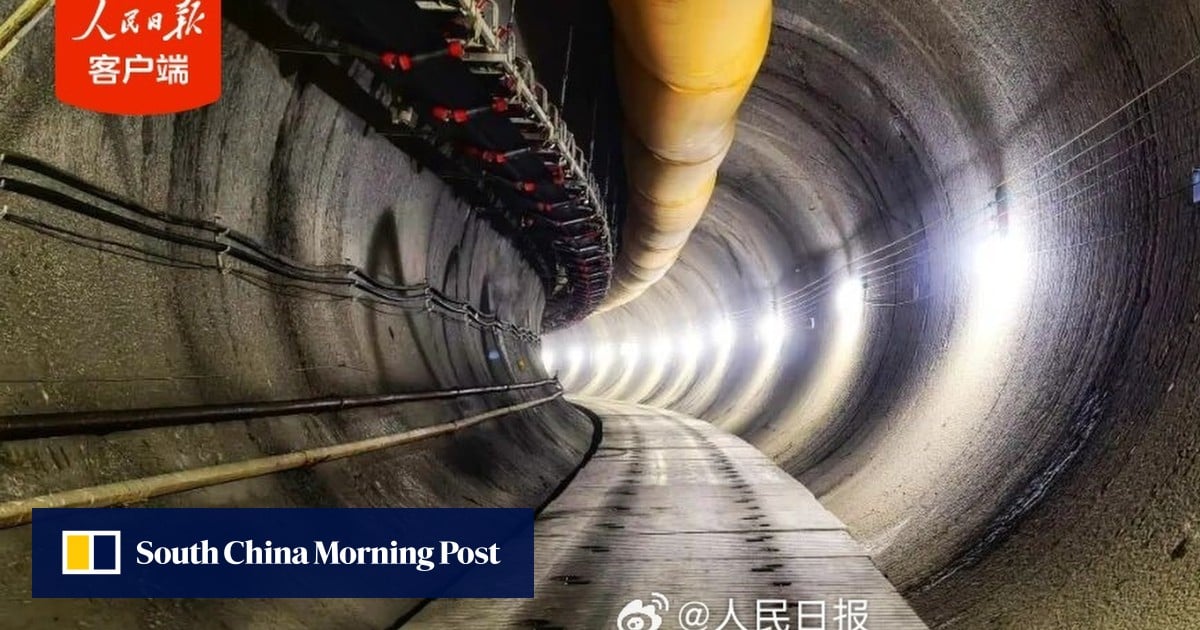
China National Nuclear Corporation (CNNC) on Friday announced a major milestone in the construction of one of the world’s biggest underground laboratories for nuclear waste as it completed a first-of-its-kind spiral ramp.
Located deep in the Gobi Desert northwest of Jiuquan in Gansu province, the Beishan Underground Research Laboratory aims to address a fundamental challenge of nuclear energy development: the safe disposal of radioactive waste.
“Nuclear energy is a clean and efficient power source, with about 99 per cent of the radioactive waste it produces is classified as low- or intermediate-level, decaying to harmless levels over time,” Wang Ju, chief scientist at CNNC and the laboratory’s chief designer, said in a company report.
“However, the remaining 1 per cent constitutes high-level waste, which requires safe disposal and isolation for hundreds of thousands of years.”
The best solution is to bury that high-level waste 500 to 1,000 metres (1,640 to 3,280 feet) underground, ensuring isolation. This is often called “the final link in the nuclear industry chain”.
“Every country has its own unique strategies for managing nuclear waste,” Wang said. “Through the Beishan platform, we will exchange knowledge – bringing in global best practices and sharing our own findings with the world.”
