


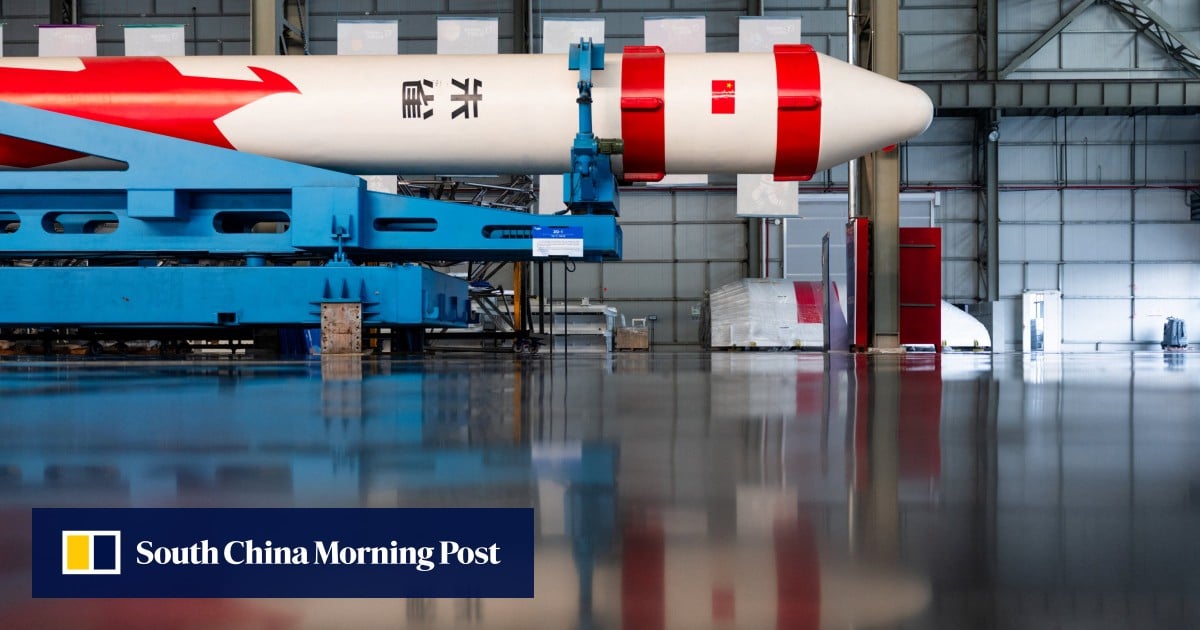
The Beijing-headquartered company, regarded as a challenger to Elon Musk-led SpaceX, said its listing aimed to “actively respond to national strategic plans and urgent market demands”, according to its prospectus.
On December 26, the SSE exempted commercial rocket companies from profitability requirements for listings on the Star Market, offering a fast lane for such firms. The exchange requires applicants to have achieved phased results towards successfully launching reusable medium to large launch vehicles into orbit.
On December 3, LandSpace’s Zhuque-3 rocket completed its flight mission as planned, but the company failed to recover its descending first-stage boosters – the first attempt in mainland China. US SpaceX first caught a descending booster in October 2024.
The listing plan comes as China’s top policymakers aim to boost the country’s aerospace industry, a priority in the country’s latest five-year plan. China accounted for 87 of 325 orbital launches globally in the first 11 months of 2025, according to a report compiled by ZGC Commercial Aerospace Industry Innovation Alliance, a government-approved Beijing-based organisation established to enhance industrial competitiveness.
Including LandSpace, at least 10 Chinese aerospace companies have started IPO preparations.
