


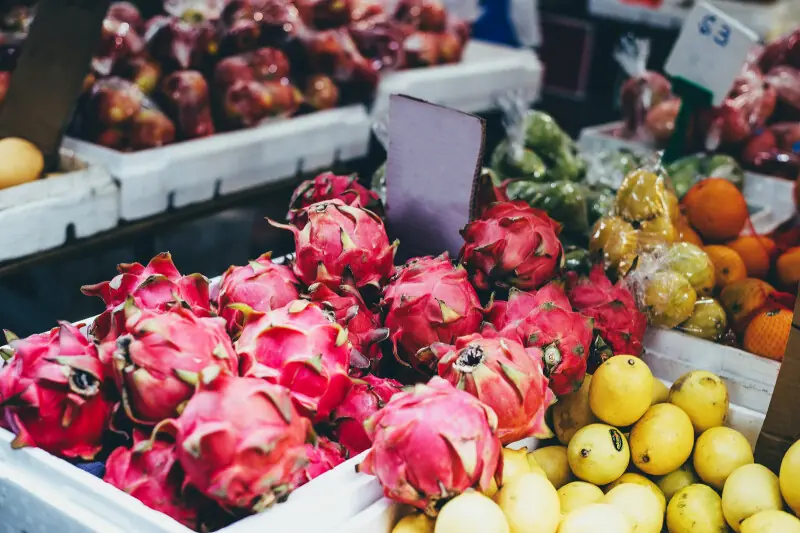
KARACHI: Progressive farmers say dragon fruit – known as an exotic ‘superfruit’ for its health benefits and popular in many countries – should not only be marketed better locally but exported.
There are around 10 farms cultivating dragon fruit at a commercial level, although they are still in developing stages.
Farmers say the fruit can be promoted in Pakistan through good marketing and making people aware of not only its health benefits but also its by products, incuding fruit powder which can be used to make drinks, jam and ice cream.
Progressive farmer and owner of Delicious Dragon Fruits Farms Karachi, Captain Rizwan Rehman, is growing and cultivating dragon fruits at his farm in Gadap Town Karachi.
He told Business Recorder dragon fruit cultivation can be promoted with government support, such as giving small farmers subsidies on infrastructure materials like concrete pillars, steel wire, ropes, solar plates and drip irrigation system materials.
He added that “dragon fruit is not popular in Pakistan due to mostly only being available in big supermarkets – and they often sell imported ones instead of local – and its price is also high due to limited supply. It’s become a rich man’s fruit, out of reach for common people. Prices will come down once supply of fruit will be increased and it is available in open markets.“
Export potential
There is a huge demand for dragon fruits in the world. Its main exporters are Vietnam and Thailand, but they mostly have the white flesh variety, which has a longer shelf life. However, Pakistan has the red flesh variety, which is considered sweeter and more flavorful. In addition is it said to be richer in antioxidants and vitamin C, Rehman said.
There are many varieties of dragon fruit available worldwide, but the export standard is 300 gm per fruit.
Rehman said in Pakistan “mostly-grown varieties are Chinese Red, I have the most commercial varieties including Siam Red, Royal Red, Moroccan Red, Red Ruby, Dark Star, Taiwan Jumbo Red, Vietnam Red, Chinese Red, Vietnam White, Aussie Gold, Israeli Yellow, Desert King, Siam Red C and many more.”
Pakistan can also take advantage of its location, being closer to the Gulf countries, he said.
Sohail Mohammad Khan, a progressive farmer from Sargodha believes if farmers start producing the fruit on a large scale it can earn billions of dollars in exports.
“It shouldn’t always be the government that has to support farmers to make things happen but when it comes to exports, the government must guide farmers about international markets such as the US where dragon fruit is very popular,” he said.
Meanwhile Rehman explained that dragon farming is relatively simple, requiring well-drained land. With initial growth of a few hundred plants, farmers can multiply their yield to thousands within a year or two.
There are two systems which help the dragon fruit grow: the ring poll and the high-density Trellis systems.
While the ring poll system can cost up to around Rs2 million per acre, he said, the high-density Trellis system may incur at least Rs3 million. The fruit can be sold at Rs1,000 per kilogramme, and one acre has the potential to yield five to ten tonnes.
