


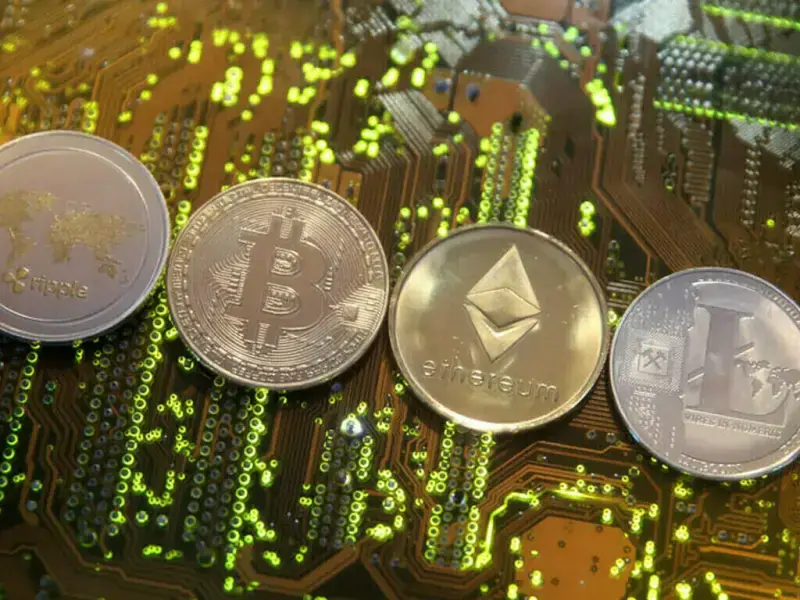
Financial experts are optimistic about the future role of crypto exchanges in Pakistan as catalysts for attracting investment, reversing the flight of capital and contributing to the economy through tax revenues.
The experts believe that the interest shown by major virtual currency trading platforms in Pakistan is a positive sign for restoring the confidence of foreign investors and attracting foreign direct investment, especially at a time when multinational companies are reducing or shutting down their operations in the country.
Recently, Pakistan Virtual Assets Regulatory Authority (PVARA) issued No-Objection Certificates (NOCs) to Binance and HTX, allowing both global crypto platforms to begin formal registration and engagement activities in Pakistan.
NOCs to Binance, HTX not a ‘blanket approval’: PVARA chief
These exchanges will register with regulators to obtain licences for setting up local subsidiaries and explore the tokenisation of up to $2 billion in sovereign bonds, T-bills, and commodity reserves to boost liquidity and attract investors.
“Binance and HTX are renowned digital exchange companies with valuations far larger than many banks, multinational corporations, and capital market firms”, said Ali Farid Khwaja, a financial expert and chairman of KTrade Securities.
“Both [Binance and HTX] are eager to start operations in Pakistan and are willing to comply with local rules and regulations.” This, according to Khwaja, is a positive development for the country, unlike global tech companies such as Google, Facebook, and TikTok, which have been reluctant to establish local operations in Pakistan.
“The establishment of these crypto exchanges in Pakistan will pave the way for reversing the flight of capital, enable monitoring of investor activities, and generate healthy tax revenues.” he said.
Khwaja added that a large number of Pakistanis had invested heavily in cryptocurrencies, resulting in significant capital outflows.
“Once these exchanges become operational, not only is the flight of capital likely to reverse, but fresh foreign direct investment is also expected to flow into Pakistan.”
Pakistan is ranked among the countries with the highest levels of crypto adoption worldwide and is home to an estimated 30 to 40 million users.
Mehwish Salman Ali, CEO of Datavault, said developments in Pakistan’s virtual assets ecosystem would improve the country’s image for future tech investment, including blockchain and artificial intelligence (AI).
She mentioned that the government already indicated its plan to convert underutilised energy into a robust digital infrastructure that could unlock billions of dollars in economic potential, while creating high-skilled jobs and attracting foreign investment.
“The formalisation of this ecosystem, combined with AI and cloud services, could increase national gross domestic product, expand export earnings, and strengthen technological sovereignty,” she said.
Recently, several countries, including the United Arab Emirates (UAE), Japan, and parts of the European Union, have expanded formal licensing rules for crypto exchanges amid broader global regulatory tightening.
Ibrahim Amin, a financial expert and Chairman of Dellsons Associates, said the issuance of NOCs to Binance and HTX was a positive step toward regulatory engagement in the virtual assets space, “as regulatory clarity, even at an initial stage, is better than uncertainty”.
However, he stressed that it must be clearly understood that the NOCs were not operating licences.
“The real challenge lies in how Pakistan designs its final regulatory framework, particularly in areas such as compliance, consumer protection, and monitoring of foreign exchange flows.”
Binance delegation meets PM Shehbaz, Field Marshal Asim Munir
He further said if virtual asset platforms were enabled, there must be a clear and enforceable mechanism to check, monitor, and control foreign exchange outflows, as Pakistan could not afford untracked capital movement under the guise of innovation.
Amin maintained that global platforms should operate through local incorporation, with strict anti-money laundering and counter-terrorist financing controls, and maintain close coordination with the State Bank of Pakistan (SBP), the Securities and Exchange Commission of Pakistan (SECP), and the Financial Monitoring Unit.
“At the same time, regulators must actively engage industry bodies, freelancers, and technology professionals while finalising the rules. If done correctly, Pakistan can position itself as a responsible digital economy that attracts global platforms while empowering local talent and boosting exports,” he said.
