


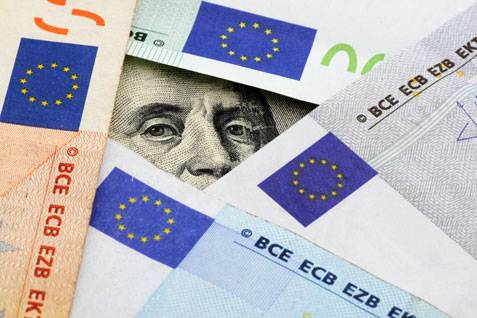
The world’s leading reserve currency appears set to record its weakest annual performance in more than a decade. The US Dollar Index (DXY), which measures the dollar against a basket of major currencies, fell by around 10 percent by the end of September, with even sharper losses against several individual currencies.
Over the same period, the dollar declined by 13.5 percent against the euro, 13.9 percent against the Swiss franc, 6.4 percent against the Japanese yen, and by 5.6 percent against a basket of major emerging market currencies.
What drove the dollar sell-off in 2025?
The decline reflected a combination of long-standing structural pressures and new vulnerabilities that became more pronounced in 2025.
Persistent concerns included rising US debt burdens, which were exacerbated by the passage of the so-called “Big Beautiful Act,” alongside a gradual erosion of the US growth advantage, particularly amid uncertainty surrounding tariffs.
At the same time, new risks emerged. Global investors began increasing hedges against their exposure to US assets, reversing years of declining hedging when confidence in so-called “US exceptionalism” was at its peak. Political uncertainty also weighed on sentiment, ranging from questions over Federal Reserve independence to heightened market sensitivity to tariff-related headlines.
Together, these forces produced one of the most notable episodes of dollar weakness in recent memory.
Three key questions heading into 2026
1. Is the dollar on a structural downtrend?
Despite the sharp recent decline, the evidence does not point to a full structural breakdown of the dollar. Most of the weakness reflects cyclical and policy-driven factors: slowing US growth, narrowing interest rate differentials, persistent fiscal deficits, and elevated inflation. Shifts in global capital flows, renewed hedging of dollar assets, and declining confidence in US economic policymaking added further pressure.
That said, key structural pillars remain intact. The dollar continues to dominate as the world’s primary reserve and settlement currency and retains its safe-haven appeal during periods of stress.
As a result, the dollar appears more likely to be entering an extended phase of cyclical weakness rather than a long-term structural decline.
2. Has the 2025 decline made the dollar attractive again?
While the sharp sell-off has improved valuations compared with earlier in the year, a longer historical perspective suggests the dollar remains relatively expensive. Among 34 major developed and emerging market currencies, only nine are considered more overvalued than the dollar. This implies the dollar has become relatively cheaper, but not genuinely cheap.
3. How should investors position their portfolios?
For US-based investors, this environment offers an opportunity to increase exposure to non-US markets, not only because many provide better risk-adjusted returns, but also because foreign currency exposure now offers greater upside potential relative to the dollar.
For investors outside the United States, dollar exposure is often already high due to the heavy weighting of US equities in global indices. In this case, balancing the costs and benefits of currency hedging becomes critical.
Hedging costs and returns vary widely. They are close to zero for UK-based investors, reach around 4 percent annually in Japan or Switzerland due to wide interest rate differentials, and can even generate positive returns for investors in high-yield markets such as South Africa.
What could replace the dollar?
Over the long term, even with continued dollar weakness, identifying a clear alternative remains difficult. Gold has gained popularity as a safe haven, but the absence of cash flows complicates valuation, while its high volatility limits reliability.
The Japanese yen appears attractive on valuation grounds, but replacing exposure to US equities with Japanese equities purely for currency reasons is impractical given the dominance of US markets. Fully hedging into a third currency also adds complexity and cost.
As a result, a gradual and flexible approach to currency hedging appears most appropriate, taking into account differences in inflation and interest rates across countries.
Trade war dynamics and a paused Fed dominate 2025
The dollar is set to end 2025 in negative territory, erasing the previous year’s gains and returning to levels last seen in 2022, despite the Federal Reserve remaining largely on hold for most of the year.
Donald Trump’s return to the White House and the launch of “Trade War 2.0” weighed on sentiment, as investors feared tariffs would be more damaging to the US economy. However, the subsequent conclusion of trade deals on relatively more favorable terms for the United States helped support a modest rebound in the dollar over the summer.
As recession fears eased, inflation expectations rose on concerns about the price impact of tariffs, prompting the Fed to adopt a cautious stance and signal a willingness to look through temporary price increases as long as secondary inflation effects did not emerge.
Labor market and inflation: the 2026 dilemma
As the labor market cools, the Federal Reserve faces the risk of stagflation, a scenario that could extend into early 2026. Despite Jerome Powell’s efforts to temper market expectations for rate cuts, investors are pricing in further easing, particularly given the possibility of appointing a more dovish Fed chair.
However, these cuts may occur in the context of a weaker economy rather than a low-inflation environment, leaving the dollar vulnerable to further pressure, especially in the first half of 2026.
The yen
A resumption of Fed easing at a time when other central banks have paused rate cuts leaves the dollar exposed to additional weakness, at least in the first quarter of 2026.
Against the yen, the 140 level remains a critical test, with a risk of Japanese authorities intervening if the currency weakens beyond 158–160 per dollar.
At the same time, the Bank of Japan may become more assertive in raising rates later on, particularly if wage growth continues and inflation remains above 2 percent.
The euro and the pound: diverging paths
For the euro, the 2026 trajectory will depend on the resilience of European growth relative to the pace of US rate cuts. The euro-dollar pair could move back toward 1.20 in a positive scenario, or fall to the 1.13–1.10 range if Europe disappoints.
The outlook for the pound appears more challenging. Slowing growth and easing inflation toward 2 percent point to further rate cuts by the Bank of England, implying additional pressure on sterling.
