

Close Menu
World Economist – Global Markets, Finance & Economic Insights
  • Home
  • Economist Impact
    • Economist Intelligence
    • Finance & Economics
  • Business
  • Asia
  • China
  • Europe
  • Economy
  • USA
    • Middle East & Africa
    • Highlights
  • This week
  • World Economy
    • World News
What's Hot

China’s oil giants Sinopec, CNAF to undergo consolidation, creating energy powerhouse

January 8, 2026

China’s oil giants Sinopec, CNAF to undergo consolidation, creating energy powerhouse

January 8, 2026

Core Chinese research team behind cutting-edge AI model R1 remains intact: DeepSeek

January 8, 2026
Facebook X (Twitter) Instagram
Thursday, January 8
Facebook X (Twitter) Instagram
World Economist – Global Markets, Finance & Economic Insights
  • Home
  • Economist Impact
    • Economist Intelligence
    • Finance & Economics
  • Business
  • Asia
  • China
  • Europe
  • Economy
  • USA
    • Middle East & Africa
    • Highlights
  • This week
  • World Economy
    • World News
World Economist – Global Markets, Finance & Economic Insights
Home » FPCCI criticizes cut in solar net metering rate – Business & Finance
Economist Intelligence

FPCCI criticizes cut in solar net metering rate – Business & Finance

adminBy adminJanuary 6, 2026No Comments4 Mins Read
Share Facebook Twitter Pinterest Copy Link LinkedIn Tumblr Email VKontakte Telegram
Share
Facebook Twitter Pinterest Email Copy Link
Post Views: 21


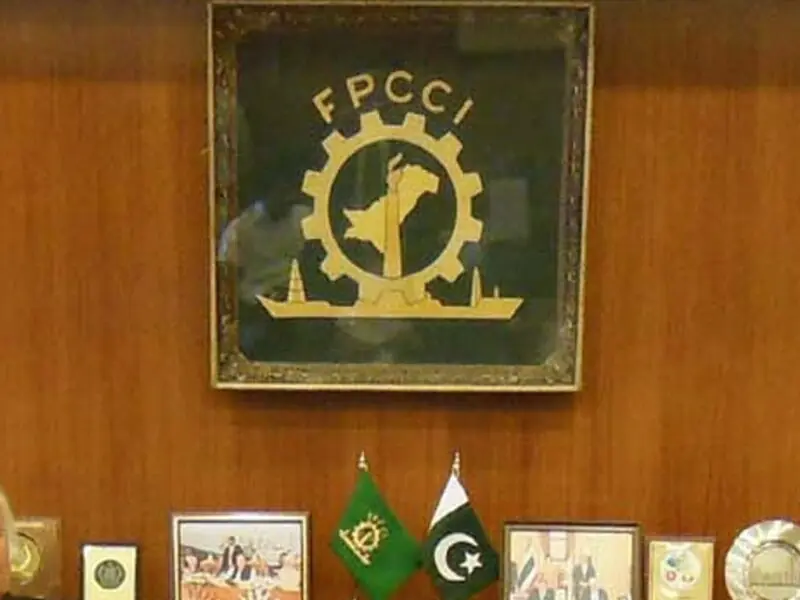
KARACHI: Aman Pracha, Vice President of the Federation of Pakistan Chambers of Commerce and Industry (FPCCI), has strongly criticized the government’s decision to reduce the solar net metering rate from 29 rupees to 11 rupees, stating that this move will severely impact new investments in the country.

He further added that the business community will be disappointed, and billions of rupees invested could be wasted, as many consumers may shift to hybrid systems. In this case, they will also lose out on the electricity they currently consume.

Aman Pracha emphasized that while NEPRA (National Electric Power Regulatory Authority) has presented this as the “Solar Consumer Regulations 2025” and claimed that it had consulted with stakeholders the reality is that the country’s largest business community representative body, FPCCI, was not consulted.

The decision to change the net metering policy for all solar consumers is detrimental to investment and could lead to significant losses.

He also pointed out that under the new system the period for solar agreements has been reduced from 7 years to 5 years. Additionally, the proposed payment to consumers has been reduced to Rs10 per unit instead of Rs22, which will be unacceptable for many. As a result, the benefits of the previous net metering system would disappear under the new policy.

Aman Pracha mentioned that under the old net metering system, solar consumers enjoyed a benefit of 25 rupees 98 paisa per unit.

Moreover, the requirement for a NEPRA license for loads below 25 kilowatts, which was previously exempted for domestic, industrial, and commercial users, is now mandatory. He further explained that with the previous system, if consumers returned as much electricity to the grid as they used, their electricity bills could essentially be zero. In that system, people used their own electricity and benefited from supplying excess power to the grid.

This system was financially advantageous and profitable for consumers because the buy-back rate was relatively high, with electricity distribution companies purchasing excess electricity at a rate of 22 to 27 rupees per unit.

As a result, consumers could recover the cost of a 10 to 15 kilowatt solar system within two to five years. However, under the new system, the billing procedure has completely changed. Now, people sell their excess electricity to the grid at a much lower rate and buy electricity back at a higher price, with the common consumer’s unit rate being Rs34.

According to the proposed new rates, all solar power generated will be sold directly to the grid at around 10 to 11.33 rupees per unit. Consequently, it may now take six to seven years to recover the cost of a 10-kilowatt solar system.

Aman Pracha questioned whether the government would be able to save the already weakened power grid by restricting net metering users, or if it would eventually target non-net metered solar users as well, in order to generate the necessary revenue for capacity payments to Independent Power Producers (IPPs).

The Vice President of FPCCI also mentioned that the government itself introduced the green energy transition policy, which led the business community to make significant investments in solar and other renewable energy projects.

However, the decision to reduce the solar net metering rate from Rs29 to Rs11 will cause severe harm to business investments, with billions of rupees potentially going to waste.

Aman Pracha stressed that FPCCI has always called for policy continuity, as any change in policy would deter future investments.

He urged the government to ensure that once a policy is announced, no changes should be made to it, so that the desired outcomes could be achieved.

Copyright Business Recorder, 2026


Source link

Share. Facebook Twitter Pinterest LinkedIn Tumblr Email Telegram Copy Link
admin
  • Website

Related Posts

Economist Intelligence

S&P Global ranks Pakistani banks among Asia’s top performers – Business & Finance

January 8, 2026
Economist Intelligence

Ferry terminal inaugurated at Karachi Port Trust – Business & Finance

January 8, 2026
Economist Intelligence

After Islamabad, PIA to resume flights to London from Lahore – Business & Finance

January 8, 2026
Economist Intelligence

Bata Pakistan appoints Ahsan Umar as new CEO – Business & Finance

January 8, 2026
Economist Intelligence

Visa confident in Pakistan’s payments ecosystem amid economic stabilisation – Technology

January 8, 2026
Economist Intelligence

Gold edges down on firm dollar as investors await key jobs data – Markets

January 8, 2026
Add A Comment
Leave A Reply Cancel Reply

Editors Picks

S&P Global ranks Pakistani banks among Asia’s top performers – Business & Finance

January 8, 2026

Ferry terminal inaugurated at Karachi Port Trust – Business & Finance

January 8, 2026

After Islamabad, PIA to resume flights to London from Lahore – Business & Finance

January 8, 2026

Bata Pakistan appoints Ahsan Umar as new CEO – Business & Finance

January 8, 2026
Latest Posts

PSX hits all-time high as proposed ‘neutral-to-positive’ budget well-received by investors – Business

June 11, 2025

Sindh govt to allocate funds for EV taxis, scooters in provincial budget: minister – Pakistan

June 11, 2025

US, China reach deal to ease export curbs, keep tariff truce alive – World

June 11, 2025

Subscribe to News

Subscribe to our newsletter and never miss our latest news

Subscribe my Newsletter for New Posts & tips Let's stay updated!

Recent Posts

  • China’s oil giants Sinopec, CNAF to undergo consolidation, creating energy powerhouse
  • China’s oil giants Sinopec, CNAF to undergo consolidation, creating energy powerhouse
  • Core Chinese research team behind cutting-edge AI model R1 remains intact: DeepSeek
  • S&P Global ranks Pakistani banks among Asia’s top performers – Business & Finance
  • Bitcoin declines amid focus on geopolitical tensions, US payrolls data

Recent Comments

No comments to show.

Welcome to World-Economist.com, your trusted source for in-depth analysis, expert insights, and the latest news on global finance and economics. Our mission is to provide readers with accurate, data-driven reports that shape the understanding of economic trends worldwide.

Latest Posts

China’s oil giants Sinopec, CNAF to undergo consolidation, creating energy powerhouse

January 8, 2026

China’s oil giants Sinopec, CNAF to undergo consolidation, creating energy powerhouse

January 8, 2026

Core Chinese research team behind cutting-edge AI model R1 remains intact: DeepSeek

January 8, 2026

Subscribe to Updates

Subscribe to our newsletter and never miss our latest news

Subscribe my Newsletter for New Posts & tips Let's stay updated!

Archives

  • January 2026
  • December 2025
  • November 2025
  • October 2025
  • September 2025
  • August 2025
  • July 2025
  • June 2025
  • May 2025
  • April 2025
  • March 2025
  • February 2025
  • January 2025
  • December 2024
  • June 2024
  • March 2024
  • October 2022
  • March 2022
  • July 2021
  • February 2021
  • January 2021
  • November 2019
  • April 2011
  • January 2011
  • December 2007
  • July 2007

Categories

  • AI & Tech
  • Asia
  • Banking
  • Business
  • Business
  • China
  • Climate
  • Computing
  • Economist Impact
  • Economist Intelligence
  • Economy
  • Editor's Choice
  • Europe
  • Europe
  • Featured
  • Featured Business
  • Featured Climate
  • Featured Health
  • Featured Science & Tech
  • Featured Travel
  • Finance & Economics
  • Health
  • Highlights
  • Markets
  • Middle East
  • Middle East & Africa
  • Middle East News
  • Most Viewed News
  • News Highlights
  • Other News
  • Politics
  • Russia
  • Science
  • Science & Tech
  • Social
  • Space Science
  • Sports
  • Sports Roundup
  • Tech
  • This week
  • Top Featured
  • Travel
  • Trending Posts
  • Ukraine Conflict
  • Uncategorized
  • US Politics
  • USA
  • World
  • World & Politics
  • World Economy
  • World News
© 2026 world-economist. Designed by world-economist.
  • Home
  • About Us
  • Advertise With Us
  • Contact Us
  • DMCA
  • Privacy Policy
  • Terms & Conditions

Type above and press Enter to search. Press Esc to cancel.