China’s carmakers are on track to capture about one-third of the global auto market by 2030 and generate most of their profits overseas, according to UBS, underscoring the resilience of the country’s electric vehicle (EV) advantage despite mounting trade barriers in the West.
The Swiss bank said its forecast had remained unchanged from two years ago, even as Chinese carmakers accelerated factory construction in Europe and some global rivals scaled back electrification plans.
“The main drag was due to Europe’s slowdown of EV adoption, and tariffs and protectionism against Chinese EVs,” said Paul Gong, an analyst at UBS specialising in Chinese EVs. “I think 2024 progress was slower than expected, but recent signs have shown some catch-up.”
UBS estimated that overseas markets now accounted for about 20 per cent of industry sales and as much as 50 per cent of earnings for some Chinese carmakers, highlighting their growing reliance on international expansion as domestic competition intensified.
Industry executives said the forecast did not suggest China would dominate the market alone. Instead, they argued that global competition was increasingly coalescing around a small number of large EV platforms – a shift that still left room for emerging players such as India.
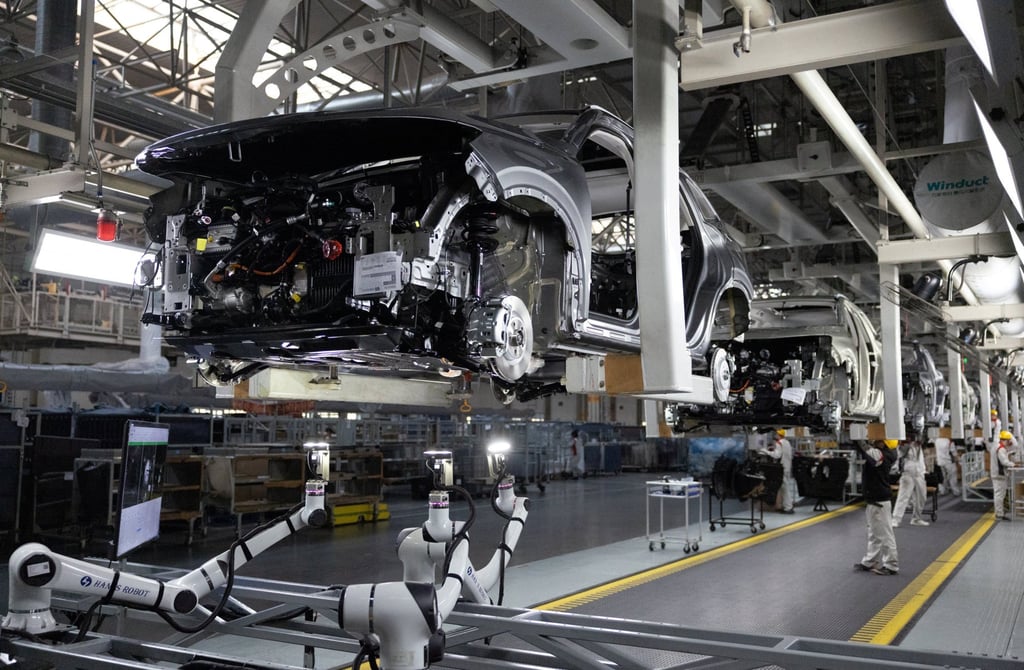
Global competition is increasingly coalescing around a small number of large electric vehicle platforms, industry executives say. Photo: Reuters
“The fact that [China] has been learning aggressively means that they’re going to have a dominant position and market share,” said Frank Diana, managing partner and principal futurist at Tata Consultancy Services. “But they’re not alone … you will see the rise of other players in the space.”