

Close Menu
World Economist – Global Markets, Finance & Economic Insights
  • Home
  • Economist Impact
    • Economist Intelligence
    • Finance & Economics
  • Business
  • Asia
  • China
  • Europe
  • Economy
  • USA
    • Middle East & Africa
    • Highlights
  • This week
  • World Economy
    • World News
What's Hot

US-based scientist Valery Fokin wins Vyzov Prize, beating fierce Chinese rivals

December 20, 2025

More Japanese favour having an empress as Princess Aiko’s public appeal rises

December 20, 2025

US singer marries sultan, Singaporean Chinese ‘least attractive’: 8 viral stories in 2025

December 20, 2025
Facebook X (Twitter) Instagram
Saturday, December 20
Facebook X (Twitter) Instagram
World Economist – Global Markets, Finance & Economic Insights
  • Home
  • Economist Impact
    • Economist Intelligence
    • Finance & Economics
  • Business
  • Asia
  • China
  • Europe
  • Economy
  • USA
    • Middle East & Africa
    • Highlights
  • This week
  • World Economy
    • World News
World Economist – Global Markets, Finance & Economic Insights
Home » German exhibition explores history of fragrance
Europe

German exhibition explores history of fragrance

adminBy adminOctober 29, 2025No Comments4 Mins Read
Share Facebook Twitter Pinterest Copy Link LinkedIn Tumblr Email VKontakte Telegram
Share
Facebook Twitter Pinterest Email Copy Link
Post Views: 35


DÜSSELDORF, Germany (AP) — Ever wondered what war smells like? Or ponder the odor of love, or the stench of medieval Paris, or the sacred fragrance of religion?

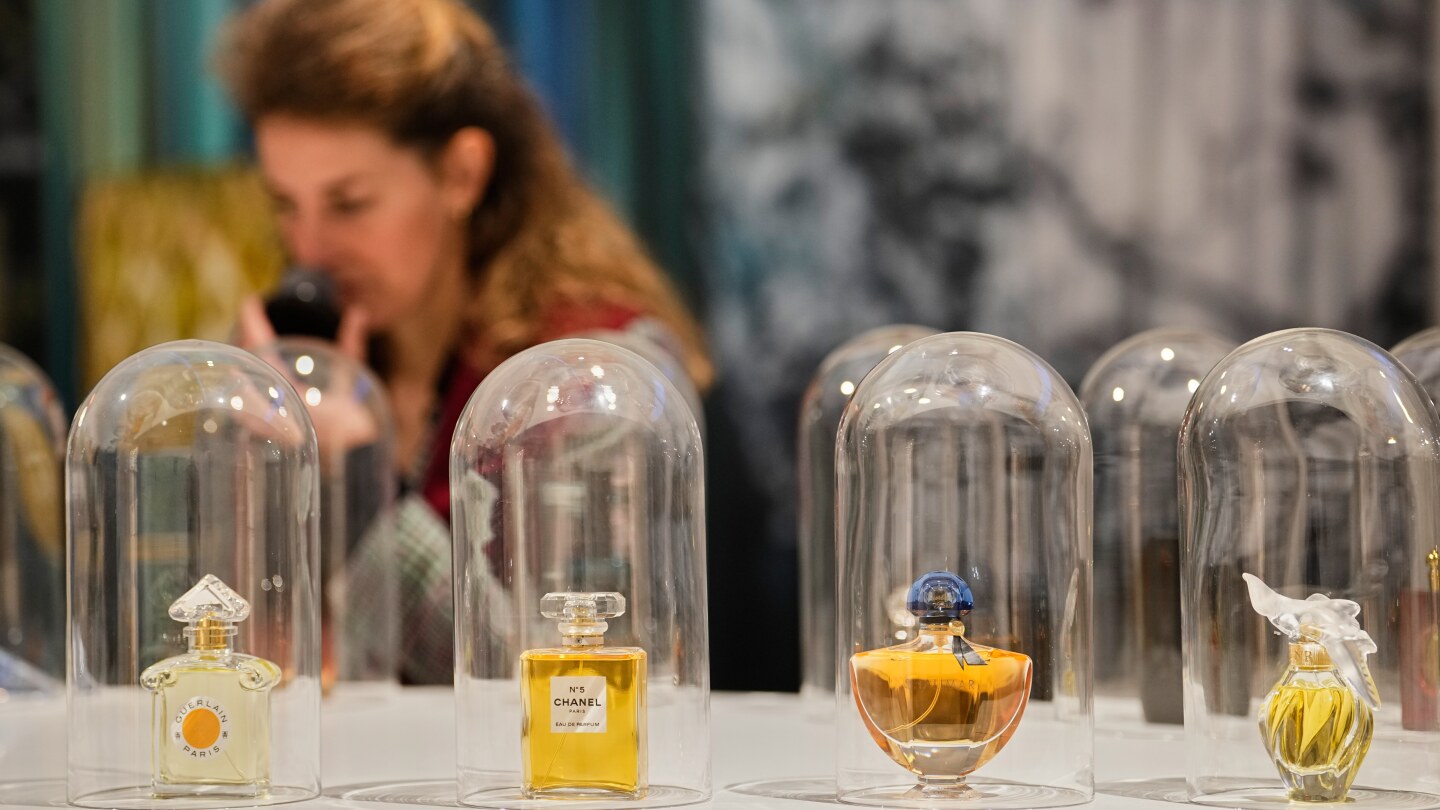
A new exhibition in Germany allows visitors to discover unknown worlds of smells by sniffing their way through 81 different fragrances across 37 different galleries.

The show “The Secret Power of Scents,” which opens to the public on Wednesday at the Kunstpalast museum, in the western city of Düsseldorf, combines fragrances with art, taking visitors on a journey of more than 1,000 years of cultural history.

“This exhibition is an experiment — and an invitation for our audience to discover the history of scents with their noses,” said Felix Krämer, the museum’s director general.

The exhibition follows a chronological order, from religious artifacts of the Middle Ages through to contemporary art of the 21st century. The various galleries are equipped with scent steles, atomizers and diffusers to create a connection between the art and the smell of a specific time period or cultural context.

Waves of myrrh waft through a darkened gallery of Christian wood carvings depicting various scenes from the Bible. Christianity, but also Judaism and Islam used myrrh as a symbol for prayer and purification, the show explains.

Scents evoke direct emotional reactions more strongly than any other sense. So it comes as no surprise that visitors almost retreat in fear when they press a button in a gallery about World War I. The scent released from the diffuser was created by mixing the pungent smell of gunpowder with the metallic odor of blood and sulfur.

“Anyone who has ever experienced war, conventional war, will hate it, because you can actually smell the brutality of war here,” said Robert Müller-Grünow, the show’s curator and a leading expert in the field of scent and scent technology.

“It’s the first exhibition worldwide to bring scents into a museum in this form, format and scale,” he said.

On the other side of the fragrance spectrum, there’s the Venus and Adonis painting from 1610 by Flemish artist Peter Paul Rubens showing two lovers.

“This room is all about passion and emotions,” said Müller-Grünow, adding that the smells diffused here are dominated by roses and the scent of the civet — a cat whose scent was considered erotic in the 17th century, but made today’s visitors turn up their noses in disgust.

Certain smells also connect to different eras of history — pressing the button to release the stench of medieval Paris made some visitors choke when they inhaled a mix of sewage, mold and unwashed bodies.

On the other hand, in a gallery dedicated to the Roaring 20s, there’s an oil painting by Gert Wollheim from 1924, called Farewell from Düsseldorf, which celebrates the liberation of women, who at the time began wearing bold lipstick, bobbed their hair and smoked cigarettes in public. The room is filled with the uplifting scent of tobacco, vanilla and leather — a mixture that’s a nod to famous early fragrances such as the historic Tabac Blond which was launched by the fragrance house Caron in 1919.

Moving on to modern art, the museum presents more contemporary smells between works of Andy Warhol, Yves Klein or Günther Uecker, that remind visitors of world-famous brands such as Coca-Cola or German airline carrier Eurowings — which diffuses a pleasant and relaxing scent on the plane when passengers board.

In addition to the application of scents in marketing, the museum also shows the role of very modern scents such as the fragrance molecule “Iso E Super,” which is not a type of gasoline, but rather a dazzling scent that supposedly makes its wearers more attractive.

“It’s a fragrance that smells like cedarwood, but it also has something very velvety and skin-like about it,” said the curator. “It smells very human, warm, and flatteringly approachable.”

For visitors strolling and sniffing their way through the show, which runs through March 8, the 81 different scents opened up a whole new world, visitor Kirsten Gnoth said.

“I’ve been to the collection here before, but now it’s completely new with scents that match the pictures and eras,” she said. “It’s exciting to combine art with scents.”


Source link

Share. Facebook Twitter Pinterest LinkedIn Tumblr Email Telegram Copy Link
admin
  • Website

Related Posts

Europe

Ukrainian artist creates a living record of invasion

December 20, 2025
Europe

What to know about the EU’s new $106 billion loan to Ukraine

December 19, 2025
Europe

Zelenskyy signals good will to Polish president with Warsaw visit

December 19, 2025
Europe

Louvre reopens fully after staff vote to suspend strike

December 19, 2025
Europe

Russia’s Putin holds his annual year-end news conference

December 19, 2025
Europe

Photos show a world aglow with holiday lights

December 19, 2025
Add A Comment
Leave A Reply Cancel Reply

Editors Picks

China regulatory approvals awaited: USD250m Panda Bond inaugural issuance targeted for next month – Business & Finance

December 20, 2025

Maersk tests Red Sea route as Gaza ceasefire offers hope – Business & Finance

December 20, 2025

PTCL showcases long-term digital infrastructure vision – Business & Finance

December 20, 2025

NLC installs state-of-the-art scanning systems – Business & Finance

December 20, 2025
Latest Posts

PSX hits all-time high as proposed ‘neutral-to-positive’ budget well-received by investors – Business

June 11, 2025

Sindh govt to allocate funds for EV taxis, scooters in provincial budget: minister – Pakistan

June 11, 2025

US, China reach deal to ease export curbs, keep tariff truce alive – World

June 11, 2025

Subscribe to News

Subscribe to our newsletter and never miss our latest news

Subscribe my Newsletter for New Posts & tips Let's stay updated!

Recent Posts

  • US-based scientist Valery Fokin wins Vyzov Prize, beating fierce Chinese rivals
  • More Japanese favour having an empress as Princess Aiko’s public appeal rises
  • US singer marries sultan, Singaporean Chinese ‘least attractive’: 8 viral stories in 2025
  • Will Taiwan’s decentralised military model raise more questions than it solves?
  • NLC installs state-of-the-art scanning systems – Business & Finance

Recent Comments

No comments to show.

Welcome to World-Economist.com, your trusted source for in-depth analysis, expert insights, and the latest news on global finance and economics. Our mission is to provide readers with accurate, data-driven reports that shape the understanding of economic trends worldwide.

Latest Posts

US-based scientist Valery Fokin wins Vyzov Prize, beating fierce Chinese rivals

December 20, 2025

More Japanese favour having an empress as Princess Aiko’s public appeal rises

December 20, 2025

US singer marries sultan, Singaporean Chinese ‘least attractive’: 8 viral stories in 2025

December 20, 2025

Subscribe to Updates

Subscribe to our newsletter and never miss our latest news

Subscribe my Newsletter for New Posts & tips Let's stay updated!

Archives

  • December 2025
  • November 2025
  • October 2025
  • September 2025
  • August 2025
  • July 2025
  • June 2025
  • May 2025
  • April 2025
  • March 2025
  • February 2025
  • January 2025
  • December 2024
  • June 2024
  • March 2024
  • October 2022
  • March 2022
  • July 2021
  • February 2021
  • January 2021
  • November 2019
  • April 2011
  • January 2011
  • December 2007
  • July 2007

Categories

  • AI & Tech
  • Asia
  • Banking
  • Business
  • Business
  • China
  • Climate
  • Computing
  • Economist Impact
  • Economist Intelligence
  • Economy
  • Editor's Choice
  • Europe
  • Europe
  • Featured
  • Featured Business
  • Featured Climate
  • Featured Health
  • Featured Science & Tech
  • Featured Travel
  • Finance & Economics
  • Health
  • Highlights
  • Markets
  • Middle East
  • Middle East & Africa
  • Middle East News
  • Most Viewed News
  • News Highlights
  • Other News
  • Politics
  • Russia
  • Science
  • Science & Tech
  • Social
  • Space Science
  • Sports
  • Sports Roundup
  • Tech
  • This week
  • Top Featured
  • Travel
  • Trending Posts
  • Ukraine Conflict
  • Uncategorized
  • US Politics
  • USA
  • World
  • World & Politics
  • World Economy
  • World News
© 2025 world-economist. Designed by world-economist.
  • Home
  • About Us
  • Advertise With Us
  • Contact Us
  • DMCA
  • Privacy Policy
  • Terms & Conditions

Type above and press Enter to search. Press Esc to cancel.