


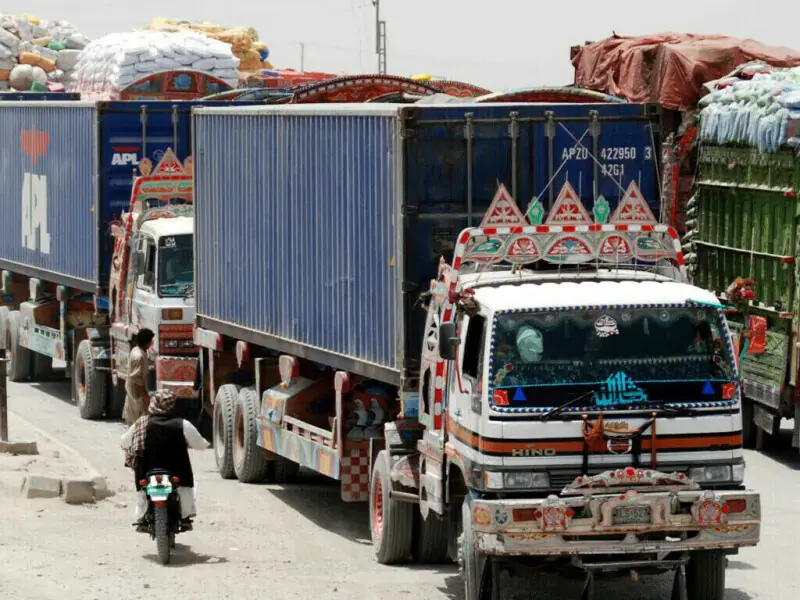
KARACHI: The ongoing goods transporters’ strike has turned into a major crisis for both traders and the underprivileged. Traders have incurred losses amounting to billions of rupees, while the poor are shivering in the cold due to the non-availability of warm clothing.
According to details, the strike — now in its ninth consecutive day — has led to the shutdown of certain factories and shortages of essential commodities in cities, while also creating severe difficulties for citizens battling harsh winter conditions.
Five containers carrying warm clothing for Saylani Welfare International Trust from Malaysia are currently stranded at the port, resulting in a halt in the distribution of these clothes among the needy. The Founder and Chairman of Saylani Welfare, Maulana Muhammad Bashir Farooq Qadri, have expressed deep concern over the prolonged strike by goods transporters.
In a statement, he said that the government should have taken immediate steps to resolve the issue and should have pursued negotiations to find a solution. He added that the suspension of port traffic has caused a massive backlog of containers at ports. If these are not cleared promptly, containers loaded on ships will not be unloaded, which will adversely affect business activities. Shipping lines will either be forced to pay heavy demurrage charges or take their cargo back.
He further stated that every year warm clothing for the poor is imported from abroad. This year, however, the strike — occurring during the peak winter season — has completely halted port operations, leaving five Saylani containers full of warm clothes stuck at Karachi Port, thereby suspending their distribution.
According to trader associations, the strike has already caused losses worth billions of rupees. Meanwhile, welcoming the government’s decision to reduce diesel prices by Rs14 per liter, Maulana Muhammad Bashir Farooq Qadri emphasized that owners of freight vehicles and intercity buses must also significantly reduce fares to pass on the benefit to the public.
Vegetables, meat, essential commodities, and passenger coaches all rely on diesel.
Copyright Business Recorder, 2025
