

Close Menu
World Economist – Global Markets, Finance & Economic Insights
  • Home
  • Economist Impact
    • Economist Intelligence
    • Finance & Economics
  • Business
  • Asia
  • China
  • Europe
  • Economy
  • USA
    • Middle East & Africa
    • Highlights
  • This week
  • World Economy
    • World News
What's Hot

How China’s US$150,000 robotic start-up beat Tesla boss Elon Musk in 2 years

December 14, 2025

China orders local governments to settle bills to companies by year end

December 14, 2025

Reporter’s notebook: home test kit takes headache out of Beijing healthcare

December 14, 2025
Facebook X (Twitter) Instagram
Sunday, December 14
Facebook X (Twitter) Instagram
World Economist – Global Markets, Finance & Economic Insights
  • Home
  • Economist Impact
    • Economist Intelligence
    • Finance & Economics
  • Business
  • Asia
  • China
  • Europe
  • Economy
  • USA
    • Middle East & Africa
    • Highlights
  • This week
  • World Economy
    • World News
World Economist – Global Markets, Finance & Economic Insights
Home » Govt says IMF structural benchmarks ‘part of ongoing reform agenda’ – Business & Finance
Economist Intelligence

Govt says IMF structural benchmarks ‘part of ongoing reform agenda’ – Business & Finance

adminBy adminDecember 14, 2025No Comments3 Mins Read
Share Facebook Twitter Pinterest Copy Link LinkedIn Tumblr Email VKontakte Telegram
Share
Facebook Twitter Pinterest Email Copy Link
Post Views: 13


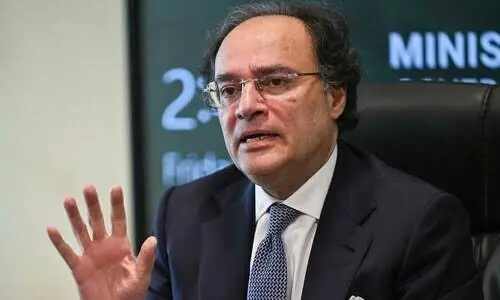
The Ministry of Finance clarified on Sunday that the recently highlighted structural benchmarks under Pakistan’s IMF Extended Fund Facility (EFF) are part of a phased, medium-term reform agenda agreed with the Fund, rather than abrupt or new conditions.

The clarification comes after recent commentary describing the 11 benchmarks as “new conditions.”

The Finance Division said the measures build on reforms already initiated by the government and are implemented in a sequenced, step-by-step manner to achieve the program’s policy objectives.

The Memorandum of Economic and Financial Policies (MEFP) finalized after the EFF’s Second Review supplements the earlier MEFP and reflects this phased approach, ensuring continuity and deepening of Pakistan’s reform agenda.

According to a statement from the ministry, the benchmarks cover multiple sectors, including fiscal management, governance, financial markets, state-owned enterprises, energy, trade, and corporate regulation.

Key reforms include enhancing transparency of civil servants’ asset declarations following amendments to the Civil Servants Act, strengthening the operational effectiveness of the National Accountability Bureau (NAB) and coordination with provincial anti-corruption bodies, and empowering provincial anti-corruption establishments with access to financial intelligence under the ongoing Anti-Money Laundering and Countering Financing of Terrorism (AML/CFT) framework.

The government is also focusing on improving remittance flows by removing bottlenecks in cross-border payments, which helped increase remittances by 26 percent in FY25, with further growth projected for FY26. Structural reforms in financial markets include a study of the local currency bond market to broaden the investor base.

The government is advancing a comprehensive reform roadmap for the Federal Board of Revenue (FBR), operationalizing the Tax Policy Office, strengthening compliance risk management, and preparing a medium-term (3-5 year) tax reform strategy to improve revenue predictability and administration.

Energy and state-owned enterprise reforms include privatization of selected power distribution companies (DISCOs), finalizing preconditions for private sector participation in HESCO and SEPCO, and signing Public Service Obligation (PSO) agreements with major entities.

In trade and commodity markets, the government is deregulating the sugar sector to reduce price distortions and liberalize market operations, while regulatory reforms aim to improve corporate governance, compliance for unlisted firms, and efficiency of special economic zones. Contingency measures to address potential revenue shortfalls, including a Federal Excise Duty on fertilizer and pesticides, remain part of the program framework.

The IMF’s Second Review report noted that eight of 13 prior benchmarks had been met, including approval of the FY26 budget in line with program targets, implementation of the new agricultural income tax, and amendments to enhance asset disclosures of public officials.

Some benchmarks, including governance action plans and contingency revenue measures, were delayed due to ongoing reform implementation and the impact of recent floods. Authorities have requested resetting these benchmarks for future deadlines, emphasizing that progress remains on track.

Authorities said the phased approach ensures reforms are sequenced, sustainable, and aligned with Pakistan’s medium-term economic priorities, underscoring that the EFF’s structural benchmarks support the government’s own reform agenda rather than imposing externally driven or unprecedented conditions.


Source link

Share. Facebook Twitter Pinterest LinkedIn Tumblr Email Telegram Copy Link
admin
  • Website

Related Posts

Economist Intelligence

Textile sector faces layoffs, shutdowns as export growth slows: PTC chairman – Business & Finance

December 14, 2025
Economist Intelligence

SBP expected to retain policy rate at 11pc: analyst – Business & Finance

December 13, 2025
Economist Intelligence

Meth, foreign liquor of worth $132mn seized in joint operation – Markets

December 13, 2025
Economist Intelligence

Rising land costs push Pakistan’s housing market towards vertical, compact living – Markets

December 13, 2025
Economist Intelligence

IMF “conditionalities” not new, just execution of passed legislation, says Aurangzeb – Business & Finance

December 13, 2025
Economist Intelligence

Ex-finance minister raises concerns over $2bn Binance tokenisation deal – Technology

December 13, 2025
Add A Comment
Leave A Reply Cancel Reply

Editors Picks

Textile sector faces layoffs, shutdowns as export growth slows: PTC chairman – Business & Finance

December 14, 2025

Govt says IMF structural benchmarks ‘part of ongoing reform agenda’ – Business & Finance

December 14, 2025

SBP expected to retain policy rate at 11pc: analyst – Business & Finance

December 13, 2025

Meth, foreign liquor of worth $132mn seized in joint operation – Markets

December 13, 2025
Latest Posts

PSX hits all-time high as proposed ‘neutral-to-positive’ budget well-received by investors – Business

June 11, 2025

Sindh govt to allocate funds for EV taxis, scooters in provincial budget: minister – Pakistan

June 11, 2025

US, China reach deal to ease export curbs, keep tariff truce alive – World

June 11, 2025

Subscribe to News

Subscribe to our newsletter and never miss our latest news

Subscribe my Newsletter for New Posts & tips Let's stay updated!

Recent Posts

  • How China’s US$150,000 robotic start-up beat Tesla boss Elon Musk in 2 years
  • China orders local governments to settle bills to companies by year end
  • Reporter’s notebook: home test kit takes headache out of Beijing healthcare
  • How will China respond to latest West Africa coup as economic footprint expands?
  • Textile sector faces layoffs, shutdowns as export growth slows: PTC chairman – Business & Finance

Recent Comments

No comments to show.

Welcome to World-Economist.com, your trusted source for in-depth analysis, expert insights, and the latest news on global finance and economics. Our mission is to provide readers with accurate, data-driven reports that shape the understanding of economic trends worldwide.

Latest Posts

How China’s US$150,000 robotic start-up beat Tesla boss Elon Musk in 2 years

December 14, 2025

China orders local governments to settle bills to companies by year end

December 14, 2025

Reporter’s notebook: home test kit takes headache out of Beijing healthcare

December 14, 2025

Subscribe to Updates

Subscribe to our newsletter and never miss our latest news

Subscribe my Newsletter for New Posts & tips Let's stay updated!

Archives

  • December 2025
  • November 2025
  • October 2025
  • September 2025
  • August 2025
  • July 2025
  • June 2025
  • May 2025
  • April 2025
  • March 2025
  • February 2025
  • January 2025
  • December 2024
  • June 2024
  • October 2022
  • March 2022
  • July 2021
  • February 2021
  • January 2021
  • November 2019
  • April 2011
  • January 2011
  • December 2007
  • July 2007

Categories

  • AI & Tech
  • Asia
  • Banking
  • Business
  • Business
  • China
  • Climate
  • Computing
  • Economist Impact
  • Economist Intelligence
  • Economy
  • Editor's Choice
  • Europe
  • Europe
  • Featured
  • Featured Business
  • Featured Climate
  • Featured Health
  • Featured Science & Tech
  • Featured Travel
  • Finance & Economics
  • Health
  • Highlights
  • Markets
  • Middle East
  • Middle East & Africa
  • Middle East News
  • Most Viewed News
  • News Highlights
  • Other News
  • Politics
  • Russia
  • Science
  • Science & Tech
  • Social
  • Space Science
  • Sports
  • Sports Roundup
  • Tech
  • This week
  • Top Featured
  • Travel
  • Trending Posts
  • Ukraine Conflict
  • Uncategorized
  • US Politics
  • USA
  • World
  • World & Politics
  • World Economy
  • World News
© 2025 world-economist. Designed by world-economist.
  • Home
  • About Us
  • Advertise With Us
  • Contact Us
  • DMCA
  • Privacy Policy
  • Terms & Conditions

Type above and press Enter to search. Press Esc to cancel.