


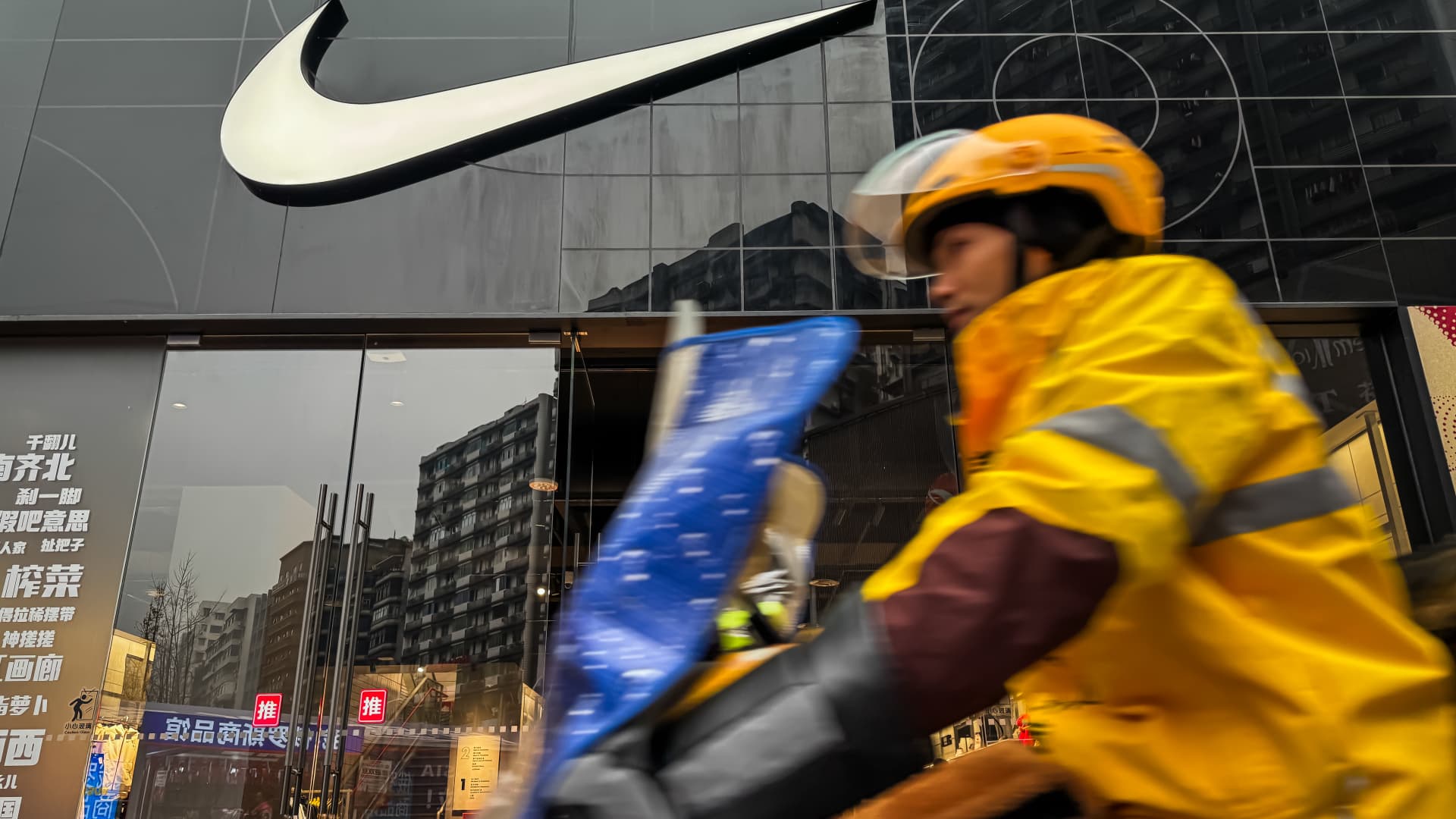
Nike stock sank Thursday evening, even after the sportswear maker delivered better-than-expected quarterly results. While management said it is in the middle innings of its turnaround, severe issues in China and a weak outlook discouraged investors. Total revenue in the company’s fiscal 2026 second quarter increased 1% year over year to $12.4 billion, topping Wall Street expectations of about $12.2 billion, according to analyst estimates compiled by LSEG. Earnings per share fell 33% from the year-ago period to 53 cents, beating the consensus of 38 cents, LSEG data showed. NKE YTD mountain Nike YTD Shares of Nike dropped nearly 11% in after-hours trading to below $60 each, marking their lowest level since June. We, however, are keeping faith. Bottom line Turnarounds are challenging, and Nike’s numbers Thursday evening showed how uneven progress can be when juggling multiple brands across different geographies. When Elliott Hill came out of retirement and took over as CEO 14 months ago, he made fixing the company’s largest business, North America, his top priority. The headway here has been encouraging, and all signs suggest his pivot back to embracing the wholesale channel and focusing on innovation instead of relying too heavily on classics is working. Sales in North America were much better than expected, and profitability is recovering, even as tariff pressure weighed on margins. If you only looked at North America, it would be clear that the company’s “Win Now” initiative and “Sport Offense” plan have been a home run. The “Win Now” initiative prioritizes Nike’s best-performing categories across its main geographies, New York, Los Angeles, London, Beijing, and Shanghai. The “Sport Offense” brings the company’s organization closer to the athletes it serves. China was a major issue. Hill and his team have been upfront about the challenges there and have repeatedly said the turn in China would take time. However, we had expected to see some progress, and instead we got a significant setback. Nike went from sales down 9% year over year in its fiscal first quarter to down about 17% in the second quarter. Nike is stuck in a negative cycle of promotional activity and markdowns, and management is calling for a full reset in how they approach China to fix the business. The company can use its learnings from North America and apply that playbook to other geographies as the company slowly works its way back to its goal of double-digit EBIT margins, but it’s going to take time. EBIT, also known as operating profit, stands for earnings before interest and taxes. Turnarounds never happen in a straight line and can test our patience. We like where Nike’s underlying trends are headed, with North America on a path to sustainable profitable growth and inventories in a much better spot than a year ago. We’re maintaining our buy-equivalent 1 rating but lowering our price target to $75 from $80 to account for the weakness in China. Quarterly commentary By region, all of the quarter’s upside came from strength in North America, where sales increased about 9% year over year to $5.6 billion, beating analyst estimates of about $5.1 billion. The rest of Nike’s geographies missed the mark. The largest offender was Greater China, where sales dropped the aforementioned 17% to $1.4 billion, missing estimates of $1.57 billion. The weakness was across all channels, with direct revenue down 18%, digital down 36%, and Nike stores down 5%. Wholesale revenue fell 15%, with EBIT plummeting 49% on a reported basis. Europe, Middle East & Africa (EMEA) sales increased about 2%, while Asia Pacific and Latin America fell about 4%. By channel, wholesale revenue increased 8% on a reported and currency-neutral basis to $7.5 billion, with strength primarily in North America. That’s a solid acceleration from the 5% growth in the first quarter and is a sign that the strategy pivot is working. Nike Direct revenue dropped 8% on a reported basis and 9% on a currency-neutral basis to $4.6 billion, reflecting a 14% decline from digital and 3% decrease in Nike-owned stores. Management previously guided gross margins to fall 300 to 375 basis points year over year, and the company in fiscal Q2 delivered at the better side of that range at 40.6%. Tariff-related costs took out a big chunk of those profits, with Nike’s cost of sales increasing 6% year over year. Nike is facing an annualized cost headwind of $1.5 billion due to tariffs, resulting in a gross headwind of 320 basis points to the fiscal year. The company thinks it can reduce this impact to 120 basis points through supply chain and cost increase actions, but it’s taking time. The tariff picture could change dramatically if the U.S. Supreme Court were to rule the levies illegal. A decision on the matter is expected early next year. Management did not address this on the post-earnings conference call. As for inventories, Nike reported a 3% decline to $7.7 billion, reflecting a decline in units but an offset from increased product costs due to tariffs. Management believes its inventory positions in North America and the EMEA region are “healthy and clean,” which we think should result in gross margin tailwinds in the year ahead. Guidance The fiscal 2026 third quarter outlook was disappointing, with management guidance on revenue and gross margin below expectations. Revenue is expected to decline by low single digits, with “modest growth” in North America and declines in Greater China and with the company’s Converse brand. This outlook is worse than the FactSet consensus estimate of about 1.3% growth. Gross margins are forecast to decline approximately 175 basis points to 225 basis points year over year. That’s a big miss versus the FactSet consensus estimate of a 60 basis point improvement. Excluding the impact of tariffs, the company said gross margins would be positive in fiscal Q3. Selling, general, and administrative (SG & A) expenses are seen increasing in the low single digits due to higher demand creation and investments. That’s roughly in line with the consensus. Why we own it Nike is undergoing a turnaround under CEO Elliott Hill. With Hill in charge, Nike is focusing on its most important categories across its three main geographies and five major cities. After too much attention on its direct-to-consumer business, Nike has pivoted back to key retail partners to drive sales. Competitors: Adidas , Puma , Lululemon , On Holding , Deckers Outdoor Last buy: Nov. 18, 2025 Initiation date: Sept. 26, 2025 (Jim Cramer’s Charitable Trust is long NKE. See here for a full list of the stocks.) As a subscriber to the CNBC Investing Club with Jim Cramer, you will receive a trade alert before Jim makes a trade. Jim waits 45 minutes after sending a trade alert before buying or selling a stock in his charitable trust’s portfolio. If Jim has talked about a stock on CNBC TV, he waits 72 hours after issuing the trade alert before executing the trade. THE ABOVE INVESTING CLUB INFORMATION IS SUBJECT TO OUR TERMS AND CONDITIONS AND PRIVACY POLICY , TOGETHER WITH OUR DISCLAIMER . NO FIDUCIARY OBLIGATION OR DUTY EXISTS, OR IS CREATED, BY VIRTUE OF YOUR RECEIPT OF ANY INFORMATION PROVIDED IN CONNECTION WITH THE INVESTING CLUB. NO SPECIFIC OUTCOME OR PROFIT IS GUARANTEED.
