Close Menu
World Economist – Global Markets, Finance & Economic Insights
  • Home
  • Economist Impact
    • Economist Intelligence
    • Finance & Economics
  • Business
  • Asia
  • China
  • Europe
  • Economy
  • USA
    • Middle East & Africa
    • Highlights
  • This week
  • World Economy
    • World News
What's Hot

Dollar declines as investors brace for complex Fed decision

December 8, 2025

Chinese court orders Malaysia Airlines to pay families of 8 missing MH370 victims

December 8, 2025

Oil declines on Ukrainian talks, Fed rate cut prospects

December 8, 2025
Facebook X (Twitter) Instagram
Monday, December 8
Facebook X (Twitter) Instagram
World Economist – Global Markets, Finance & Economic Insights
  • Home
  • Economist Impact
    • Economist Intelligence
    • Finance & Economics
  • Business
  • Asia
  • China
  • Europe
  • Economy
  • USA
    • Middle East & Africa
    • Highlights
  • This week
  • World Economy
    • World News
World Economist – Global Markets, Finance & Economic Insights
Home » Pakistan’s trade imbalance expected to grow, analysts say – Markets
Economist Intelligence

Pakistan’s trade imbalance expected to grow, analysts say – Markets

adminBy adminDecember 8, 2025No Comments4 Mins Read
Share Facebook Twitter Pinterest Copy Link LinkedIn Tumblr Email VKontakte Telegram
Share
Facebook Twitter Pinterest Email Copy Link
Post Views: 4


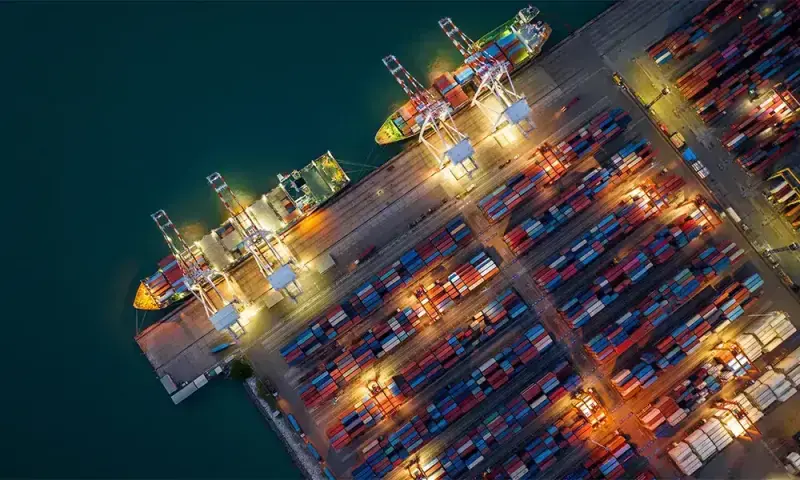
Given Pakistan’s consistent import tariff reduction, and a further cut on the radar under the National Tariff Policy 2025-30, the country’s growing trade deficit woes are expected to further exacerbate, experts say.

Policy Research & Advisory Council (PRAC) Head of Research Dr Usama Ehsan Khan told Business Recorder that Pakistan had repeatedly reduced tariffs – such as the steep reduction from very high levels to much lower averages in earlier liberalisation phases. Average tariffs were being reduced from 10.4% to below 6% by 2030 under the National Tariff Policy, which would open the market to imported goods, he added.

“Meanwhile, domestic industry, stuck in low-value production and premature de-industrialisation, is not expanding or upgrading fast enough to compete locally or improve exports.”

A trade deficit occurs when a country imports more goods and services than it exports, creating a negative trade balance.

According to the Pakistan Bureau of Statistics (PBS), the country’s trade deficit significantly increased by nearly 33% to $2.86 billion in November 2025, as compared to the same month of the previous year. Exports in November 2025 stood at $2.39 billion, down 15.4% against $2.83 billion recorded in November 2024. Imports were recorded at $5.25 billion, up over 5% against $4.98 billion in the same period last year.

During the first five months of the fiscal year 2025-26 (5MFY26), the country’s trade deficit increased by over 37% to $15.47 billion from $11.28 billion recorded in the same period the previous year.

If the trade deficit expands, Pakistan may face higher financing needs, renewed pressure on reserves/exchange rate, and difficulty in meeting IMF performance criteria—thereby jeopardising programme continuity or requiring additional tightening measures.

Pakistan’s imports jumped far faster than exports, jumping multiple times over 1995–2025 while exports rose modestly, according to PRAC official.

“Trade deficit can widen even in weak growth periods because import demand is not only about industrial expansion; it also reflects finished goods and consumption imports, and a structural dependence on foreign goods when domestic capacity is uncompetitive.

“Pakistan’s export expansion is also constrained by limited market access, so exports don’t grow proportionately even when policy changes aim at integration,” Khan said.

Meanwhile, AKD Securities Research Director Muhammad Awais Ashraf said imports had risen due to increased industrial activity, as reflected in higher machinery and metal-group inflows.

“Disruptions in the food supply chain and lower cotton output due to floods also added pressure on food and textile sector imports,” he said.

However, the most concerning trend is the surge in automobile imports, which have more than doubled to $1.4 billion during the first four months of the current fiscal year, according to Ashraf.

On the export front, he added, overall performance had weakened primarily due to a decline in rice and vegetable exports, both impacted by floods and an intense monsoon season.

“Interestingly, knitwear and bedwear exports grew by 16.5% and 7.2% in quantity terms however impact diluted by drop in per unit rates.”

‘A risk under IMF programme’

A larger trade deficit typically worsens the current account and pressures external sector stability, which are central to International Monetary Fund (IMF) programme targets and reviews.

“The new tariff policy poses a risk to external sector stability and can undermine the hard-earned current account improvement. If the trade deficit expands, Pakistan may face higher financing needs, renewed pressure on reserves/exchange rate, and difficulty in meeting IMF performance criteria—thereby jeopardising programme continuity or requiring additional tightening measures,” Dr Usama Ehsan Khan said.

Pakistan’s current account posts $112mn deficit in October 2025

However, Muhammad Awais Ashraf was of the view that the current account remained manageable despite an increase in the trade deficit, “supported by robust remittances and controlled interest payments”.

“Moreover, we do not anticipate any disruption to the IMF programme due to the rise in imports, as several policy tools, such as higher real interest rates and exchange-rate flexibility, remain available to address external pressures,” he maintained.


Source link

Share. Facebook Twitter Pinterest LinkedIn Tumblr Email Telegram Copy Link
admin
  • Website

Related Posts

Economist Intelligence

Liven Pharma puts Chinese blistering packing line into full operation – Business & Finance

December 8, 2025
Economist Intelligence

China’s November coal imports down 20% year-on-year – Markets

December 8, 2025
Economist Intelligence

Gold rises as dollar softens, traders brace for Fed rate cut – Markets

December 8, 2025
Economist Intelligence

Pakistan’s loss-making textile firm rebrands and pivots to AI & EVs – Business & Finance

December 8, 2025
Economist Intelligence

Intra-day update: rupee records gain against US dollar – Markets

December 8, 2025
Economist Intelligence

KSE-100 gains over 950 points ahead of crucial IMF Executive Board meeting – Markets

December 8, 2025
Add A Comment
Leave A Reply Cancel Reply

Editors Picks

Pakistan’s trade imbalance expected to grow, analysts say – Markets

December 8, 2025

Liven Pharma puts Chinese blistering packing line into full operation – Business & Finance

December 8, 2025

China’s November coal imports down 20% year-on-year – Markets

December 8, 2025

Gold rises as dollar softens, traders brace for Fed rate cut – Markets

December 8, 2025
Latest Posts

PSX hits all-time high as proposed ‘neutral-to-positive’ budget well-received by investors – Business

June 11, 2025

Sindh govt to allocate funds for EV taxis, scooters in provincial budget: minister – Pakistan

June 11, 2025

US, China reach deal to ease export curbs, keep tariff truce alive – World

June 11, 2025

Subscribe to News

Subscribe to our newsletter and never miss our latest news

Subscribe my Newsletter for New Posts & tips Let's stay updated!

Recent Posts

  • Dollar declines as investors brace for complex Fed decision
  • Chinese court orders Malaysia Airlines to pay families of 8 missing MH370 victims
  • Oil declines on Ukrainian talks, Fed rate cut prospects
  • Chinese scientists report way to extract hypersonic weapon fuel boron from seawater
  • The Club’s top 10 things to watch in the stock market Monday

Recent Comments

No comments to show.

Welcome to World-Economist.com, your trusted source for in-depth analysis, expert insights, and the latest news on global finance and economics. Our mission is to provide readers with accurate, data-driven reports that shape the understanding of economic trends worldwide.

Latest Posts

Dollar declines as investors brace for complex Fed decision

December 8, 2025

Chinese court orders Malaysia Airlines to pay families of 8 missing MH370 victims

December 8, 2025

Oil declines on Ukrainian talks, Fed rate cut prospects

December 8, 2025

Subscribe to Updates

Subscribe to our newsletter and never miss our latest news

Subscribe my Newsletter for New Posts & tips Let's stay updated!

Archives

  • December 2025
  • November 2025
  • October 2025
  • September 2025
  • August 2025
  • July 2025
  • June 2025
  • May 2025
  • April 2025
  • March 2025
  • February 2025
  • January 2025
  • December 2024
  • June 2024
  • October 2022
  • March 2022
  • July 2021
  • February 2021
  • January 2021
  • November 2019
  • April 2011
  • January 2011
  • December 2007
  • July 2007

Categories

  • AI & Tech
  • Asia
  • Banking
  • Business
  • Business
  • China
  • Climate
  • Computing
  • Economist Impact
  • Economist Intelligence
  • Economy
  • Editor's Choice
  • Europe
  • Europe
  • Featured
  • Featured Business
  • Featured Climate
  • Featured Health
  • Featured Science & Tech
  • Featured Travel
  • Finance & Economics
  • Health
  • Highlights
  • Markets
  • Middle East
  • Middle East & Africa
  • Middle East News
  • Most Viewed News
  • News Highlights
  • Other News
  • Politics
  • Russia
  • Science
  • Science & Tech
  • Social
  • Space Science
  • Sports
  • Sports Roundup
  • Tech
  • This week
  • Top Featured
  • Travel
  • Trending Posts
  • Ukraine Conflict
  • Uncategorized
  • US Politics
  • USA
  • World
  • World & Politics
  • World Economy
  • World News
© 2025 world-economist. Designed by world-economist.
  • Home
  • About Us
  • Advertise With Us
  • Contact Us
  • DMCA
  • Privacy Policy
  • Terms & Conditions

Type above and press Enter to search. Press Esc to cancel.