


The Philippines’ long-standing alliance with the United States has come under fresh scrutiny after Washington’s move against Venezuelan President Nicolas Maduro, with critics in Manila warning the action had complicated the country’s claim to champion a rules-based international order.
Opposition lawmakers and analysts said the US operation, which resulted in Maduro being captured and brought to the United States to face charges, had left the Philippines “compromised” and exposed to charges of double standards, as it invokes international law in disputes with China while Washington is accused of disregarding those same principles elsewhere.
The tension is especially acute as Manila serves as this year’s chair of the Association of Southeast Asian Nations (Asean), a role that amplifies scrutiny of a country widely viewed as Washington’s closest security ally in the region.
The Philippine government responded cautiously. In a brief statement issued on Monday, the Department of Foreign Affairs expressed “concern over evolving events in Venezuela”.
While acknowledging America’s “security considerations”, the department said the Philippines “stresses the relevant principles of international law, including the independence and sovereign equality of states, prohibition against the threat or use of force, and non-interference in the domestic affairs of sovereign states”.
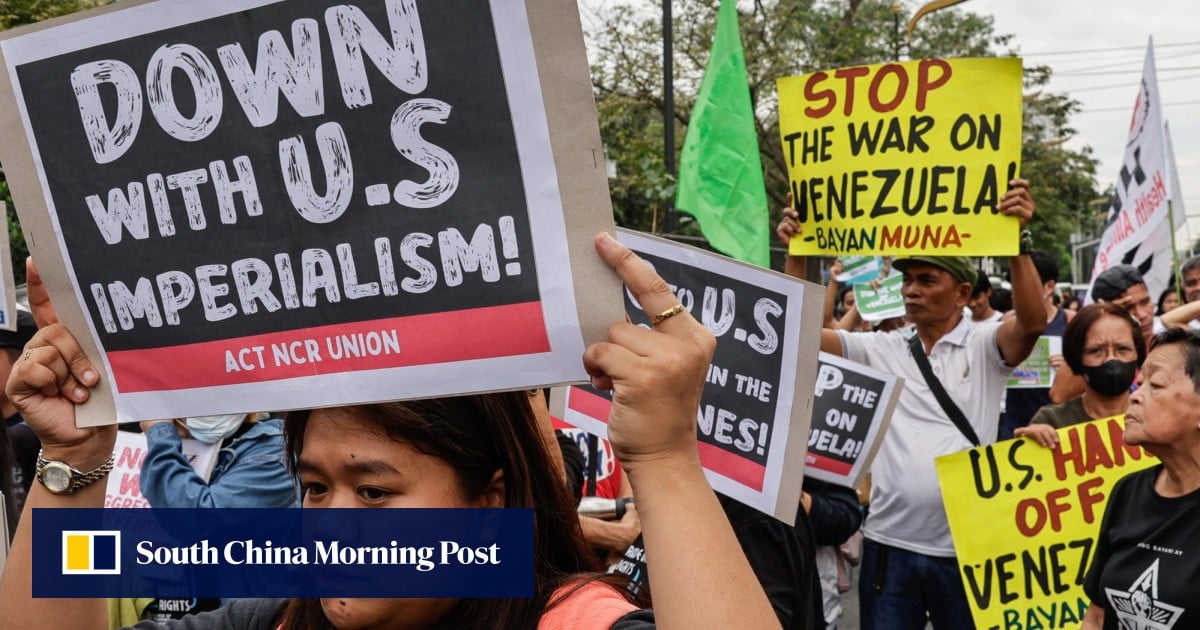
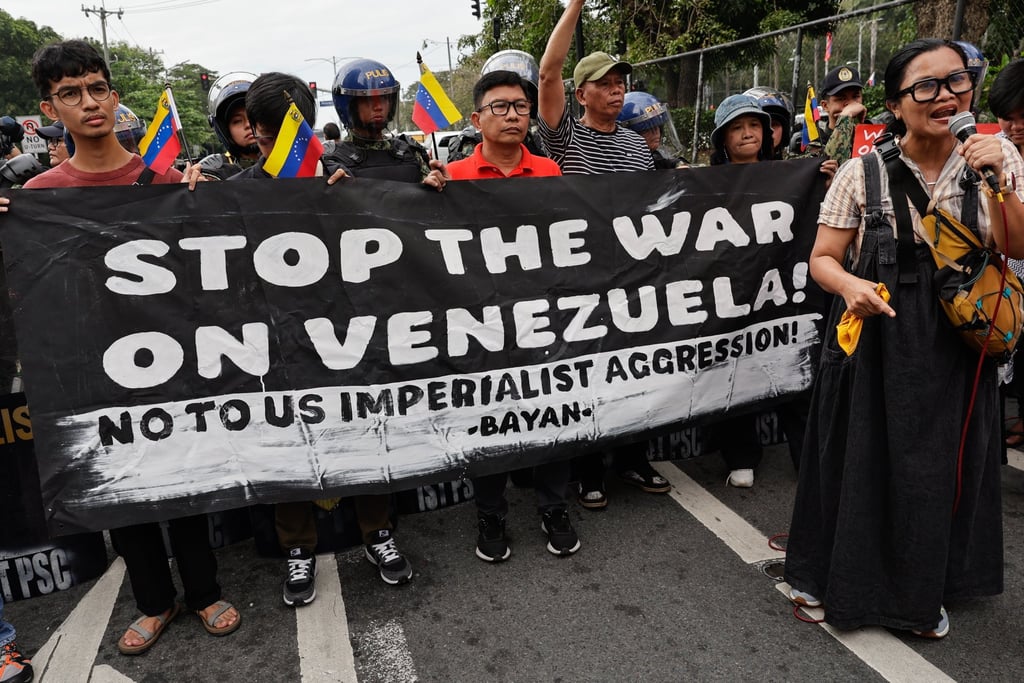
Outside the US Embassy in Manila on Monday, a small but vocal rally of demonstrators protested Washington’s military action in Venezuela, carrying signs denouncing the US intervention and calling for respect for national sovereignty.
