

Close Menu
World Economist – Global Markets, Finance & Economic Insights
  • Home
  • Economist Impact
    • Economist Intelligence
    • Finance & Economics
  • Business
  • Asia
  • China
  • Europe
  • Economy
  • USA
    • Middle East & Africa
    • Highlights
  • This week
  • World Economy
    • World News
What's Hot

Fed cuts interest rates below 4%

December 10, 2025

The market likes what it heard from the Fed — plus, Lilly’s new $6B manufacturing investment

December 10, 2025

US seeks ‘constructive’ reset with China as trade tensions ease: Greer

December 10, 2025
Facebook X (Twitter) Instagram
Wednesday, December 10
Facebook X (Twitter) Instagram
World Economist – Global Markets, Finance & Economic Insights
  • Home
  • Economist Impact
    • Economist Intelligence
    • Finance & Economics
  • Business
  • Asia
  • China
  • Europe
  • Economy
  • USA
    • Middle East & Africa
    • Highlights
  • This week
  • World Economy
    • World News
World Economist – Global Markets, Finance & Economic Insights
Home » Researchers uncover earliest known evidence of human fire-making in England
Europe

Researchers uncover earliest known evidence of human fire-making in England

adminBy adminDecember 10, 2025No Comments3 Mins Read
Share Facebook Twitter Pinterest Copy Link LinkedIn Tumblr Email VKontakte Telegram
Share
Facebook Twitter Pinterest Email Copy Link
Post Views: 4


LONDON (AP) — Scientists in Britain say ancient humans may have learned to make fire far earlier than previously believed, after uncovering evidence that deliberate fire-setting took place in what is now eastern England around 400,000 years ago.

The findings, described in the journal Nature, push back the earliest known date for controlled fire-making by roughly 350,000 years. Until now, the oldest confirmed evidence had come from Neanderthal sites in what is now northern France dating to about 50,000 years ago.

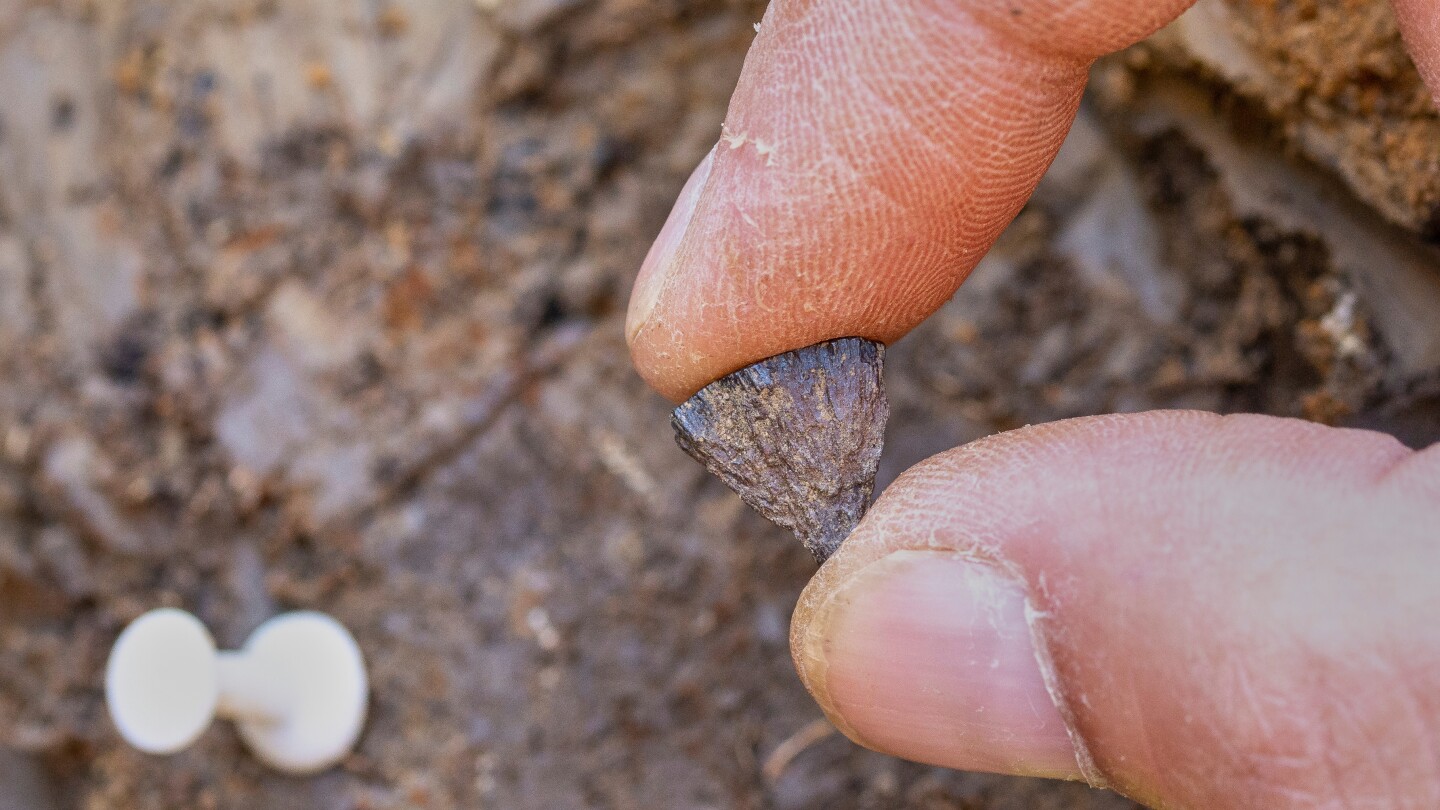
The discovery was made at Barnham, a Paleolithic site in Suffolk that has been excavated for decades. A team led by the British Museum identified a patch of baked clay, flint hand axes fractured by intense heat and two fragments of iron pyrite, a mineral that produces sparks when struck against flint.

Researchers spent four years analyzing to rule out natural wildfires. Geochemical tests showed temperatures had exceeded 700 degrees Celsius (1,292 Fahrenheit), with evidence of repeated burning in the same location.

That pattern, they say, is consistent with a constructed hearth rather than a lightning strike.

Rob Davis, a Paleolithic archaeologist at the British Museum, said the combination of high temperatures, controlled burning and pyrite fragments shows “how they were actually making the fire and the fact they were making it.”

Iron pyrite does not occur naturally at Barnham. Its presence suggests the people who lived there deliberately collected it because they understood its properties and could use it to ignite tinder.

Deliberate fire-making is rarely preserved in the archaeological record. Ash is easily dispersed, charcoal decays and heat-altered sediments can be eroded.

At Barnham, however, the burned deposits were sealed within ancient pond sediments, allowing scientists to reconstruct how early people used the site.

Researchers say the implications for human evolution are substantial.

Fire allowed early populations to survive colder environments, deter predators and cook food. Cooking breaks down toxins in roots and tubers and kills pathogens in meat, improving digestion and releasing more energy to support larger brains.

Chris Stringer, a human evolution specialist at the Natural History Museum, said fossils from Britain and Spain suggest the inhabitants of Barnham were early Neanderthals whose cranial features and DNA point to growing cognitive and technological sophistication.

Fire also enabled new forms of social life. Evening gatherings around a hearth would have provided time for planning, storytelling and strengthening group relationships, which are behaviors often associated with the development of language and more organized societies.

Archaeologists say the Barnham site fits a wider pattern across Britain and continental Europe between 500,000 and 400,000 years ago, when brain size in early humans began to approach modern levels and when evidence for increasingly complex behavior becomes more visible.

Nick Ashton, curator of Paleolithic collections at the British Museum, described it as “the most exciting discovery of my long 40-year career.”

For archaeologists, the find helps address a long-standing question: When humans stopped relying on lightning strikes and wildfires and instead learned to create flame wherever and whenever they needed it.


Source link

Share. Facebook Twitter Pinterest LinkedIn Tumblr Email Telegram Copy Link
admin
  • Website

Related Posts

Europe

Ukraine’s Zelenskyy denies using war to delay elections, seeks US help

December 10, 2025
Europe

Zelenskyy says Ukraine ready for elections if safe vote is guaranteed

December 10, 2025
Europe

Italian cooking and its rituals get UN designation as world heritage

December 10, 2025
Europe

Venezuelan opposition leader Machado will not attend Peace Prize ceremony

December 10, 2025
Europe

Sarkozy book describes his prison stay and advises on far-right appeal

December 10, 2025
Europe

Pope Leo XIV criticizes US bid to ‘break apart’ US-Europe alliance

December 9, 2025
Add A Comment
Leave A Reply Cancel Reply

Editors Picks

Pakistan govt completes PHL settlements with ‘largest-ever debt market transaction’ – Markets

December 10, 2025

Regulatory frameworks across major sectors in Pakistan ‘outdated’, says CCP chairman – Markets

December 10, 2025

KAPCO resumes power generation as NEPRA clears tariff hurdles – Business & Finance

December 10, 2025

OGDCL discovers oil & gas in Khyber Pakhtunkhwa – Business & Finance

December 10, 2025
Latest Posts

PSX hits all-time high as proposed ‘neutral-to-positive’ budget well-received by investors – Business

June 11, 2025

Sindh govt to allocate funds for EV taxis, scooters in provincial budget: minister – Pakistan

June 11, 2025

US, China reach deal to ease export curbs, keep tariff truce alive – World

June 11, 2025

Subscribe to News

Subscribe to our newsletter and never miss our latest news

Subscribe my Newsletter for New Posts & tips Let's stay updated!

Recent Posts

  • Fed cuts interest rates below 4%
  • The market likes what it heard from the Fed — plus, Lilly’s new $6B manufacturing investment
  • US seeks ‘constructive’ reset with China as trade tensions ease: Greer
  • US Fed delivers quarter-point rate cut as policymakers weigh inflation outlook
  • Palladium drops 3% before Fed’s decision

Recent Comments

No comments to show.

Welcome to World-Economist.com, your trusted source for in-depth analysis, expert insights, and the latest news on global finance and economics. Our mission is to provide readers with accurate, data-driven reports that shape the understanding of economic trends worldwide.

Latest Posts

Fed cuts interest rates below 4%

December 10, 2025

The market likes what it heard from the Fed — plus, Lilly’s new $6B manufacturing investment

December 10, 2025

US seeks ‘constructive’ reset with China as trade tensions ease: Greer

December 10, 2025

Subscribe to Updates

Subscribe to our newsletter and never miss our latest news

Subscribe my Newsletter for New Posts & tips Let's stay updated!

Archives

  • December 2025
  • November 2025
  • October 2025
  • September 2025
  • August 2025
  • July 2025
  • June 2025
  • May 2025
  • April 2025
  • March 2025
  • February 2025
  • January 2025
  • December 2024
  • June 2024
  • October 2022
  • March 2022
  • July 2021
  • February 2021
  • January 2021
  • November 2019
  • April 2011
  • January 2011
  • December 2007
  • July 2007

Categories

  • AI & Tech
  • Asia
  • Banking
  • Business
  • Business
  • China
  • Climate
  • Computing
  • Economist Impact
  • Economist Intelligence
  • Economy
  • Editor's Choice
  • Europe
  • Europe
  • Featured
  • Featured Business
  • Featured Climate
  • Featured Health
  • Featured Science & Tech
  • Featured Travel
  • Finance & Economics
  • Health
  • Highlights
  • Markets
  • Middle East
  • Middle East & Africa
  • Middle East News
  • Most Viewed News
  • News Highlights
  • Other News
  • Politics
  • Russia
  • Science
  • Science & Tech
  • Social
  • Space Science
  • Sports
  • Sports Roundup
  • Tech
  • This week
  • Top Featured
  • Travel
  • Trending Posts
  • Ukraine Conflict
  • Uncategorized
  • US Politics
  • USA
  • World
  • World & Politics
  • World Economy
  • World News
© 2025 world-economist. Designed by world-economist.
  • Home
  • About Us
  • Advertise With Us
  • Contact Us
  • DMCA
  • Privacy Policy
  • Terms & Conditions

Type above and press Enter to search. Press Esc to cancel.