

Close Menu
World Economist – Global Markets, Finance & Economic Insights
  • Home
  • Economist Impact
    • Economist Intelligence
    • Finance & Economics
  • Business
  • Asia
  • China
  • Europe
  • Economy
  • USA
    • Middle East & Africa
    • Highlights
  • This week
  • World Economy
    • World News
What's Hot

SOE losses widen to Rs123bn in FY25 despite revenue of Rs12.4trn – Business & Finance

January 10, 2026

Privatisation Commission makes major decisions regarding HBFCL, Roosevelt Hotel and Islamabad airport – Business & Finance

January 10, 2026

Argentina repays US emergency loan, boosting Trump’s economic strategy in Latin America

January 10, 2026
Facebook X (Twitter) Instagram
Saturday, January 10
Facebook X (Twitter) Instagram
World Economist – Global Markets, Finance & Economic Insights
  • Home
  • Economist Impact
    • Economist Intelligence
    • Finance & Economics
  • Business
  • Asia
  • China
  • Europe
  • Economy
  • USA
    • Middle East & Africa
    • Highlights
  • This week
  • World Economy
    • World News
World Economist – Global Markets, Finance & Economic Insights
Home » Russia’s use of its hypersonic missile in western Ukraine is seen as a warning to Kyiv’s allies
Europe

Russia’s use of its hypersonic missile in western Ukraine is seen as a warning to Kyiv’s allies

adminBy adminJanuary 9, 2026No Comments5 Mins Read
Share Facebook Twitter Pinterest Copy Link LinkedIn Tumblr Email VKontakte Telegram
Share
Facebook Twitter Pinterest Email Copy Link
Post Views: 8


Russia said Friday it used its latest missile against Ukraine for a second time in the nearly 4-year-old war, a forceful signal to Kyiv and its Western allies as U.S.-led peace talks have entered a new and crucial stage.

The hypersonic Oreshnik intermediate range ballistic missile hit Ukraine’s western Lviv region late Thursday night, although officials there did not mention any casualties. The area is near a military base in neighboring Poland, a NATO member, that serves as a key hub for ferrying Western military supplies to Kyiv.

Some Moscow commentators said the attack was a warning to European leaders against proposals to deploy their troops to Ukraine as part of a prospective peace deal. Russia has said it won’t accept such a deployment and would view those forces as legitimate targets.

A look at the weapon and why Russia used it now:

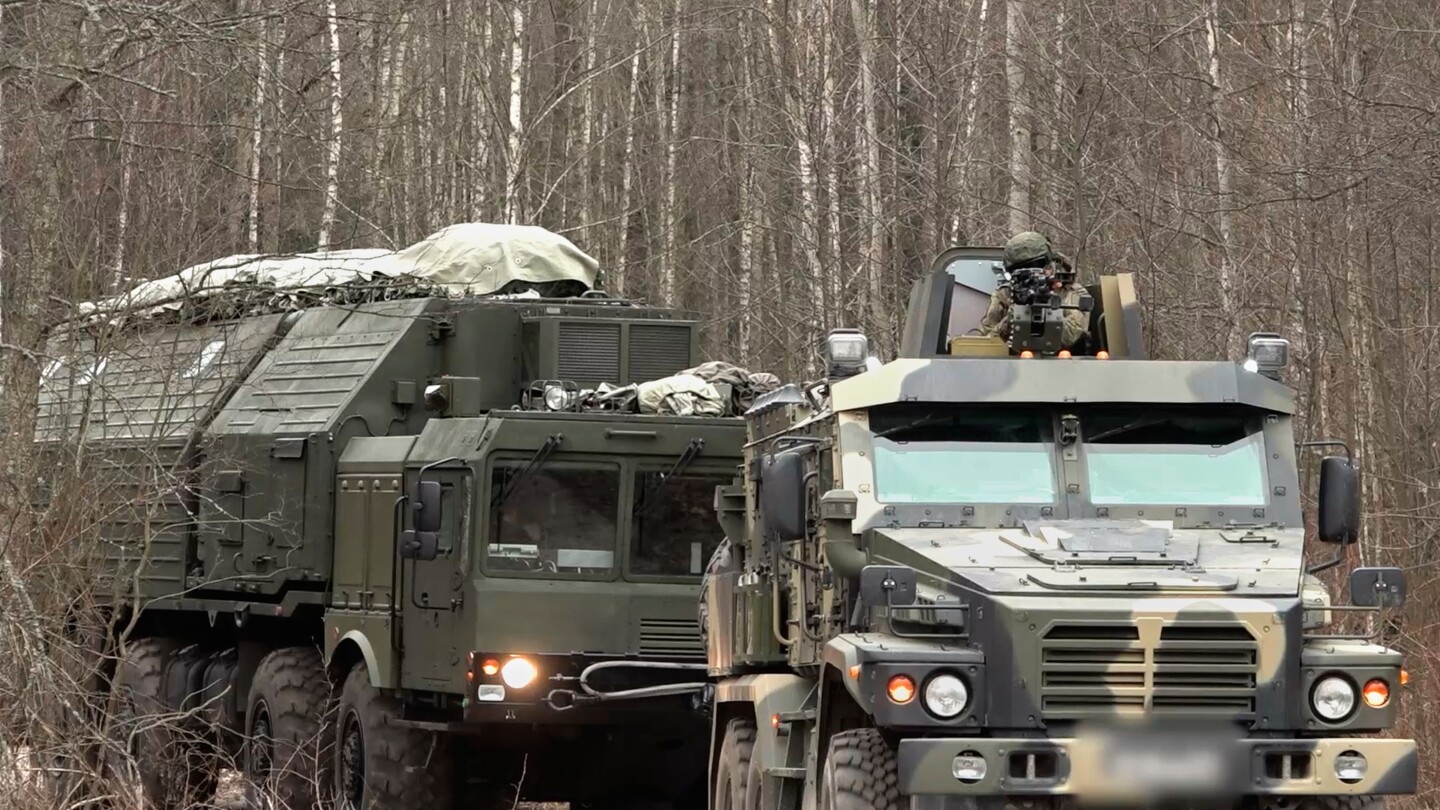
What’s known about the Oreshnik

Russia first used the multiple-warhead Oreshnik on the Ukrainian city of Dnipro in November 2024.

President Vladimir Putin said the Oreshnik, which means “hazelnut tree” in Russian, streaks at 10 times the speed of sound, or Mach 10, “like a meteorite,” and was immune to any missile defense system.

He said the weapon is so powerful that several such missiles — even fitted with conventional warheads — could be as devastating as a nuclear strike. He said it’s capable of destroying underground bunkers “three, four or more floors down.”

The Russian military said the Oreshnik can carry nuclear or conventional warheads and can reach any European target.

The Pentagon said the Oreshnik was an experimental type of intermediate-range ballistic missile, or IRBM, based on Russia’s RS-26 Rubezh intercontinental ballistic missile, or ICBM. Intermediate-range missiles can fly between 500 to 5,500 kilometers (310 to 3,400 miles). Such weapons were banned under a Soviet-era treaty that Washington and Moscow abandoned in 2019.

When Russia first used the Oreshnik, Ukraine’s military said the missile had six independently targetable warheads, each carrying six submunitions.

Russian military bloggers said the submunitions released by each warhead apparently were unarmed but had high kinetic energy estimated to deliver a destructive force equivalent to tons of explosives.

Since the start of its full-scale invasion of Ukraine in 2022, Russia has used swarms of cheap slow-flying drones and an assortment of other missiles, but none had the range and power of Oreshnik.

Deployed to Belarus

Russia’s Defense Ministry said last month the Oreshnik had been deployed to Belarus and entered active service. It didn’t specify how many missiles were sent to the key ally of Moscow and whether they were fitted with nuclear warheads, but Belarusian President Alexander Lukashenko said that up to 10 Oreshnik systems will be stationed there.

Russia previously has stationed tactical nuclear weapons inside Belarus, whose territory it used to launch the invasion of Ukraine.

In 2024, Putin released a revised nuclear doctrine that placed Belarus under Russia’s atomic umbrella. The document significantly lowered the threshold for the possible use of nuclear weapons, declaring that any nation’s conventional attack on Russia that is supported by a nuclear power will be considered a joint attack on the country. The threat was clearly aimed at discouraging the West from allowing Ukraine to strike Russia with longer-range weapons.

Unlike Russia’s other shorter-range conventional weapons, the Oreshnik is able to launch a powerful, conventional strike anywhere in Europe, giving the Kremlin a new instrument of escalation without tapping its nuclear arsenal. There will be no way to know whether the missile is carrying a nuclear or a conventional warhead before it hits the target.

Russia’s message by using the Oreshnik

When Russia first used the Oreshnik, Putin described it as a response to Ukraine’s Western allies allowing it to use their longer-range weapons to strike Russian territory.

Its latest strike comes as the U.S.-led efforts to end the war in Ukraine have entered a pivotal stage and appears to underline Putin’s intention to negotiate from a position of strength as his troops make slow but steady territorial gains.

Some Russian military bloggers noted that the strike in Lviv, not far from the Polish border, was a message intended for Kyiv’s allies. Those members of the “coalition of the willing” have proposed sending their troops to Ukraine as part of security guarantees once a peace deal is reached.

Russia has said it won’t accept any European forces in Ukraine, seeing them as legitimate targets.

“For the first time, NATO command has been shown a strategic weapons strike virtually on its border,” said military expert Valery Shiryayev. “This action is intended to demonstrate the determination of Russia’s military and political leadership to use such weapons with nuclear warheads if necessary.”

The attack comes less than a week after the U.S. capture of Venezuelan President Nicolas Maduro, a Russian ally. The Russian Foreign Ministry denounced the U.S. action as an act of aggression and sharply criticized Wednesday’s U.S. seizure of a Russia-flagged tanker.


Source link

Share. Facebook Twitter Pinterest LinkedIn Tumblr Email Telegram Copy Link
admin
  • Website

Related Posts

Europe

Freezing temperatures grip Europe: See the photo gallery

January 9, 2026
Europe

The pope in a major foreign policy address blasts how countries are using force to assert dominion

January 9, 2026
Europe

Switzerland honors the victims of the deadly Alpine bar fire

January 9, 2026
Europe

The aftermath of Russia’s latest attack on Ukraine, in photos

January 9, 2026
Europe

What to know about Nickolay Mladenov, appointee to Gaza peace board

January 9, 2026
Europe

Russia attacks Ukraine, killing 3 in Kyiv and injuring at least 16

January 8, 2026
Add A Comment
Leave A Reply Cancel Reply

Editors Picks

SOE losses widen to Rs123bn in FY25 despite revenue of Rs12.4trn – Business & Finance

January 10, 2026

Privatisation Commission makes major decisions regarding HBFCL, Roosevelt Hotel and Islamabad airport – Business & Finance

January 10, 2026

India bonds end lower; fall for second week as supply concerns linger – Markets

January 9, 2026

What does Pakistan’s economy need to thrive? – Business & Finance

January 9, 2026
Latest Posts

PSX hits all-time high as proposed ‘neutral-to-positive’ budget well-received by investors – Business

June 11, 2025

Sindh govt to allocate funds for EV taxis, scooters in provincial budget: minister – Pakistan

June 11, 2025

US, China reach deal to ease export curbs, keep tariff truce alive – World

June 11, 2025

Subscribe to News

Subscribe to our newsletter and never miss our latest news

Subscribe my Newsletter for New Posts & tips Let's stay updated!

Recent Posts

  • SOE losses widen to Rs123bn in FY25 despite revenue of Rs12.4trn – Business & Finance
  • Privatisation Commission makes major decisions regarding HBFCL, Roosevelt Hotel and Islamabad airport – Business & Finance
  • Argentina repays US emergency loan, boosting Trump’s economic strategy in Latin America
  • Trump-Xi diplomacy put to test thanks to tit-for-tat Covid lawsuits
  • The great chip leap: China’s semiconductor equipment self-reliance surges past targets

Recent Comments

No comments to show.

Welcome to World-Economist.com, your trusted source for in-depth analysis, expert insights, and the latest news on global finance and economics. Our mission is to provide readers with accurate, data-driven reports that shape the understanding of economic trends worldwide.

Latest Posts

SOE losses widen to Rs123bn in FY25 despite revenue of Rs12.4trn – Business & Finance

January 10, 2026

Privatisation Commission makes major decisions regarding HBFCL, Roosevelt Hotel and Islamabad airport – Business & Finance

January 10, 2026

Argentina repays US emergency loan, boosting Trump’s economic strategy in Latin America

January 10, 2026

Subscribe to Updates

Subscribe to our newsletter and never miss our latest news

Subscribe my Newsletter for New Posts & tips Let's stay updated!

Archives

  • January 2026
  • December 2025
  • November 2025
  • October 2025
  • September 2025
  • August 2025
  • July 2025
  • June 2025
  • May 2025
  • April 2025
  • March 2025
  • February 2025
  • January 2025
  • December 2024
  • June 2024
  • March 2024
  • October 2022
  • March 2022
  • July 2021
  • February 2021
  • January 2021
  • November 2019
  • April 2011
  • January 2011
  • December 2007
  • July 2007

Categories

  • AI & Tech
  • Asia
  • Banking
  • Business
  • Business
  • China
  • Climate
  • Computing
  • Economist Impact
  • Economist Intelligence
  • Economy
  • Editor's Choice
  • Europe
  • Europe
  • Featured
  • Featured Business
  • Featured Climate
  • Featured Health
  • Featured Science & Tech
  • Featured Travel
  • Finance & Economics
  • Health
  • Highlights
  • Markets
  • Middle East
  • Middle East & Africa
  • Middle East News
  • Most Viewed News
  • News Highlights
  • Other News
  • Politics
  • Russia
  • Science
  • Science & Tech
  • Social
  • Space Science
  • Sports
  • Sports Roundup
  • Tech
  • This week
  • Top Featured
  • Travel
  • Trending Posts
  • Ukraine Conflict
  • Uncategorized
  • US Politics
  • USA
  • World
  • World & Politics
  • World Economy
  • World News
© 2026 world-economist. Designed by world-economist.
  • Home
  • About Us
  • Advertise With Us
  • Contact Us
  • DMCA
  • Privacy Policy
  • Terms & Conditions

Type above and press Enter to search. Press Esc to cancel.