


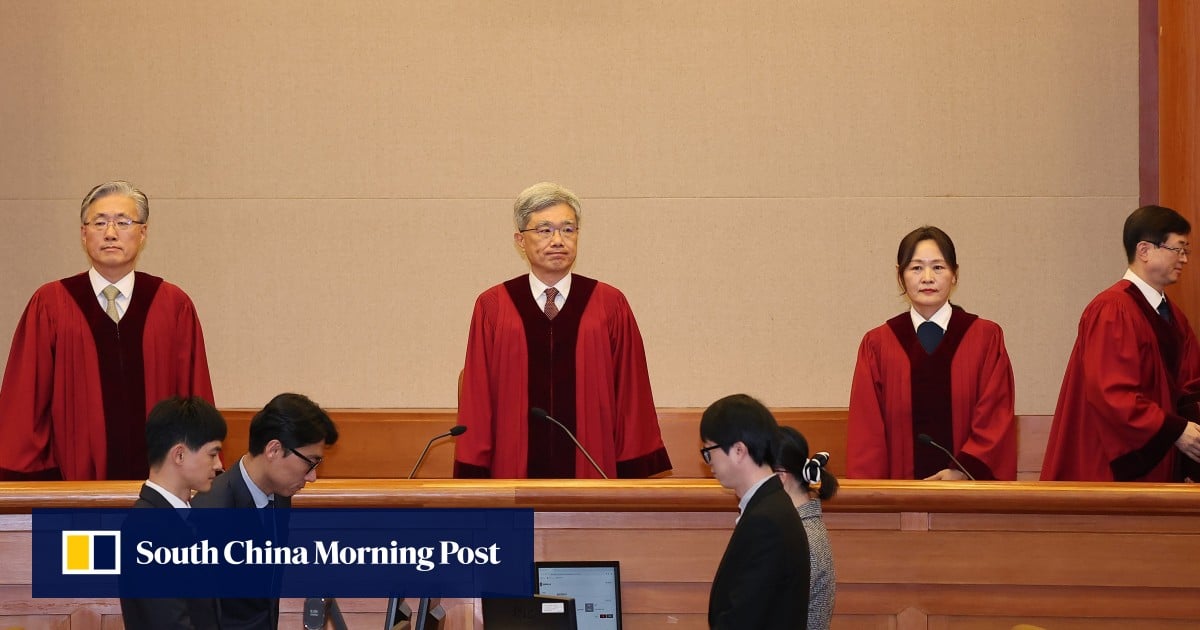
More than a year after former South Korean president Yoon Suk-yeol’s failed attempt to impose martial law, the country’s top court has announced changes to how politically explosive cases are handled, as public anger over delays and alleged bias continues to mount.
The Supreme Court said it would revamp procedures for high-stakes national security trials, including cases stemming from Yoon’s December 2024 martial law bid, in what it described as an effort to ensure swift and fair proceedings and restore confidence in the justice system.
Legal analysts say the clash reflects a deeper struggle over how South Korea’s judiciary should handle politically sensitive cases, with critics arguing that delays and controversial rulings in the aftermath of Yoon’s failed martial law bid have eroded public trust.
The move comes as President Lee Jae-myung’s ruling Democratic Party of Korea (DPK), which controls the National Assembly, presses ahead with legislation to create a separate tribunal dedicated exclusively to cases linked to the martial law decree.

02:34
South Korean prosecutors formally indict ex-president Yoon Suk-yeol for martial law plot
South Korean prosecutors formally indict ex-president Yoon Suk-yeol for martial law plot
The party argues the Supreme Court’s initiative does not go far enough to address widespread public distrust of what critics describe as a “biased” judiciary.
