


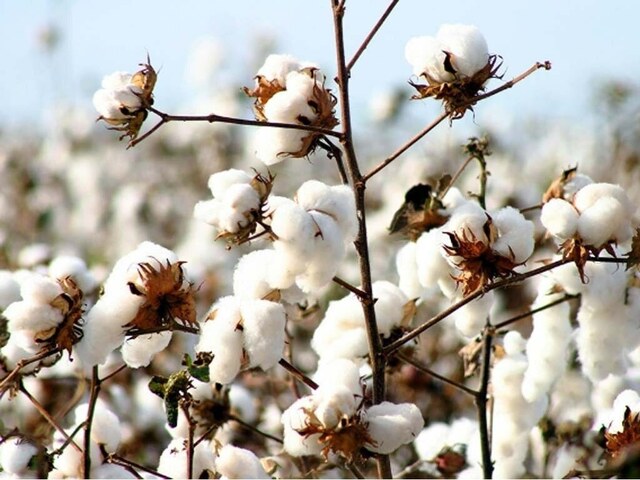
KARACHI: Quality cotton prices have maintained stability while the spot rate has recorded an increase of one hundred rupees. However, a significant decline has been observed in trading volume, which is having negative impacts on the overall performance of the industry.
The textile and cotton industry is currently facing the worst economic crisis in the country’s history. Ehsan-ul-Haq, Chairman of the Ginners Forum, expressed concern over this situation and stated that the industry is going through an extremely difficult period and immediate measures are urgently needed.
The ongoing transport strike across the country has severely affected the textile sector along with other industries. Serious obstacles are being created in the transportation of raw materials and the delivery of finished products, which has slowed down the production process.
Farmers are already suffering from financial distress, and now the International Monetary Fund has committed to imposing an additional five percent excise duty on agricultural medicines and fertilizers. This measure is expected to further increase costs in the agricultural sector, which will lead to a further escalation in the financial difficulties faced by farmers.
The Federal Investigation Agency (FIA) and the Evacuee Trust Property Board (ETPB) have claimed to have “recovered” and “vacated” the Karachi Cotton Exchange Building situated on I.I. Chundrigar Road in a “joint operation” declaring it a federal trust property.
The Chairman of the KCA has presented his position in this regard, stating that he has completed all the paperwork and is striving to resolve the matter.
The situation of the textile industry in Faisalabad is becoming increasingly alarming, and industrial units have started closing down rapidly. This situation is not only detrimental to the economy but has also created the risk of thousands of people losing their employment.
The local cotton market continued to show overall stability in prices during the past week. Demand for quality cotton is particularly increasing, with several mills showing interest in quality cotton, which has led to relatively better prices for quality cotton. The business volume is being described as reasonable, with several ginners stockpiling quality cotton in anticipation of improved prices.
The supply of Phutti is decreasing day by day, which has led to speculation about the crop situation. While there were hopes for a good cotton crop at the beginning of the season, it now appears that the crop may be around 55 lac bales.
During the week, the textile sector was severely affected along with other industries due to a transport strike. The delivery of export goods has been halted, and the All Pakistan Textile Mills Association has requested the government to intervene immediately regarding the transporters’ strike.
Pakistan’s textile and cotton industry is experiencing the worst economic crisis in the country’s history due to excessive taxes, the highest electricity rates in the region, and cheap imports of yarn and fabric from China and other countries.
Currently, more than 100 spinning mills and over 400 ginning factories have already become non-operational. The shutdown has caused a significant decline in raw cotton purchases, national cotton production has shrunk to dangerous levels, and there is a risk of further depletion of foreign exchange reserves due to increasing imports of edible oil and textile products.
Chairman of the Cotton Ginners Forum, Ehsanul Haq, warned in a statement that the unchecked influx of imported yarn, most of which is under-invoiced, has devastated the domestic spinning industry. He stated that instead of providing relief to restore cotton production and boost exports, the sector is being crushed under heavy taxes and prohibitive electricity rates. This unprecedented crisis has left millions of families unemployed.
Cotton prices in Sindh and Punjab provinces are ranging between 13,800 to 16,000 rupees per maund depending on quality and payment conditions. Phutti prices remained at 6,000 to 8,200 rupees per 40 kilograms.
In Balochistan province, cotton prices stood at 15,300 to 16,200 rupees per maund while Phutti prices were 7,400 to 8,500 rupees per 40 kilograms. Balochi cotton was priced at 16,000 to 16,200 rupees and Primark cotton was approximately 17,000 rupees.
The Karachi Cotton Association’s Spot Rate Committee increased the spot rate by 100 rupees per maund, closing the spot rate at 15,500 rupees per maund.
Meanwhile, Pakistan’s textile and cotton industry is going through the worst economic crisis in the country’s history due to excessive taxation, the highest electricity rates in the region, and imports of cheap yarn and fabric from China and other countries. More than 100 spinning mills and over 400 ginning factories have already become non-operational. The shutdowns have led to a significant decline in raw cotton purchasing, national cotton production has shrunk to dangerous levels, and there is a risk of further depletion in foreign exchange reserves due to increasing imports of edible oil and textile products.
The All Pakistan Textile Mills Association (APTMA) had formally informed the Federal Board of Revenue (FBR) about the monthly arrival of millions of kilograms of under-invoiced yarn. However, no action was taken, which led to a surge in imports every month and accelerated the demise of local spinning mills.
Some importers are selling yarn in the country’s largest Faisalabad yarn market without any receipts, causing losses of millions of rupees to the national treasury while further damaging the country’s cotton value chain. They added that a major Chinese company has already opened an office in Faisalabad, and more firms are reportedly planning to do the same to increase yarn sales to Pakistani mills.
Pakistan’s cotton production, which was previously approximately 15 million cotton bales, has now dropped to just 5.5 million bales. Even with weak demand, approximately 800,000 unsold bales remain with ginners and traders. Cotton prices have fallen to 8,000 rupees per 40 kilograms, causing severe financial distress to farmers. With the shift from cotton to sugarcane cultivation, they warned that Pakistan may be forced to spend billions of dollars on edible oil imports next year.
The ginning sector is also crushed under massive tax burdens. Cotton, cottonseed, oil and oil cake face a combined 86 percent sales tax, leading to additional financial pressure on textile units as they are being asked to pay 10-year-old gas dues. To highlight the severity of the crisis, they noted that Rahim Yar Khan, which was previously the country’s largest cotton-producing district, used to operate approximately 125 ginning factories and 150 oil mills annually. However, this year only 45 ginning units and 25 oil mills are still operational. The district has also witnessed the closure of over 100 spinning mills and hundreds of power looms.
They urged the federal government to immediately impose an import duty of at least 20 percent on yarn and fabric, reduce electricity rates and taxes in the cotton value chain, and provide relief to spinning, ginning and textile units to restore competitiveness.
Furthermore, regarding the transporters’ strike, APTMA addressed the Chief Minister of Punjab stating that they wish to draw attention to the serious problems faced by the industry in general and exporters in particular, which have arisen due to the transporters’ strike ongoing since December 8, 2025. This strike is severely affecting the import and export process, which is the backbone of the national economy. Hundreds of cargo vehicles are stuck on roads throughout Punjab awaiting the restoration of routes. This is causing extraordinary delays in goods delivery, resulting in heavy demurrage and detention charges, reduced scheduled ship departures, unavailability of raw materials and halted production processes due to failure to deliver finished goods. This continuous disruption is creating a serious risk of export order cancellations by international buyers, which could have far-reaching impacts on Pakistan’s foreign exchange earnings.
In view of the severity of the current situation and its serious economic implications, the Government of Punjab is politely requested to intervene at the highest level to immediately resolve the transporters’ strike and ensure uninterrupted delivery of goods throughout the province, providing stable and predictable logistic conditions for the flow of export goods. APTMA remains committed to continuing its cooperation with the Government of Punjab in establishing a stable and productive industrial environment. Immediate action from your esteemed office is requested to end the transporters’ strike and restore industrial activities and continuous delivery of export goods.
Moreover, the textile industry in Faisalabad has started closing down rapidly. According to the report, the textile industry holding a sixty percent share in the country’s exports is rapidly shutting down in Faisalabad, and due to the energy crisis and high prices, shortage of orders and closure of two shifts in factories have left thousands of workers unemployed.
Due to higher electricity and gas prices compared to Bangladesh, Vietnam and other competing countries, it has become difficult for industrialists to obtain orders from Europe and America. After spinning and processing, the hosiery industry is now operating only 8 hours instead of 24 hours, eliminating the employment of thousands of workers. Due to rapidly closing factories, workers in operating factories are also under mental pressure from the fear of factory closures at any time.
The Federal Investigation Agency (FIA) and the Evacuee Trust Property Board (ETPB) have claimed to have “recovered” and “vacated” the Karachi Cotton Exchange Building situated on I.I. Chundrigar Road in a “joint operation” declaring it a federal trust property.
In a joint statement, the FIA and ETPB said that the Karachi Cotton Exchange Building is a trust property as per federal government’s gazette notification and hence the title of this property is vested in the federal government.
During the operation, the statement said, it was found that the Karachi Cotton Association had been illegally occupying the premises, keeping multiple tenants inside the building and charging them rent without any lawful authority.
The two agencies said the premises were secured in the presence of FIA and ETPB officials and representatives of the Karachi Cotton Association (KCA).
“All occupants and tenants were afforded an opportunity to safely retrieve their personal belongings before the premises were sealed under their lock and key,” the statement said, adding that arrangements have been made to facilitate retrieval of remaining valuables and records through a formal application and verification process.
Copyright Business Recorder, 2025
