

Close Menu
World Economist – Global Markets, Finance & Economic Insights
  • Home
  • Economist Impact
    • Economist Intelligence
    • Finance & Economics
  • Business
  • Asia
  • China
  • Europe
  • Economy
  • USA
    • Middle East & Africa
    • Highlights
  • This week
  • World Economy
    • World News
What's Hot

China’s Sugon unveils new AI infrastructure to rival platforms from Nvidia and Huawei

December 19, 2025

Jim Cramer’s top 10 things to watch in the stock market Friday

December 19, 2025

Yen dips after BOJ decision as tightening path remains unclear

December 19, 2025
Facebook X (Twitter) Instagram
Friday, December 19
Facebook X (Twitter) Instagram
World Economist – Global Markets, Finance & Economic Insights
  • Home
  • Economist Impact
    • Economist Intelligence
    • Finance & Economics
  • Business
  • Asia
  • China
  • Europe
  • Economy
  • USA
    • Middle East & Africa
    • Highlights
  • This week
  • World Economy
    • World News
World Economist – Global Markets, Finance & Economic Insights
Home » What to know about the EU’s new $106 billion loan to Ukraine
Europe

What to know about the EU’s new $106 billion loan to Ukraine

adminBy adminDecember 19, 2025No Comments5 Mins Read
Share Facebook Twitter Pinterest Copy Link LinkedIn Tumblr Email VKontakte Telegram
Share
Facebook Twitter Pinterest Email Copy Link
Post Views: 1


BRUSSELS (AP) — European Union leaders agreed on Friday to provide a massive interest-free loan to Ukraine to meet its military and economic needs for the next two years.

The 27-nation bloc’s heads of state had planned to use some of the 210 billion euros ($246 billion) worth of Russian assets that are frozen in Europe, mostly in Belgium. But despite working through the night into Friday morning, they failed to convince Belgium that the country would be protected from any Russian retaliation if it backed the “reparations loan” plan.

They settled on an alternative: borrowing $106 billion on capital markets.

After almost four years of war, the International Monetary Fund estimates that Ukraine will need 137 billion euros ($161 billion) in 2026 and 2027. The government in Kyiv is on the verge of bankruptcy, and desperately needs the money by spring to pay for everything from ammunition to infrastructure repairs.

Here’s what to know about the loan.

EU to shoulder debt

European Commission President Ursula von der Leyen had brought to Thursday’s summit two proposals to keep Ukraine afloat.

The first plan had been to use some of the 210 billion euros ($246 billion) worth of Russian assets that are frozen in Europe, mostly in Belgium. The money has been frozen under EU sanctions slapped on Moscow after its launched its full-scale war in 2022.

Leaders like German Chancellor Friedrich Merz and French President Emmanuel Macron backed this first option, especially since that method of funding would require support from two-thirds of the 27 EU nations.

That majority was expected to be far easier politically to reach than the total unanimity required by the EU foundational treaty for the second option: borrowing money from capital markets.

But throughout the long night, Belgium’s Prime Minister Bart de Wever refused to budge on the reparations loan. It was Hungary, whose leader Viktor Orbán has long objected to Brussels’ embrace of Ukraine, that compromised.

The European Council said it would use Article 20 of the Treaty of Europe to allow the EU to shoulder debt for a zero-interest loan to Ukraine.

It’s a simpler and possibly safer solution compared to the reparations loans. It is also akin to how the EU took on 750 billion euro in debt in the wake of the COVID-19 pandemic for a gigantic economic recovery fund. Large borrowing has become a hallmark of the administration of von der Leyen.

Outliers protected from financial burdens

Not all countries agreed to the loan package. Hungary, Slovakia and the Czech Republic refused to take on debt for Ukraine, but a deal was reached in which they did not block the loan package and were promised protection from any financial fallout.

Orbán, who is Russian President Vladimir Putin’s closest ally in Europe, claimed double victory at the summit in a post on X.

“We did not allow Europe to issue a declaration of war on Russia by using Russian assets” and “we succeeded in protecting Hungarian families” from additional debt, he said. He estimated the cost to Hungarians would have been 1000 billion HUF or $3 billion.

Orbán praised the cooperation of Hungary, Slovakia, and the Czech Republic, which were all excluded from financial burdens from the loan to allow for the unanimity required by the EU treaty.

But Czech Prime Minister Andrej Babiš distanced himself Friday from Slovakia and Hungary’s anti-Ukraine position during the summit, and said that Prague could simply not afford additional debt.

Use of Russian assets still on the table

The plan to use frozen Russian assets got bogged down at the summit as De Wever rejected it as legally risky. He warned that it could harm the business of Euroclear, the Brussels-based financial clearing house where 193 billion euros ($226 billion) in frozen assets are held.

Belgium was rattled last Friday when Russia’s Central Bank launched a lawsuit against Euroclear to prevent any loan being provided to Ukraine using its money.

But while the reparations loan was set aside, using frozen assets remains on the table.

The EU has said the assets will remain frozen until Russia has paid war reparations to Ukraine. Ukrainian President Volodymyr Zelenskyy has said that would cost over 600 billion euros ($700 billion.)

“If Russia does not pay reparations we will — in full accordance with international law — make use of Russian immobilized assets for paying back the loan,” Merz said.

EU leaders agreed that “this loan would be repaid by Ukraine only once Russia compensates Ukraine for the damage caused by its war of aggression. Until then, Russia’s assets will remain immobilized and the EU reserves the right to use them to repay the loan, in accordance with EU and international law,” according to a statement.

Council president Costa said that the EU “reserves its right to make use of the immobilized assets to repay this loan.”

Few believe Russian President Vladimir Putin will pay reparations, so the assets could well remain in Europe and make their way to Ukraine.

What the loan will be spent on

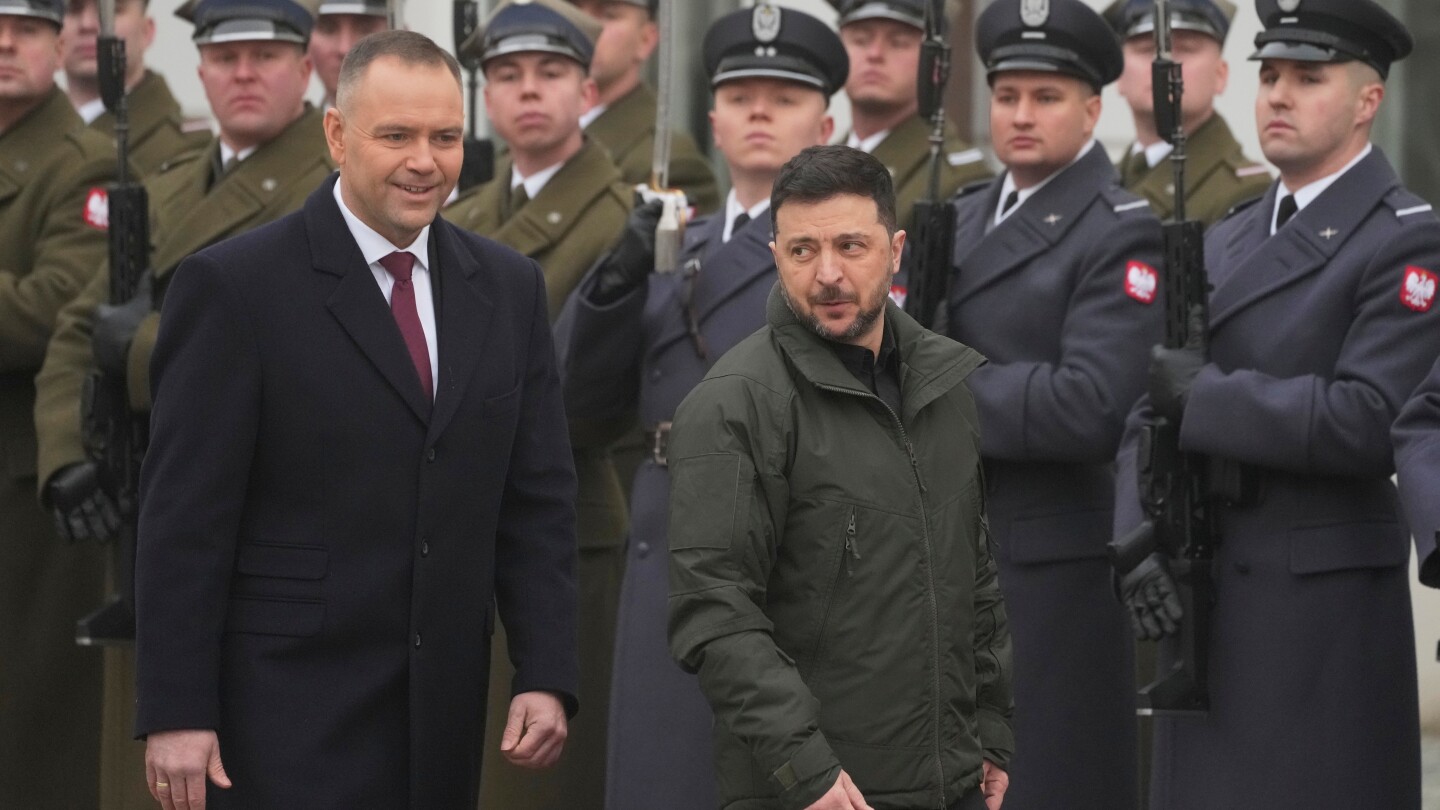
At a press conference on Friday in Warsaw, Zelenskyy said the loan gives Ukraine “financial certainty for the coming years” and said it would be spent on either reconstruction or arms.

“If Russia drags out this war — and that is exactly the signal the entire world hears from Moscow, as they continue to threaten us — we will use these funds for defense, if the war continues,” he said. “If the world compels Russia to make peace, we will use these funds exclusively for the reconstruction of our country.”

___

Associated Press writers Karel Janicek in Prague, Justin Spike in Budapest, and Illia Novikov contributed to this report.


Source link

Share. Facebook Twitter Pinterest LinkedIn Tumblr Email Telegram Copy Link
admin
  • Website

Related Posts

Europe

Zelenskyy signals good will to Polish president with Warsaw visit

December 19, 2025
Europe

Louvre reopens fully after staff vote to suspend strike

December 19, 2025
Europe

Russia’s Putin holds his annual year-end news conference

December 19, 2025
Europe

Photos show a world aglow with holiday lights

December 19, 2025
Europe

Belgium’s leader treads a tight rope with EU partners over funds for Ukraine

December 18, 2025
Europe

EU to limit asylum cases from 7 countries including Colombia, Egypt and India

December 18, 2025
Add A Comment
Leave A Reply Cancel Reply

Editors Picks

India’s Adani seeks to operate more airports as part of $11 billion expansion, exec says – Markets

December 19, 2025

UAE’s AD Ports Group sets up Pakistan logistics JV, takes majority control – Business & Finance

December 19, 2025

Chaman traders flag economic losses amid prolonged Pak–Afghan border shutdowns – Business & Finance

December 19, 2025

PSX extends rally, KSE-100 up over 400 points – Markets

December 19, 2025
Latest Posts

PSX hits all-time high as proposed ‘neutral-to-positive’ budget well-received by investors – Business

June 11, 2025

Sindh govt to allocate funds for EV taxis, scooters in provincial budget: minister – Pakistan

June 11, 2025

US, China reach deal to ease export curbs, keep tariff truce alive – World

June 11, 2025

Subscribe to News

Subscribe to our newsletter and never miss our latest news

Subscribe my Newsletter for New Posts & tips Let's stay updated!

Recent Posts

  • China’s Sugon unveils new AI infrastructure to rival platforms from Nvidia and Huawei
  • Jim Cramer’s top 10 things to watch in the stock market Friday
  • Yen dips after BOJ decision as tightening path remains unclear
  • Anwar’s coalition revives Malaysian Chinese school certification debate, sparking row
  • China eyes mastery of EUV lithography, bolstering AI chip ambitions, analysts say

Recent Comments

No comments to show.

Welcome to World-Economist.com, your trusted source for in-depth analysis, expert insights, and the latest news on global finance and economics. Our mission is to provide readers with accurate, data-driven reports that shape the understanding of economic trends worldwide.

Latest Posts

China’s Sugon unveils new AI infrastructure to rival platforms from Nvidia and Huawei

December 19, 2025

Jim Cramer’s top 10 things to watch in the stock market Friday

December 19, 2025

Yen dips after BOJ decision as tightening path remains unclear

December 19, 2025

Subscribe to Updates

Subscribe to our newsletter and never miss our latest news

Subscribe my Newsletter for New Posts & tips Let's stay updated!

Archives

  • December 2025
  • November 2025
  • October 2025
  • September 2025
  • August 2025
  • July 2025
  • June 2025
  • May 2025
  • April 2025
  • March 2025
  • February 2025
  • January 2025
  • December 2024
  • June 2024
  • March 2024
  • October 2022
  • March 2022
  • July 2021
  • February 2021
  • January 2021
  • November 2019
  • April 2011
  • January 2011
  • December 2007
  • July 2007

Categories

  • AI & Tech
  • Asia
  • Banking
  • Business
  • Business
  • China
  • Climate
  • Computing
  • Economist Impact
  • Economist Intelligence
  • Economy
  • Editor's Choice
  • Europe
  • Europe
  • Featured
  • Featured Business
  • Featured Climate
  • Featured Health
  • Featured Science & Tech
  • Featured Travel
  • Finance & Economics
  • Health
  • Highlights
  • Markets
  • Middle East
  • Middle East & Africa
  • Middle East News
  • Most Viewed News
  • News Highlights
  • Other News
  • Politics
  • Russia
  • Science
  • Science & Tech
  • Social
  • Space Science
  • Sports
  • Sports Roundup
  • Tech
  • This week
  • Top Featured
  • Travel
  • Trending Posts
  • Ukraine Conflict
  • Uncategorized
  • US Politics
  • USA
  • World
  • World & Politics
  • World Economy
  • World News
© 2025 world-economist. Designed by world-economist.
  • Home
  • About Us
  • Advertise With Us
  • Contact Us
  • DMCA
  • Privacy Policy
  • Terms & Conditions

Type above and press Enter to search. Press Esc to cancel.