
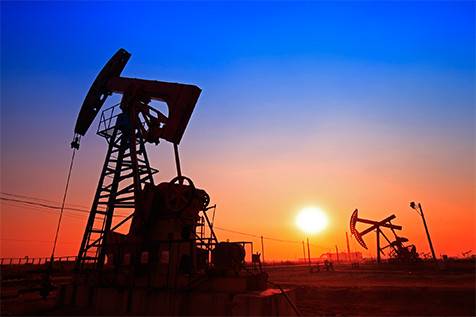
The US move against Venezuelan president Nicolás Maduro has refocused attention on one of the world’s most politically sensitive oil industries, forcing investors to reassess who controls the country’s petroleum resources and whether they can be meaningfully revived after decades of decline.
For now, the answer appears relatively straightforward. Andy Lipow, president of Lipow Oil Associates, said: “Petróleos de Venezuela (PDVSA), the state-owned oil company, controls the vast majority of oil production and reserves.”
US energy major Chevron operates in the country through its own output and via a joint venture with PDVSA, while Russian and Chinese firms are also involved through partnerships. However, “majority control still rests with PDVSA,” according to Lipow. Chevron shares rose more than 6% in pre-market trading by 8:00 a.m. Eastern Time on Monday.
Venezuela nationalized its oil industry in the 1970s, leading to the creation of PDVSA. Oil output peaked at around 3.5 million barrels per day in 1997, but has since fallen to an estimated 950,000 barrels per day, of which about 550,000 barrels per day are exported, according to data from Lipow Oil Associates.
If a government more aligned with the United States and more supportive of investment were to take power, Chevron would be “best positioned” to expand its role, said Saul Kavonic, head of energy research at MST Financial. He added that European firms such as Repsol and Eni could also benefit, given their existing presence in Venezuela.
What does this mean for global oil markets?
Industry experts warned that any regime change could disrupt the trading chain that keeps Venezuelan oil flowing.
“Given the lack of clarity over who is in charge in Venezuela right now, we could see exports grind to a halt because buyers don’t know who to pay,” Lipow said. He added that the latest round of US sanctions targeting the so-called shadow fleet of oil tankers had already hit exports hard, forcing Venezuela to cut production.
The term “shadow fleet” refers to tankers operating outside traditional shipping, insurance, and regulatory systems to transport oil from sanctioned countries. These vessels are commonly used to move crude from countries such as Venezuela, Russia, and Iran, which face US restrictions on energy exports.
Lipow expects Chevron to continue exporting roughly 150,000 barrels per day, limiting any immediate impact on supply. However, he said broader uncertainty could add a short-term risk premium of around $3 per barrel.
This potential increase comes at a time when many analysts believe the market is adequately supplied, at least for now. Bob McNally of Rapidan Energy Group said the oil market is currently heading toward a surplus, describing the immediate impact as “almost negligible.”
Venezuela’s longer-term importance lies in the type of crude it produces. The country’s heavy, high-sulfur oil is difficult to extract, but highly sought after by complex refineries, particularly in the United States. McNally said: “US refineries love to gulp down this thick crude from Venezuela and Canada.”
He added: “The real question is whether the oil industry can return to Venezuela and reverse two decades of decline, neglect, and damage, and actually raise production again.”
If opposition leader María Corina Machado were installed as president quickly, sanctions could be eased and oil exports might initially rise as inventories are drawn down to generate revenue, according to Lipow. However, he noted that any short-term increase could weigh on prices.
Global benchmark Brent crude futures for March delivery rose 0.5% to $61.03 per barrel, while US West Texas Intermediate futures for February delivery climbed 0.6% to $57.64 per barrel.
Still, any vision of a sustained recovery faces severe physical constraints. “Venezuela’s oil industry is in such a degraded state that even with a change in government, it is unlikely we would see any meaningful increase in production for years,” Lipow said, noting that rehabilitating existing infrastructure would require substantial investment.
Similarly, Helima Croft of RBC warned that the road to recovery would be long, pointing to “decades of decline under the Chávez and Maduro regimes.” She said oil executives estimate that at least $10 billion per year would be needed to repair the sector, with a “stable security environment” being an essential prerequisite.
She added: “All bets are off in a chaotic power transition scenario, like those seen in Libya or Iraq.”
