


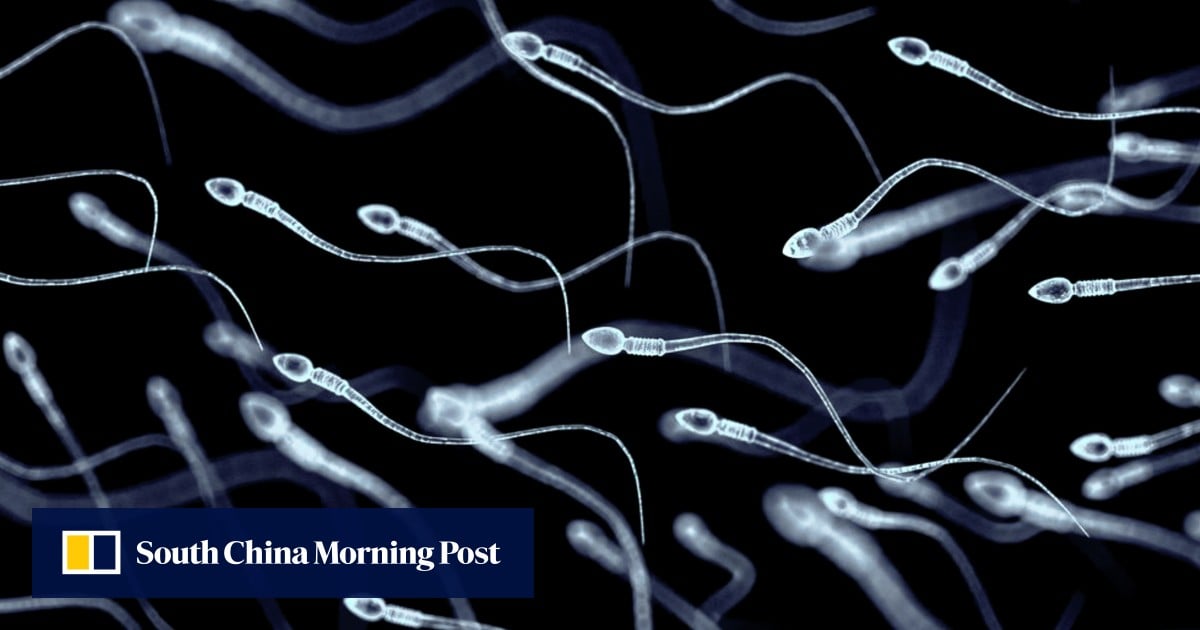
In an attempt to solve the global fertility crisis, Chinese scientists have developed a balm for testicles they say can boost sperm activity.
The lotion they developed for external application significantly enhanced sperm quality in both animal trials and in vitro studies, regardless of whether the decline in function was caused by exposure to heavy metals, plasticisers, heat stress or natural ageing, the researchers said.
The study, conducted by researchers from several domestic institutes, including the Institute of Reproduction and Development at Fudan University and the Third Military Medical University in Chongqing, was published online on November 27 in the peer-reviewed journal The Innovation.

10:38
Hong Kong researchers develop AI model that detects fertile sperm with 96% accuracy
Hong Kong researchers develop AI model that detects fertile sperm with 96% accuracy
Declining sperm quality – characterised by reduced sperm count, abnormal morphology and diminished motility – is one of the main causes of male infertility. However, there is a lack of effective solutions, particularly targeted biological agents, to reverse or substantially improve the condition.
It is estimated that around one in every six people of reproductive age worldwide experience infertility in their lifetime. According to the World Health Organization, infertility in the male reproductive system is most commonly caused by problems with the ejection of semen, an absence or low level of sperm, or low sperm motility – the ability of sperm to move around.
In China, which is mirroring global trends, the decline in sperm quality has become a concerning public health issue due to factors that include unhealthy lifestyle, environmental pollution and work-related stress.
For example, data from a major sperm bank in Hunan province in central China indicated that the pass rate for donor sperm was 45.9 per cent in 2006, but had since fallen to around 20 per cent, which is in line with the national average.
The team used extracellular vesicles – which are nanoscale information shuttles – derived from milk as natural carriers and loaded them with a key protein known as SKAP2, a target that specifically binds to haploid sperm containing one set of chromosomes. These were then embedded within a hydrogel matrix to enable direct application to the scrotal skin.
