


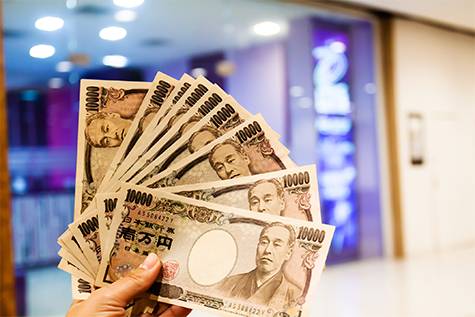
The Japanese yen rose in Asian trading on Tuesday against a basket of major and minor currencies, extending its gains for a second consecutive day against the US dollar, as it continued to recover from four-week lows, following a strongly worded warning from Japanese authorities signaling Tokyo’s readiness to intervene to support the local currency.
Finance Minister Satsuki Katayama said Japan has full freedom to take whatever action it deems necessary to address excessive volatility in the yen, stressing that recent moves in the currency do not reflect market fundamentals at all.
A former Bank of Japan official said that rising yields pose the biggest risk to the Japanese economy in 2026, warning that the central bank may be forced to review its quantitative easing tapering plan if the bond market downturn persists.
Price overview
Japanese yen exchange rate today: the dollar fell 0.7% against the yen to ¥155.96, from an opening level of ¥157.02, after recording an intraday high of ¥157.04.
The yen ended Monday’s session up 0.45% against the dollar, as part of its recovery from a four-week low of ¥157.77, following warnings from Japanese government officials about possible intervention in the foreign exchange market.
Japanese finance minister
Japanese Finance Minister Satsuki Katayama said on Monday that Japan has “freedom of action” to take bold measures to deal with excessive volatility in the yen.
Speaking at a press conference on Tuesday, Katayama said recent movements in the local currency do not reflect market fundamentals at all, but are driven by speculation, giving Tokyo justification to intervene in the market if necessary.
She added that the government will take appropriate measures to counter excessive moves, in line with Japan’s agreement with the United States in September on exchange rate policy.
Key comments
Seiji Adachi, a former Bank of Japan official, told Reuters that Japan could face further yen weakness and a continued rise in bond yields, driven by market concerns over the new government’s expansionary fiscal policy.
Adachi explained that the yen is weakening despite the narrowing interest rate gap between Japan and the United States, suggesting that the move is not closely linked to Bank of Japan policy.
He added that investors appear to be demanding a higher premium for Japan’s fiscal risks, a trend also evident in the recent rise in Japanese government bond yields.
The benchmark 10-year Japanese government bond yield hit a 27-year high of 2.1% on Monday, reflecting expectations of further Bank of Japan rate hikes and large bond issuance.
Adachi said the Bank of Japan could ultimately raise interest rates to 1.5%, with the next increase likely in July next year.
Japanese interest rates
Market pricing for a quarter-point interest rate hike by the Bank of Japan at its January meeting remains below 20%.
To reprice those expectations, investors are awaiting further data on inflation, unemployment, and wage growth in Japan.
